
Introduction and Main Facts
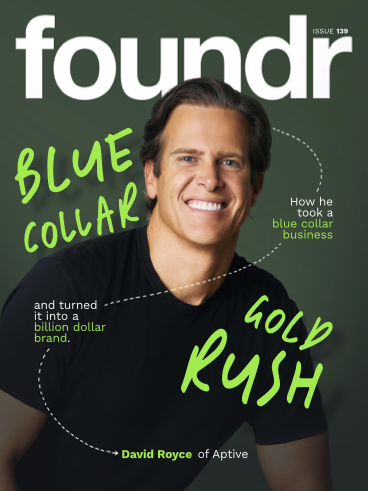
In the modern entrepreneurial landscape, conventional wisdom dictates that the path to a billion-dollar valuation runs through Silicon Valley code, venture capital backing, or disruptive fintech solutions. Yet, David Royce—founder and chairman of Aptive Environmental, North America’s third-largest residential pest control service—has built a career on defying conventional wisdom.
Royce’s core philosophy is refreshingly contrarian: true success is not a function of the industry you select, the prestige of your academic pedigree, or whether an opportunity looks glamorous on paper. Instead, it is about a willingness to execute the unglamorous tasks that others actively avoid, maintaining that execution long enough to achieve mastery.
Over a 20-year career, Royce has engineered three separate eight- and nine-figure exits to the same strategic buyer. He subsequently built Aptive into a behemoth generating over $500 million in annual revenue—all within an unsexy, blue-collar industry that most finance graduates wouldn’t touch. In a wide-ranging interview with Foundr CEO Nathan Chan, Royce unpacked the foundational experiences, harsh cash-flow lessons, and systematic scaling techniques that transformed a self-described struggling student into one of the stealthiest wealth builders in American business.
Chronology: From Academic Struggles to Industry Titan
The Early Years and the Turning Point
Royce’s journey began with a struggle common to many future entrepreneurs: an inability to focus within a traditional educational framework. Diagnosed with ADHD only later in life, Royce initially internalized his lack of academic engagement as a personal failing.
"I struggled in school because I couldn’t focus unless I cared deeply," Royce reflects. "You don’t say, I might have undiagnosed ADHD. You say, I guess I’m not smart."

The turning point arrived in the sixth grade when a teacher named Mrs. Luft recognized his potential before he could see it himself. Her validation spurred him to work relentlessly for good grades. Later in life, Royce would come to view his neurodivergence as a powerful double-edged sword: brutal in mundane environments, but a superpower in domains that command his absolute focus.
The Crucible of Door-to-Door Sales
Royce entered the pest control industry by sheer accident during his college years, drawn by a friend’s claim of making $25,000 selling door-to-door over a single summer. Traveling to Sacramento, California, Royce faced immediate, humbling failure. Operating on a commission-only structure, he sold nothing for his first five days.
Rather than calling home in defeat, Royce invested his weekend in half a dozen sales books and dedicated 90 minutes daily to studying the craft. By the end of his freshman summer, he finished as the top sales rookie out of 200 representatives, grossing $225,000—the equivalent of roughly half a million dollars today. That grit cemented his guiding operational maxim: Persistence is genius in disguise.
The Pivot to Entrepreneurship and the First Exit
Armed with $300,000 saved from his college summers—funds originally earmarked for an MBA—Royce stood at a career crossroads. Heavily recruited by investment banks, he asked his pest-control boss for a letter of recommendation. Instead, his boss posed a life-altering question: "Why go work 80 to 100-hour weeks for someone else when you could start your own pest control company?"
Swallowing his ego—he initially feared that "pest control" lacked the social prestige of investment banking—Royce leveraged his boss’s operational template and his own door-to-door mastery. He founded his first company, leveraging the exact pain points and operational efficiencies his mentor shared. This launched a serial entrepreneurial cycle: building hyper-efficient regional players, selling the recurring revenue portfolios and field technicians to strategic buyers, retaining his core leadership and sales teams, and launching the next iteration with stronger capitalization.

Supporting Data and Operational Insights
Royce’s unprecedented scaling—growing Aptive 7 to 10 times faster than the vast majority of the 20,000 North American competitors—was powered by three distinct pillars:
- The Sales Engine: Royce codified his field experience into a rigorous training regimen. He taught reps to bypass yes-or-no questions in favor of option closes ("We’ll be in your area tomorrow at three or five, which works better?"), utilize the "RAC" method (Resolve the doubt, lay down an Ace, Close), and master non-verbal communication. At scale, his sales force exceeded 3,000 representatives, with competitors’ defectors seeing an immediate 70% boost in summer production.
- Proprietary Technology Integration: Seventeen years ago, deploying custom software and gamified sales applications within a blue-collar industry was practically unheard of. Royce’s software ran nationwide sales tournaments that lifted productivity by up to 30% on tournament days.
- The Power of the Blue-Collar Margin: According to The Wall Street Journal, approximately 43% of the top 0.1% of U.S. income earners (making $2.3 million annually or more) derive their wealth from boring, blue-collar industries. With millions of baby-boomer business owners nearing retirement without succession plans, essential, recurring-revenue service models represent a massive, recession-resistant asset class. As Royce succinctly notes: "Recessions come and go, but bugs don’t read The Wall Street Journal."
Official Responses and Strategic Learnings
The Cash-Flow Near-Miss in Los Angeles
During his first year of operations in Los Angeles, Royce learned a brutal financial lesson: a company can be experiencing explosive growth while simultaneously marching toward bankruptcy.
Having projected 4,000 to 5,000 new customers, Royce’s branch closed 7,500—an industry record for a single location. However, the business model required paying out salespeople’s commissions before the recurring subscription revenue was fully collected.
Faced with a severe cash-flow crunch, Royce turned to his sales leaders. He negotiated a delay on their bonus checks in exchange for an extraordinary 10% interest rate on their capital. His takeaway remains a cornerstone of his financial philosophy: "Revenues are vanity. Profits are sanity. But cash flow is reality."
Culture as Design, Not Perks
Inspired by Tony Hsieh’s Delivering Happiness, Royce built a famously vibrant company culture featuring an NCAA basketball court at headquarters, golf simulators, and international team retreats to Egypt and Thailand. However, Royce is quick to clarify that perks are merely the "sugar," not the "protein."

The true anchor of employee retention was equity alignment. Royce distributed 25% of the company to his employees. When Aptive approached a valuation exceeding $500 million in annual revenue, this equity distribution translated into life-changing, six- and seven-figure payouts at exit, allowing team members to clear mortgages, eliminate student debt, and fund family vehicles.
Stepping Aside and the Cost of the Wrong Hire
To successfully transition out of the CEO seat after a decade at the helm, Royce promoted a trusted protégé he had trained from his second year in business. The hardest part, he admits, was resisting the urge to rescue minor missteps: "I had to learn that leadership at that level means letting someone else win, even if they’d do it differently. I had to stop being the hero and start being the architect."
However, subsequent scaling missteps provided an equally valuable lesson. When hiring an external CFO with a blue-chip tech background, Royce granted significant autonomy without verifying operational alignment. Unfamiliar with the granular expense structures of a home-services firm, the new executive oversaw mounting forecast misses precisely as Aptive attempted a massive partial sale valued between $1 billion and $1.6 billion. The compounding forecast discrepancies caused every prospective buyer to walk away.
Royce’s post-mortem on the experience: "Trust, but verify. Never miss your forecast while running a sale process. Buyers hate it, and it hands them leverage in the negotiation."
Implications for Future Entrepreneurs
As artificial intelligence rapidly automates code writing, legal analysis, and white-collar administrative tasks, Royce argues that the defensive moat around hands-on, physical service industries will only widen. "AI can write code… but it’s not unclogging your toilet anytime soon. It can’t climb on your roof. And it definitely can’t treat the termites in your walls."
Ultimately, Royce’s multi-billion-dollar trajectory offers a profound psychological challenge to aspiring founders. Success, he warns, is an eternal moving target—our brains are perpetually wired to double our goals once achieved.
True entrepreneurship, therefore, is not merely about securing a massive financial exit or attaining superficial prestige. It is about the discipline, resilience, and character forged in the trenches of unsexy industries. Royce measures his ultimate legacy not by terminal enterprise valuations, but by the leaders he helped cultivate along the way.