By the B2B Analytics Editorial Desk
Published in B2B Strategy & Measurement
Ask any modern B2B marketing team how their paid media campaigns are performing, and the responses come fast and furious. The metrics are polished, accessible, and glowing: cost-per-click (CPC) is trending downward, conversion rates are climbing, and return on ad spend (ROAS) looks healthy on the dashboard.
However, ask that exact same team what specific dollar value those paid media efforts injected into the sales pipeline last quarter, and the room frequently goes quiet.
That silence is the Achilles’ heel of modern enterprise marketing. In the B2B landscape, decision-making units—comprising CEOs, CFOs, Chief Information Officers, and HR leaders—rarely convert on a single click. Sales cycles routinely stretch across months, and buying committees often run five to ten people deep. Yet, many marketing organizations continue to rely on reporting structures that stop at platform-level metrics. In short, they are measuring the performance of the advertising channel, not the health of the underlying business.
The remedy does not lie in adopting flashier dashboards or more complex visualization tools. Instead, it requires a fundamental overhaul of measurement architecture: wiring media directly into Customer Relationship Management (CRM) systems before launching a single campaign, discarding the myth of a single source of truth, and communicating in the precise financial language the C-suite demands.
Main Facts: The Disconnect Between Platform Metrics and Revenue Reality
The core friction between marketing teams and corporate finance departments stems from a fundamental mismatch in definitions of "success." Marketing platforms—such as Google Ads, LinkedIn Campaign Manager, and Meta Ads—are inherently biased toward self-preservation. They measure engagement metrics like impressions, clicks, video completions, and superficial form fills.
Finance teams, by contrast, operate in terms of cash flow, contribution margins, Customer Lifetime Value to Customer Acquisition Cost (LTV:CAC) ratios, and capital allocation efficiency.
When a B2B marketing team reports a 30% drop in cost-per-lead (CPL) to a Chief Financial Officer, the CFO hears a platform metric that may have zero correlation with pipeline generation. If those low-cost leads are unverified, low-intent contacts who never clear sales qualification hurdles, the marketing team has merely generated cheap noise.
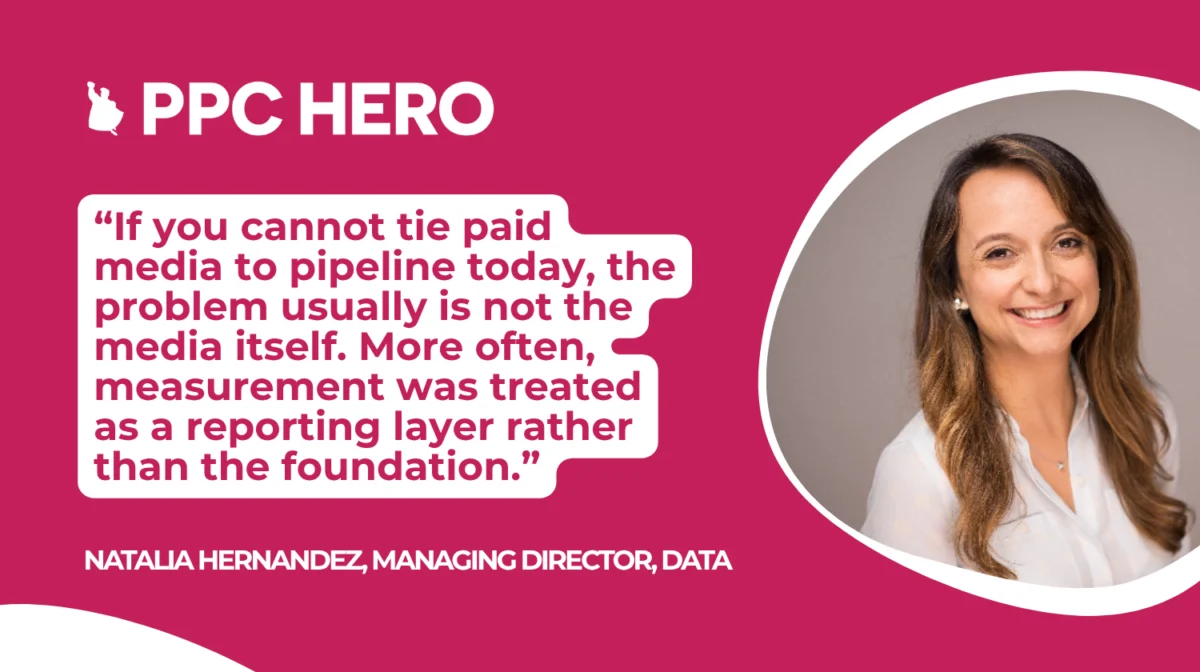
To bridge this chasm, organizations must transition from campaign-centric reporting to pipeline-centric accountability. This shift requires treating measurement not as an afterthought or a reporting layer slapped on at the end of a quarter, but as the foundational infrastructure of the media strategy itself.
Chronology: The Evolution of B2B Measurement Failure
Understanding how B2B enterprises arrived at this measurement deadlock requires examining the typical lifecycle of a botched marketing campaign:
Phase 1: The Pre-Launch Blind Spot (Weeks -4 to 0)
Campaign planning focuses heavily on creative assets, audience targeting, keyword selection, and budget allocation. CRM integration is frequently treated as an IT task to be sorted out "after the leads start rolling in." Consequently, campaign IDs are omitted from ad configurations, and UTM parameters are applied inconsistently or entirely ad-hoc.
Phase 2: The Data Silo (Weeks 1 to 4)
Ads go live. Clicks accumulate, and platform algorithms optimize toward low-friction conversions. Marketing teams report early "wins" based on rising click-through rates (CTR) and falling cost-per-acquisition (CPA) metrics. Meanwhile, lead forms sync loosely—if at all—to CRM campaign objects, breaking the chain of custody between an ad interaction and a sales opportunity.
Phase 3: The Quarter-End Reckoning (Month 3)
The quarter closes. Finance asks for an audit of paid media’s contribution to closed-won revenue or qualified pipeline. Because the data trail went cold at the form-fill stage, marketing scrambles to piece together a retrospective attribution report. They rely on a single, flawed attribution model (typically last-touch), which over-credits whatever link was clicked immediately before conversion.
Phase 4: The Budget Battle (Quarterly Review)
Finance pushes back on budget requests, viewing marketing as a cost center rather than a revenue driver. Trust erodes, and future marketing budgets are either flatlined or subjected to arbitrary cuts.
Supporting Data & Practical Solutions: Fixing the Pipeline Equation
To break this cycle, industry leaders are adopting a rigorous, three-pronged framework encompassing CRM integration, multi-model attribution, and financial translation.

1. Wire Media to the CRM Before Touching a Campaign
The discipline required to fix pipeline reporting is unglamorous and must happen before launch day. Every campaign must be rigorously tagged using standardized naming conventions and integrated tracking parameters. Lead forms must sync directly to CRM campaign objects, ensuring that conversion tracking in ad platforms connects natively to pipeline outcomes such as Marketing Qualified Leads (MQLs), Sales Qualified Leads (SQLs), first meetings, and CRM-defined lead quality.
When executed properly, organizations can trace the entire customer journey from first touch to high-intent action, and ultimately to closed-won revenue. This creates a unified view of the customer lifecycle that mirrors how the sales organization already operates.
2. The Multi-Model Reality: Why One Attribution Model Lies
One of the most persistent untruths in marketing analytics is the promise of a single "source of truth" attribution model. No single model captures B2B pipeline dynamics accurately:
- Multi-Touch Attribution (MTA): Connects ad interactions and self-reported data to CRM outcomes. While useful, MTA is inherently biased toward trackable digital touchpoints and blind to dark social, word-of-mouth, or offline exposure.
- Causal Modeling: Built on econometric principles, causal models measure each channel’s contribution to pipeline growth while actively controlling for external confounding factors, such as macro-seasonality, PR spikes, and baseline brand demand.
- Geo-Based Incrementality Testing: The gold standard for proving causality. By running geo-holdout tests, organizations can definitively prove whether paid media drove net-new pipeline or merely claimed credit for organic demand that would have converted anyway.
By running these three layers simultaneously, enterprises cover individual blind spots. Causal approaches, in particular, provide the only reliable basis for confident B2B budget allocation because they isolate incremental lift from baseline noise.
3. Real-World Case Studies in Pipeline-Led Measurement
The tangible impact of this shift is documented in recent enterprise transformations:
- B2B SaaS Efficiency: An enterprise B2B SaaS provider restructured its integrated search program by routing budget based on downstream pipeline signals rather than platform click volume. By optimizing toward SQL creation rather than CPL, the company successfully cut its cost per MQL by 27%, lifted conversion rates by 18%, and increased qualified traffic by 22%.
- Global Technology Integration: A multinational tech enterprise wired Salesforce lead scoring mechanics directly into its Google Ads account structure. By assigning real, verified dollar values to different lead tiers based on historical close rates, the organization optimized its automated bidding strategies and grew its return on ad spend (ROAS) by 138%.
Official Responses and Industry Perspectives
Enterprise finance leaders and modern marketing executives have increasingly spoken out on the necessity of aligning analytics with corporate accounting principles.
“When marketing comes to the board with impressions and clicks, they are speaking a foreign language,” notes a Chief Financial Officer at a Fortune 500 enterprise software firm. “We do not allocate capital based on platform engagement. We allocate capital based on payback periods, contribution margins, and pipeline velocity. If marketing cannot translate their digital spend into those exact units of measure, their budget is essentially flying blind.”
Industry analysts echo this sentiment, emphasizing that the era of "brand awareness at all costs" has drawn to a close. Modern economic conditions demand accountability down to the individual pipeline dollar.
“The organizations winning today are those that have dismantled the wall between growth marketing and revenue operations,” says a leading B2B analytics strategist. “Measurement is no longer a retrospective report card. It is the operating system of the go-to-market engine.”
Implications for B2B Organizations
The transition from platform-level metrics to pipeline-defensible reporting carries profound implications for organizational structure, agency relationships, and technology stacks.
1. The Death of Vanity Metrics in Executive Reviews
Organizations that continue to evaluate marketing agencies or internal teams based on cost-per-click or impression volume will find themselves at a severe competitive disadvantage. Executive leadership must actively banish impressions and clicks from pipeline reviews, treating them strictly as early-stage directional signals rather than proof of business impact.
2. Elevation of Revenue Operations (RevOps)
The traditional silo separating media buyers from CRM administrators must be dismantled. RevOps professionals, data engineers, and paid media specialists must collaborate daily to ensure data integrity flows seamlessly from ad click to closed deal.
3. Defending the Budget Against Scrutiny
When marketing leaders adopt this rigorous posture, the dynamics of budget defense shift entirely. Instead of arguing for funding based on projected traffic increases, marketing executives can walk into a board meeting armed with econometric models, geo-incrementality test results, and CRM-verified pipeline contributions.
Summary Checklist for B2B Marketers
- Audit Your Tracking Infrastructure: Ensure campaign IDs, UTM schemas, and CRM lead-form integrations are locked down before allocating ad spend.
- Embrace Triangulated Measurement: Combine Multi-Touch Attribution, econometric causal modeling, and geo-incrementality testing to eliminate blind spots.
- Speak the CFO’s Language: Translate campaign outputs into contribution margins, LTV:CAC ratios, and payback periods.
- Optimize for Downstream Value: Shift bidding algorithms and budget pacing away from platform engagement and toward CRM-verified pipeline creation.
By executing these steps, B2B marketers can transform measurement from a defensive reporting chore into their most powerful strategic asset—ensuring that the next time finance asks what paid media contributed to the bottom line, the answer is not met with silence, but with an unshakeable, defensible number.