SAN FRANCISCO — In the high-stakes arena of business-to-business (B2B) SaaS and recurring revenue models, mistakes are inevitable. Founders miss product-market fit windows, misjudge burn rates, and occasionally misread market trends. Yet, according to seasoned tech veterans and investors, mistakes are merely tuition paid on the road to innovation.
True long-term damage, however, rarely stems from active errors. Instead, it arises from the subtle, corrosive power of omission—the choices founders knew they should have made, possessed the resources to execute, but ultimately left undone.
In recurring revenue ecosystems, these omissions compound exponentially. A single deferred executive hire, a neglected enterprise account, or an underfunded venture round does not merely stunt a quarter’s growth; it alters a company’s trajectory years down the line, culminating in multi-million-dollar gaps in Annual Recurring Revenue (ARR).
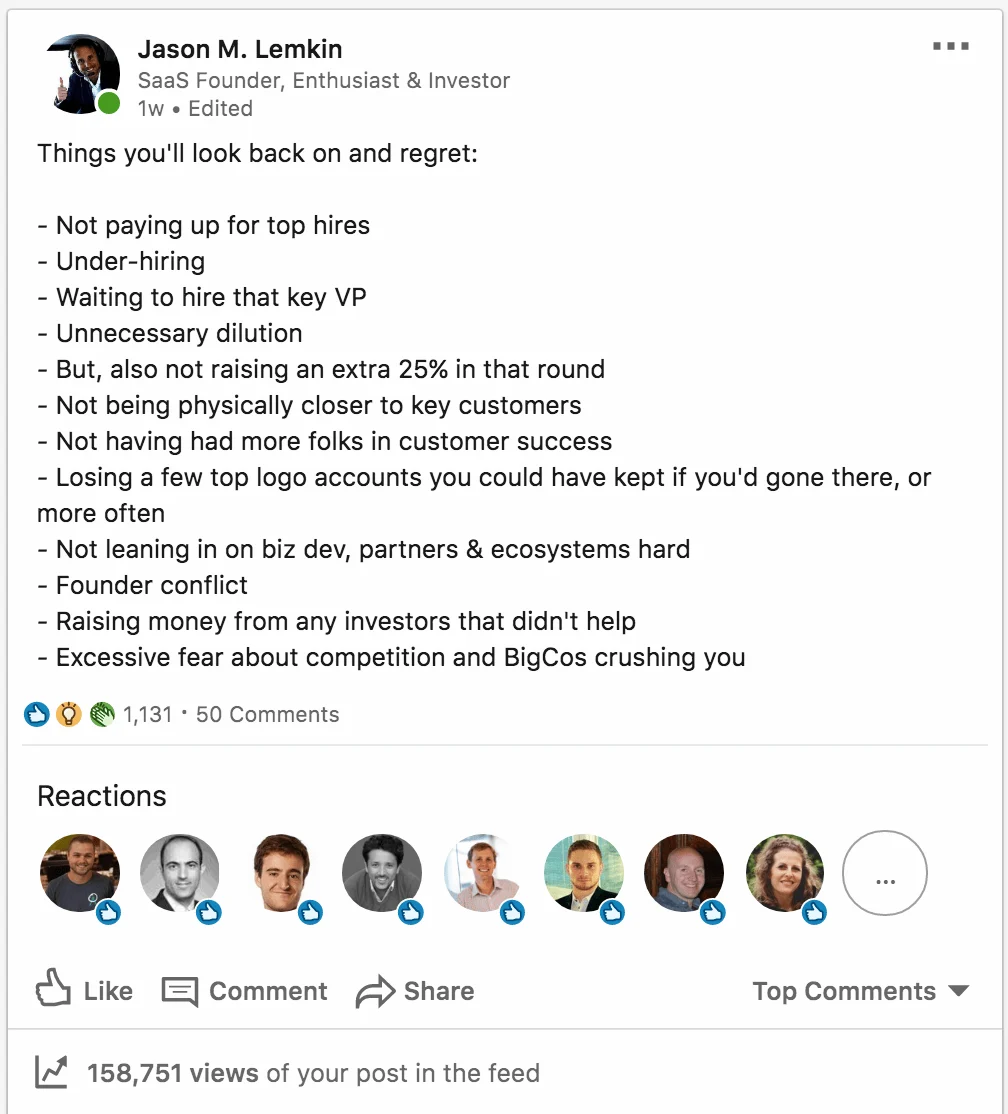
Examining the comprehensive retrospective popularized by SaaS industry thought leaders, we break down the 12 critical regrets that successful B2B founders face, and how addressing them early can safeguard a company’s future.
Main Facts: The Anatomy of B2B Regret
Unlike acute business failures that demand immediate crisis management, strategic regrets are invisible in real-time. They manifest years later when a company hits a growth ceiling and leadership realizes that a modest, straightforward intervention executed early could have dramatically altered their enterprise value.
The core findings highlight that B2B success relies heavily on leverage points: leadership quality, capital sufficiency, physical proximity to major enterprise clients, ecosystem alignment, and internal alignment among founding teams. When founders try to bootstrap through structural deficits—such as hiring junior staff instead of seasoned executives or hoarding equity at the expense of necessary runway—the compounding penalty materializes in lost market share, higher customer churn, and missed enterprise-grade logos.
Chronology: How Short-Term Savings Turn Into Long-Term Crises
The lifecycle of a B2B startup moves rapidly through distinct phases—from initial seed traction to product-market fit, scaling, and eventual market dominance. The timeline of regret typically follows a predictable chronological arc:
- The Seed Phase (Months 0–12): Founders often hyper-focus on capital preservation. This leads to under-hiring, unnecessary dilution anxiety, and the recruitment of passive investors who add no strategic value to the cap table.
- The Growth Phase (Years 1–3): As ARR approaches the $1M to $5M threshold, founders frequently delay hiring critical Vice Presidents (Engineering, Customer Success, Demand Generation) to save on base salaries. Simultaneously, remote-first habits prevent leadership from physically visiting key enterprise accounts, resulting in quiet customer attrition.
- The Scaling Phase (Years 3–5): Ecosystem neglect and unaddressed co-founder friction reach a boiling point. Competitors who invested early in platform partnerships (such as Salesforce, Slack, or AWS marketplaces) capture dominant market share, leaving late movers struggling to catch up.
Supporting Data and Strategic Insights
A granular look at the twelve strategic missteps reveals distinct operational lessons for modern founders navigating the B2B and AI landscapes.
1 & 2. Under-Hiring and Refusing to Pay for Top-Tier Leadership
A pervasive trap for early-stage founders is substituting executive talent with multiple lower-cost individual contributors. While hiring a junior content marketer appears cheaper on a ledger than recruiting a seasoned VP of Demand Generation, the math fails under scrutiny. A high-performing VP who generates $1 million in pipeline within their first year is vastly more cost-effective than a junior hire who generates none.
- The Takeaway: Never underhire for core functions. Secure seasoned Directors or VPs as early as the company can cover their base salaries.
3. Waiting Too Long to Hire Key VPs
Procrastination in executive recruitment carries heavy operational debt. Delaying a VP of Engineering locks in technical debt that cripples feature velocity. Delaying a VP of Customer Success invites enterprise churn. Great VPs should ideally be in place by the time a company reaches $1M in ARR.
4 & 5. The Fundraising Paradox: Unnecessary Dilution vs. Capital Starvation
Fundraising strategy is fraught with binary extremes. On one hand, founders occasionally raise unnecessary seed rounds just because capital is available, suffering long-term equity dilution. On the other hand, many founders raise too little capital out of hubris, assuming they can secure subsequent rounds at higher valuations.

- The Data: Roughly 66% of early-stage B2B startups ultimately require about 25% more capital than initially projected. Securing that extra capital upfront—even if it sits untouched as a financial safety net—prevents liquidity crunches during economic downturns.
6. Isolation from Key Customers and Partners
Despite the prevalence of remote work and Zoom, high-value B2B transactions remain deeply personal. Founders who refuse to board flights to conduct Quarterly Business Reviews (QBRs) regularly lose enterprise contracts to agile competitors who show up in person. For accounts with massive Annual Contract Values (ACVs), establishing localized field offices or placing general managers near major client hubs directly correlates with lower churn and higher net retention.
7 & 8. Underservicing Customer Success and Protecting "Logo" Accounts
In subscription businesses, the initial sale is merely the starting line. Allocating too many resources to initial acquisition while starving Customer Success (CS) is a structural miscalculation. Industry benchmarks suggest maintaining a ratio of at least one CS professional per $500K in ARR. Furthermore, losing an industry-titan logo (such as Google or Salesforce) inflicts a triple blow: lost revenue, lost prestige, and the forfeiture of a decade of downstream referrals.
+-------------------------------------------------------------+
|              THE TRUE COST OF LOSING A KEY LOGO             |
+-------------------------------------------------------------+
|  1. Immediate Revenue Loss (Contract Value)                 |
|  2. Brand Devaluation (Loss of Elite Market Validation)     |
|  3. Opportunity Cost (Foregone Downstream Referrals)        |
+-------------------------------------------------------------+
9. Ignoring Ecosystems and Business Development
Platform partnerships require immense upfront labor with seemingly minimal immediate return. Building integrations for major software ecosystems can feel frustratingly slow. However, market winners play the long game. Appointing a dedicated Head of Business Development as soon as early platform traction appears boxes out competitors and secures network effects.
10. Tolerating Co-Founder Conflict
Toxic employees damage team morale; toxic co-founders threaten the entire enterprise mission. Lingering conflicts freeze product velocity and stall operational momentum. When alignment fractures irreparably, swift resolution—even if it requires a founder’s departure—is essential to preserve company agility.
11. Accumulating Dead Weight on the Cap Table
Every percentage point on a cap table is precious real estate. Accepting capital from investors who offer prestigious branding but zero strategic assistance is a misallocation of equity. Founders must rigorously vet investors for active value-add before allocating ownership slots.
12. Paralysis by Competitive Fear
Obsessing over competitor press releases and social media posts drains internal focus. While market awareness is healthy, operational velocity is the ultimate differentiator. Startups that prioritize rapid feature deployment and relentless customer focus can outpace slower legacy competitors over time.
Official Responses and Industry Perspectives
Venture capitalists and startup advisors emphasize that the current macro environment, supercharged by rapid advancements in artificial intelligence, leaves very little room for administrative hesitation.
Industry veterans note that modern founders frequently misdiagnose the root causes of their stagnation. Rather than blaming market conditions or macroeconomic headwinds, retrospectives from seasoned executives point directly to internal operational friction.
"The startups that break out aren’t necessarily the ones with the most novel ideas on day one," notes a prominent SaaS fund partner. "They are the ones that execute the fundamental blocking and tackling early—hiring elite leadership, staffing customer success proactively, and maintaining deep physical proximity to their customers—while their competitors hesitate."
Implications for Modern Founders
As the B2B tech sector continues to evolve, the margin for operational error narrows. Founders are increasingly challenged to step away from administrative isolation, move past spreadsheet-driven conservatism, and take decisive action on critical hires and customer relationships.
By recognizing these twelve systemic regrets before they materialize, early-stage leadership teams can restructure their operational priorities. The ultimate goal is not perfection—mistakes will always occur—but the systematic elimination of predictable omissions. Addressing these challenges today ensures that when founders look back five years from now, they see a trail of compounded wins rather than a list of avoidable regrets.