NEW YORK — In an era dominated by faceless e-commerce storefronts, algorithmic social media growth hacks, and hyper-optimized SaaS platforms, the path to building a multi-million-dollar business is rarely linear.
Recently, on the Niche Pursuits podcast, host Jared Bauman sat down with entrepreneur and author Nick Gray for an atypical, wide-ranging interview. The conversation challenged standard marketing orthodoxies, explored the evolution of audience trust, and detailed an unconventional trajectory from running renegade art tours to spearheading the modern personal website movement.
Gray’s career offers a masterclass in identifying overlooked niches, monetizing genuine passions, and understanding the rising importance of digital identity in an age dominated by artificial intelligence.
Main Facts: The Anatomy of a Serial Entrepreneur
Nick Gray is not a traditional corporate executive. Over the past decade and a half, his entrepreneurial endeavors have spanned the worlds of experiential tourism, publishing, and digital reputation management.
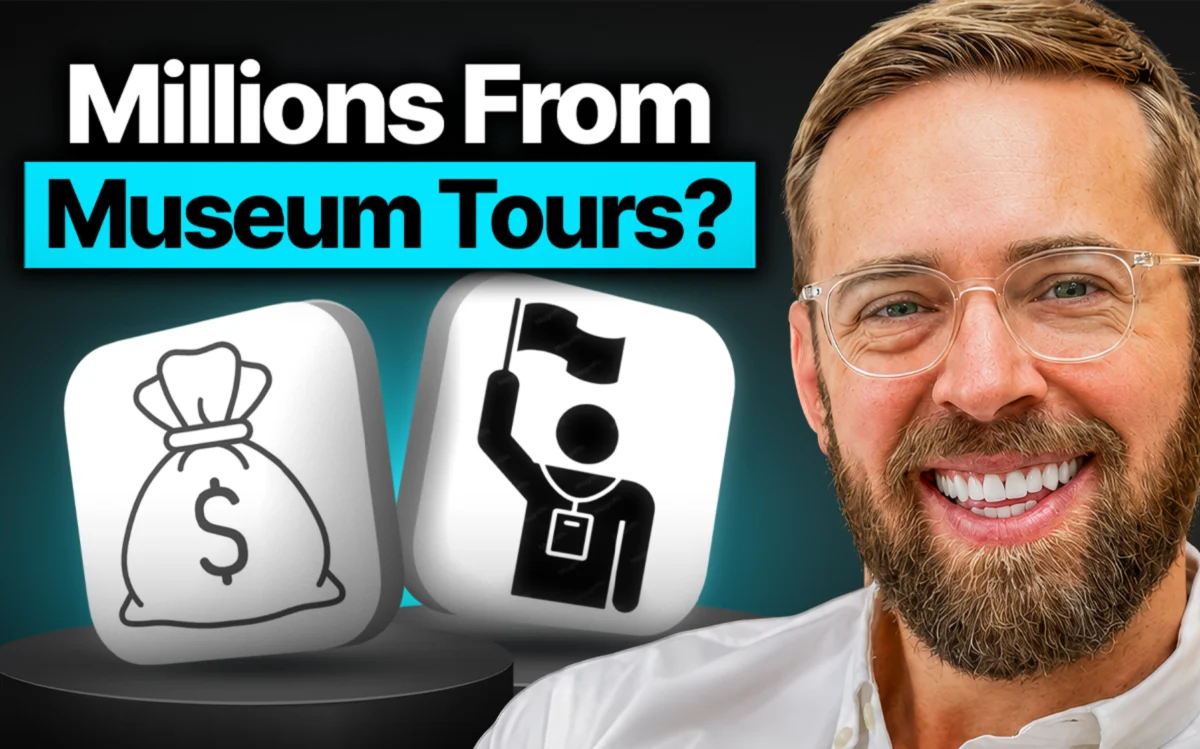
- Museum Hack: Founded as an informal hobby in New York City, Gray scaled the unconventional museum tour company into a multi-million-dollar enterprise before orchestrating a successful buyout in 2019.
- The 2-Hour Cocktail Party: Following his exit from Museum Hack, Gray published a tactical, workbook-style guide in 2022 designed to help professionals master the art of hosting intimate, high-impact gatherings.
- PersonalWebsites.org: Gray’s newest venture, launched roughly a year ago, provides streamlined, high-performance personal websites for roughly $29 per month. The startup has already onboarded around 80 clients, generating $3,000 to $4,000 in monthly recurring revenue.
Chronology: From Accidental Tour Guide to Digital Architect
Gray’s professional trajectory highlights how side projects can organically morph into major commercial enterprises when paired with acute operational execution and a willingness to break industry norms.
The Genesis of Museum Hack
Gray’s entrepreneurial journey began not in a boardroom, but in the halls of the Metropolitan Museum of Art in New York City. Having recently moved to the city, Gray began visiting the Met frequently and casually showing friends around for fun.
Unburdened by formal training in art history or professional tour guiding, Gray leveraged his lack of institutional background as an asset. Rather than catering to traditional art aficionados, he designed tours for people who found standard museum visits dry and uninspiring. His tours centered on narrative arcs: gossip, historical finance, romance, artistic rivalries, and the bizarre trivia that traditional curators often glossed over.
Scaling and the Monetization Pivot
As word-of-mouth recommendations grew, a prominent blog featured Gray’s tours, hailing them as one of the premier things to do in New York City. Suddenly, over 1,000 people expressed interest in joining.
Faced with overwhelming demand, Gray was forced to transition the hobby into a commercial enterprise. He instituted a modest ticket price of $19 to $29 per person. Strikingly, on his very first paid tour, he refunded everyone’s money simply because he felt guilty charging for something he enjoyed so much.
However, charging proved to be a critical turning point. Once customers paid for the experience, they treated it with significantly higher regard. Gray realized he was not selling museum access; he was selling an elevated, highly entertaining way to consume culture.
Transitioning Out of the Delivery Role
A central challenge for any personality-driven business is removing the founder from day-to-day operations. Critics told Gray that Museum Hack could never scale because he was the product.
Refusing to accept this limitation, Gray established a rigorous, unconventional hiring strategy to find guides who could replicate his high-energy delivery style. The company expanded first to Washington, D.C., and subsequently to other major metropolitan hubs like Los Angeles and San Francisco. The expansion targeted cities with deep freelance labor pools—performers, actors, and individuals with flexible schedules who could easily command a room.
Navigating Institutional Friction and Ultimate Exit
Initially, Museum Hack operated as an insurgent outsider, occasionally facing resistance from museum management. Over time, however, the model matured into a cooperative partnership. Museum Hack routinely folded the full cost of standard museum admission (roughly $25) into the ticket price of their $79 tours, aligning economic incentives and transforming the startup from a nuisance into a valuable revenue generator for cultural institutions.
By 2019, Gray had successfully worked himself out of daily operations. With the business generating millions in annual revenue—though plateauing around the $3 million mark—his leadership team approached him with a buyout offer.
In a rare business maneuver, the acquisition was structured entirely through seller financing. The incoming buyers put down zero dollars upfront, paying out Gray progressively from company profits over time—a testament to the high level of trust established within the organization. Shortly after the sale, the COVID-19 pandemic struck, forcing the new leadership to successfully pivot the business toward remote team-building experiences.
The Book and the Modern Digital Shift
Post-exit, Gray published The 2-Hour Cocktail Party in 2022. Investing roughly $60,000 into top-tier design and publishing support, Gray used the book to build deep audience trust and scale his framework for hosting gatherings of 15 to 25 people.
Today, Gray’s focus has shifted toward his newest venture: PersonalWebsites.org. Drawing on his own quarter-century experience maintaining a personal website, Gray is capitalizing on a growing market need for proactive online reputation management and entity clarity in an era dominated by search engines and Large Language Models (LLMs).
Supporting Data & Metrics
- $3M – $10M Range: The revenue bracket where Museum Hack operated, successfully scaling to multiple cities before plateauing near $3 million in annual sales prior to its acquisition.
- $60,000: The upfront investment Gray made into professional design, layout, and publishing support for his 2022 book.
- $29/Month: The accessible price point for PersonalWebsites.org, a service designed to give professionals direct control over their digital footprint.
- 80+ Clients: The current customer base of PersonalWebsites.org, generating between $3,000 and $4,000 in monthly recurring revenue just one year into operation.
- 87-88 to 99: The dramatic leap in PageSpeed Insights scores achieved by migrating personal websites from standard WordPress setups to a modern, static infrastructure using Payload CMS and Astro.
Official Perspectives and Expert Insights
During the podcast interview, the conversation took a compelling turn when Gray conducted a live, constructive audit of host Jared Bauman’s personal website (JaredBauman.com).
Gray emphasized that modern professionals must create "surface area" around their digital identities. Rather than turning a personal site into a secondary corporate page, the objective is to supply search engines and AI algorithms with clean, structured signals.
"It’s not about burying negative search results," Gray explained during the discussion. "It’s proactive reputation work focused on giving people a credible, authoritative source about who they are, what they do, and how they relate to the businesses they run."
Gray highlighted the distinct difference between a human entity (e.g., Jared Bauman) and a corporate entity (e.g., 201 Creative). When founders and their businesses are inextricably blurred online, search engines struggle to parse authority. A clean, static personal website resolves this ambiguity.
Implications: The Rise of Personal SEO, GEO, and AEO
The intersection of personal branding, Search Engine Optimization (SEO), and Generative Engine Optimization (GEO) has never been more critical. As search behavior shifts from traditional keyword queries to conversational AI prompts, how artificial intelligence perceives a founder or professional directly impacts their career, business valuation, and market authority.
Key Implications for Modern Professionals:
- Entity Clarity: AI tools rely on structured data to differentiate between individuals and the companies they operate. A dedicated personal website acts as the source of truth for an individual’s professional identity.
- Technical Performance Matters: As demonstrated by Gray’s migration of client sites to static frameworks (Payload CMS and Astro), lightning-fast load times and clean code architecture directly benefit user experience and search engine parsing.
- Proactive Reputation Management: Relying solely on social media profiles leaves professionals vulnerable to algorithm changes and platform policy shifts. Owning a domain ensures absolute control over one’s digital narrative.
Conclusion
Nick Gray’s entrepreneurial evolution—from quirky museum tours to tactical publishing and personal web infrastructure—underscores a timeless business truth: enduring value is created by looking at overlooked spaces and making them functional, engaging, and accessible. As personal reputation increasingly becomes a visible corporate asset, the humble personal website may well be the most underrated business tool of the digital age.