In the modern digital landscape, the line between "productive tool" and "digital distraction" has blurred, leading to an unprecedented demand for personal cybersecurity and focus-oriented software. Few stories illustrate the transition from a niche side project to a high-growth SaaS business as clearly as that of Ben Bozzay, the founder of Tech Lockdown.
In a recent episode of the Niche Pursuits podcast, Bozzay shared his journey of scaling Tech Lockdown from a personal experiment in digital minimalism to a robust SaaS entity generating $20,000 in Monthly Recurring Revenue (MRR). His trajectory offers a masterclass in organic growth, demonstrating how identifying a specific, painful problem and iterating based on user feedback can build a sustainable, resilient enterprise.
The Genesis: Solving a Personal Digital Dilemma
The origins of Tech Lockdown were not rooted in a boardroom strategy session, but in the quiet, overwhelming reality of the 2020 COVID-19 lockdowns. Like millions of others, Bozzay found himself tethered to his devices, struggling to maintain boundaries in a world where the office, home, and entertainment were all compressed onto the same screen.
A software developer by trade with a deep background in cybersecurity and SEO, Bozzay was uniquely equipped to tackle the problem. While the average consumer might look for a simple "website blocker" app, Bozzay knew these tools were easily circumvented by anyone with a modicum of technical knowledge. Instead of settling for consumer-grade software, he began applying enterprise-level cybersecurity concepts to his own personal devices—implementing DNS filtering, mobile device management (MDM) profiles, and strict network-level guardrails.
These were the same systems utilized by corporations to secure sensitive data and control company-issued hardware. By "repurposing" these enterprise protocols for individual use, Bozzay created a system that was virtually impossible to bypass, effectively reclaiming his digital agency.
A Chronology of Iteration: From Content to SaaS
The growth of Tech Lockdown was not a linear ascent, but rather a series of deliberate shifts, each validated by user demand.
Phase 1: The Documentation Experiment (2020)
Bozzay began by documenting his process on platforms like Medium, Reddit, and YouTube. He wasn’t trying to sell a product; he was sharing his "digital guardrails" strategy. The response was immediate and overwhelming. His audience was not just interested in the what, but the how. They wanted to know how to replicate his setup, leading to an influx of questions and requests for consulting.
Phase 2: The Paid Content Pivot (2021)
Recognizing that he had tapped into a legitimate market need, Bozzay transitioned from free content to a paid membership model. By offering comprehensive, structured guides, he saved his users hours of technical troubleshooting. This phase solidified the trust he had built with his audience—they were willing to pay for the "shortened path" to a solution.
Phase 3: The SaaS Transformation (2022)
As the business matured, Bozzay realized that information-based products had a shelf life; once a user solved their problem, they cancelled their membership. To ensure recurring revenue, he introduced a DNS filtering service. This was his first foray into true SaaS, providing an ongoing utility that kept users engaged and subscribed.
Phase 4: Going Full-Time (2023)
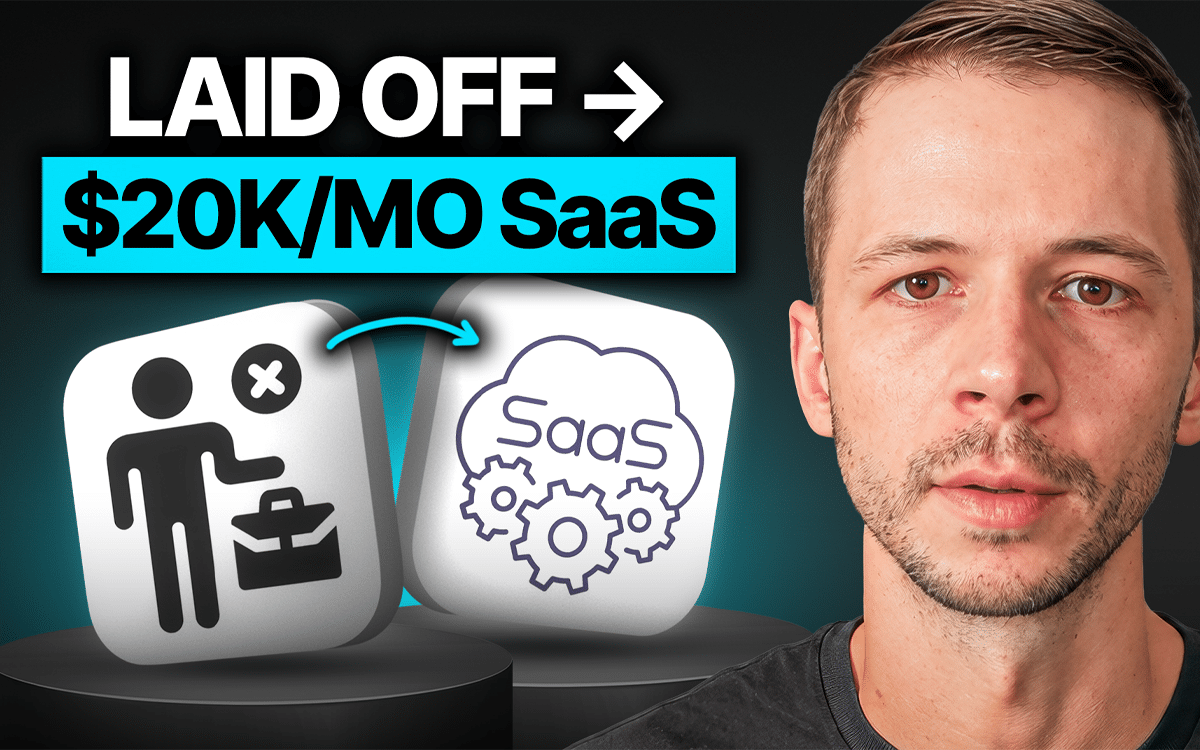
The most critical inflection point occurred in 2023, when Bozzay was caught in a round of corporate layoffs. With only $2,000 in monthly profit from the business and the sudden weight of personal financial responsibilities, he faced a choice: hunt for a new high-paying engineering job or lean fully into Tech Lockdown. With the support of his wife, he chose the latter, committing himself to the "grind" of building a full-time, independent company.
Data and Performance: The Power of SEO and Niche Targeting
The success of Tech Lockdown is inextricably linked to Bozzay’s sophisticated approach to Search Engine Optimization (SEO). Rather than competing for broad, high-volume keywords, he targeted "long-tail," intent-driven queries—the specific, technical questions that users ask when they are at their wit’s end.
At its peak, the site attracted approximately 70,000 organic visitors per month. This traffic wasn’t accidental; it was the result of a "content tree" strategy where high-level, educational articles funneled traffic into specific, high-value technical solutions. By treating his content like a product and his site like a resource library, Bozzay insulated himself from the volatility of Google’s algorithm updates.
Furthermore, his decision to pivot away from the "parental control" market—a space dominated by giant companies—and toward the "self-control" market for adults was a stroke of strategic brilliance. By focusing on users who wanted to set their own restrictions, he solved a problem that existing parental apps couldn’t: the "admin access" loophole.
Official Perspectives and Product Philosophy
In his conversation with Niche Pursuits, Bozzay emphasized that his competitive advantage remains the "depth" of his product. While other developers focus on user-friendly interfaces, Tech Lockdown focuses on technical efficacy.
"The setup is more advanced than typical household tools," Bozzay noted, "but for people who have tried weaker blockers and bypassed them, that added depth is the point."
His philosophy extends to his new ventures, such as LivingRoom, an app designed to provide transparency and accountability rather than just restriction. By separating his product suite—Tech Lockdown for the "hard" restriction and LivingRoom for the "soft" oversight—he has created a multi-layered ecosystem that addresses different psychological needs for the same customer base.
Implications for the Future of Solo-Founding
The story of Tech Lockdown carries profound implications for the current SaaS landscape, particularly for the rise of "solo-preneurs":
- Documentation as Product: Bozzay’s path proves that technical documentation is a viable precursor to a SaaS product. By building a community around shared problems, founders can generate revenue even before they write a single line of proprietary code.
- The "No-Reset" Innovation: Bozzay is currently working on an iPhone management solution that removes the need for a factory reset—a technical barrier that has frustrated users for years. This underscores the necessity of continuous technical R&D, even for a solo founder.
- Resilience Through Niche Authority: In an era where AI can generate generic content, the value of hyper-specific, expert-verified technical guides has actually increased. Bozzay’s ability to rank for questions that AI models often struggle to resolve demonstrates the enduring power of genuine human expertise.
- Strategic Caution in Scaling: Despite reaching the $20K MRR milestone, Bozzay remains cautious about hiring. He understands that his business relies on proprietary, sensitive processes. He opts instead to scale through automation, AI tools, and specialized contractors, keeping his overhead low and his agility high.
Conclusion: The Endurance of the "Problem-First" Model
Ben Bozzay’s journey serves as a powerful reminder that the most successful businesses are often those that start as humble attempts to fix a personal annoyance. He did not set out to "disrupt the cybersecurity industry"; he set out to stop himself from procrastinating on the internet.
By listening to his audience, maintaining a focus on deep technical utility, and slowly transitioning from content to software, Bozzay has built a business that is as resilient as the code he writes. For aspiring entrepreneurs, the lesson is clear: don’t look for a market gap in a textbook—look for the problem that keeps you up at night, document how you solve it, and pay close attention when others ask for the same solution. As Tech Lockdown has proven, that is where the real revenue lies.