GLOBAL BUSINESS & E-COMMERCE REPORT — In the hyper-competitive landscape of digital commerce, the prevailing industry obsession has long been the acquisition funnel. Millions of dollars are poured into paid social campaigns, search engine optimization, and top-of-funnel-visibility strategies, all designed to secure that elusive first transaction.
Yet, far fewer businesses dedicate equal intellectual and capital resources to what happens next.
Once a consumer clicks "Buy" and completes a transaction, a critical, high-stakes window opens. Decisions are made in near silence during this post-purchase phase: Will the customer remember the brand? Will they integrate the product into their daily lives? Or will the brand slowly fade into obscurity while a competitor’s flashier advertisement captures their fleeting attention?
According to modern marketing strategists, the key to bridging this gap does not lie in increasing outbound volume or shouting louder through promotional discount codes. Instead, it relies entirely on a disciplined approach to timely, behavior-triggered communication. When emails arrive in precise context—immediately after a purchase, during a quiet usage pause, or at the exact moment a consumer is primed to re-engage—they transform from intrusive marketing collateral into genuinely helpful touchpoints. And that psychological shift is precisely what turns a one-time buyer into a fiercely loyal, repeat customer.
Chronology of an E-Commerce Mistake: The Escalation of Email Fatigue
To understand the current paradigm shift toward strategic timing, one must examine how digital marketers have historically responded to softening engagement metrics.
Phase 1: The Volume Trap (The Early 2010s)
As e-commerce matured, companies discovered that email was one of the highest-yielding channels for direct-to-consumer (DTC) brands. The initial logic was deceptively simple: if sending one promotional blast yields $1,000, sending three must yield $3,000. Brands began scaling up their calendar-driven campaigns, inundating inboxes with daily newsletters, holiday blowouts, and generic clearance alerts.
Phase 2: The Engagement Cliff (The Mid-to-Late 2010s)
Consumers quickly developed digital blindness. Inbox providers like Gmail and Yahoo responded by introducing algorithmic tabs (such as the "Promotions" tab) to shield users from relentless promotional spam. Open rates plummeted, unsubscribe rates spiked, and acquisition costs climbed as brands fought for microscopic fractions of attention in crowded digital real estate.
Phase 3: The Automation Renaissance (2020–Present)
Rather than fighting algorithms with sheer volume, top-tier brands began pivoting toward automated, behavioral triggers. Instead of blasting an entire subscriber base on a Tuesday morning, forward-thinking merchants started deploying messages tied directly to user actions: abandoned carts, post-delivery check-ins, and replenishment reminders.
This chronological evolution has led to a stark realization: consumers do not disengage because they receive too few emails. They check out because messages arrive at the wrong time, disrupting their experience rather than enhancing it.
Supporting Data: The Disproportionate Power of Automation
The empirical evidence supporting behavior-based, timely messaging is overwhelming. Industry benchmarks and platform data from leading e-commerce infrastructure providers reveal a massive operational efficiency gap between generic broadcast campaigns and behavior-triggered flows.
According to Omnisend’s 2025 e-commerce data, automated emails punch significantly above their weight class. While automated flows account for a remarkably small fraction of all total email volume sent globally—roughly 2%—they generate a staggering 37% of all email-driven revenue.
| Email Strategy Type | Volume Share | Revenue Share | Efficiency Indicator |
|---|---|---|---|
| Broadcast Campaigns | ~98% | ~63% | High noise, low proportional return |
| Automated / Triggered Flows | ~2% | ~37% | Exceptional relevance, hyper-efficient |
This data underscores a fundamental truth about modern consumer behavior: relevance trumps reach. When an email is triggered by a specific customer action, it carries inherent context. That context acts as an accelerator for trust, converting passive readers into active buyers without requiring massive creative overhead or deep promotional discounting.
The Psychology Behind Timely Emails: Why Context Beats Campaigns
Why do timely emails succeed where aggressive marketing campaigns fail? The answer lies within consumer psychology, specifically the interplay between emotion, habit, and cognitive load.
1. The Power of Immediate Recognition
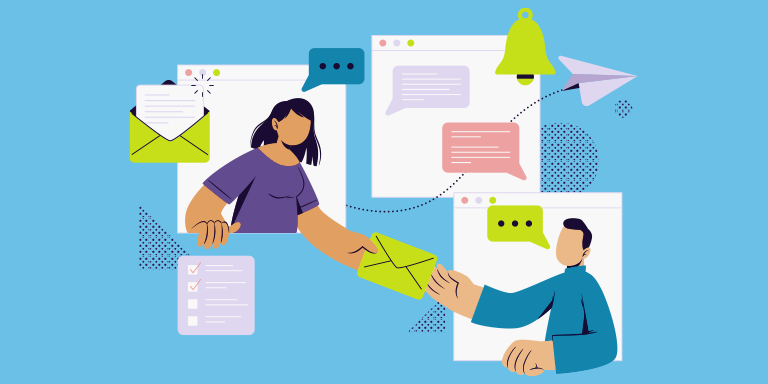
Human beings are biologically wired to notice patterns and respond to environmental feedback. When a consumer receives an email that accurately reflects an action they just took—such as a confirmation of product shipment accompanied by a quick-start guide—it signals that the brand is attentive and professional. This immediate recognition lowers psychological resistance and builds foundational trust.
2. Capturing Momentum
After a purchase is made, the psychological connection between the consumer and the brand is at its peak. The customer is actively anticipating the item’s arrival and is mentally invested in their decision. A well-timed follow-up capitalizes on this existing momentum. If a brand misses this critical window, the emotional connection fades rapidly, making subsequent re-engagement much harder.
3. Mitigating Decision Fatigue
Modern consumers face relentless choices, leading to severe decision fatigue. Traditional marketing forces customers to constantly evaluate whether they want to buy something new. Conversely, a retention-focused, timely email arrives precisely when a decision is already half-made—such as when a consumable product is running low or when a complementary accessory naturally aligns with a previous purchase. The action feels intuitive, seamless, and completely frictionless.
The Critical Moments That Drive Repeat Business
Retention is rarely built on constant, relentless contact. Rather, it is engineered through a handful of micro-moments where timing, relevance, and intent intersect seamlessly.
[First Purchase]
       │
       ▼ (Immediate Window: Reassurance & Guidance)
[The Quiet Period]
       │
       ▼ (Behavioral Trigger: Education & Value)
[The Re-Entry Point]
       │
       ▼ (Intuitive Timing: Natural Repurchase / Next Step)
[Second Purchase / Long-Term Loyalty]
1. The Post-Purchase Window
The moments immediately following a first purchase are the most critical in a customer’s lifecycle. While the excitement of the transaction is high, subtle buyer’s remorse can quickly creep in.
- The Strategy: Deploy a confirmation and confidence-building sequence. Rather than immediately pitching a second product, focus on setting clear shipping expectations, offering expert usage tips, and validating their purchasing decision.
2. The Mid-Lifecycle "Quiet Period"
Many brands make the fatal mistake of going entirely silent between a customer’s first order and their next intended purchase, only to panic and blast a 50% off discount code three months later.
- The Strategy: Fill the quiet period with value-driven touchpoints. Send educational content, community highlights, or advanced tips that help the customer extract maximum value from their initial buy. This keeps the brand warm without devaluing the product through constant discounting.
3. The Natural Re-Entry Point
Every product has a natural lifecycle. Whether it is a skincare serum that depletes every 45 days or a fitness program that transitions from beginner to intermediate after six weeks, customer behavior dictates when they are ready to return.
- The Strategy: Program behavior- or time-triggered alerts that align with these natural intervals. When an email arrives just as a product is running low, it feels like an intuitive service rather than a desperate sales pitch.
Implications for Modern Founders and E-Commerce Marketers
The shift from broadcast volume to precision timing carries profound strategic implications for business leaders navigating the current digital economy.
Protection of Margins
Brands that rely on constant promotional blasts often trap themselves in a race to the bottom, training their customer base to buy only when items are discounted. Timely, content-rich retention emails shift the focus away from price cuts and back onto product utility, preserving healthy profit margins.
Operational Efficiency
As highlighted by industry data, generating over a third of email revenue from a mere 2% volume share means marketing teams can achieve superior financial results with a fraction of the writing and design workload. Time saved on manual campaign creation can be redirected toward product development, customer service, and high-level brand strategy.
Future-Proofing Against Privacy Regulations
With tightening cookie restrictions, rising acquisition costs on paid ad networks, and evolving data privacy regulations (such as GDPR and CCPA), owned channels like email have never been more valuable. Brands that master behavioral triggers own a proprietary data loop that insulates them from external ad-platform volatility.
Conclusion: Redefining Customer Loyalty
Ultimately, customers do not return to a brand because they receive more emails; they return because the right message arrives at the exact right moment.
When digital touchpoints are synchronized with genuine human behavior rather than arbitrary marketing calendars, email ceases to feel like an intrusion and transforms into an essential component of the customer experience. This seamless integration is what cultivates authentic trust, brand familiarity, and sustainable long-term loyalty.
For founders and marketers looking to operationalize these frameworks without scaling their manual workloads, platforms like Omnisend provide the necessary infrastructure. Featuring behavior-based automations, dynamic personalization, and built-in social proof tools, Omnisend equips brands to capture critical lifecycle moments and convert them into predictable repeat revenue.
Special Offer: Readers looking to upgrade their retention architecture can access an exclusive partnership offer—50% off your first 3 months on Omnisend by applying the code FOUNDR50 at checkout.