SAN FRANCISCO — Over a decade of building, scaling, and observing the B2B software ecosystem through the SaaStr Annual and its various global and digital events, a fascinating and persistent marketing paradox has come to light.
Imagine two fiercely competitive SaaS companies. Their products are virtually indistinguishable in features, pricing, and market positioning. They sign up for the exact same sponsorship tier at the SaaStr Annual, secure identically sized booths next to one another on the expo floor, or invest the same capital into targeted podcast and newsletter ad campaigns.
Yet, when the dust settles, the divergence in outcomes defies conventional logic. Company A walks away overwhelmed by a deluge of high-intent leads, struggling to book follow-up calls fast enough to keep pace with demand. Meanwhile, Company B packs up its booth early, convinced that modern trade shows are an expensive relic of the past that generated zero tangible pipeline.
How can two identical businesses, utilizing the exact same marketing channels under identical market conditions, experience radically polar opposite realities?
According to SaaStr founder and CEO Jason Lemkin, the answer has little to do with the medium itself and everything to do with the invisible human variable driving it: your Vice President of Marketing.
Main Facts: The Field Marketing Divide
The core revelation challenging modern B2B marketing assumptions is simple yet profound—field marketing and live events do work, often yielding magical returns, but only if the organization deploying them possesses deep, specialized operational expertise in execution.
To illustrate this phenomenon, Lemkin points to real-world outcomes observed directly at SaaStr’s flagship events. Following a recent European summit, one enterprise software competitor successfully leveraged the gathering to close an astonishing $700,000 in new revenue within a single week. Concurrently, a direct competitor with a nearly identical market offering, operating in the same ecosystem and attending the same venue, closed $0.
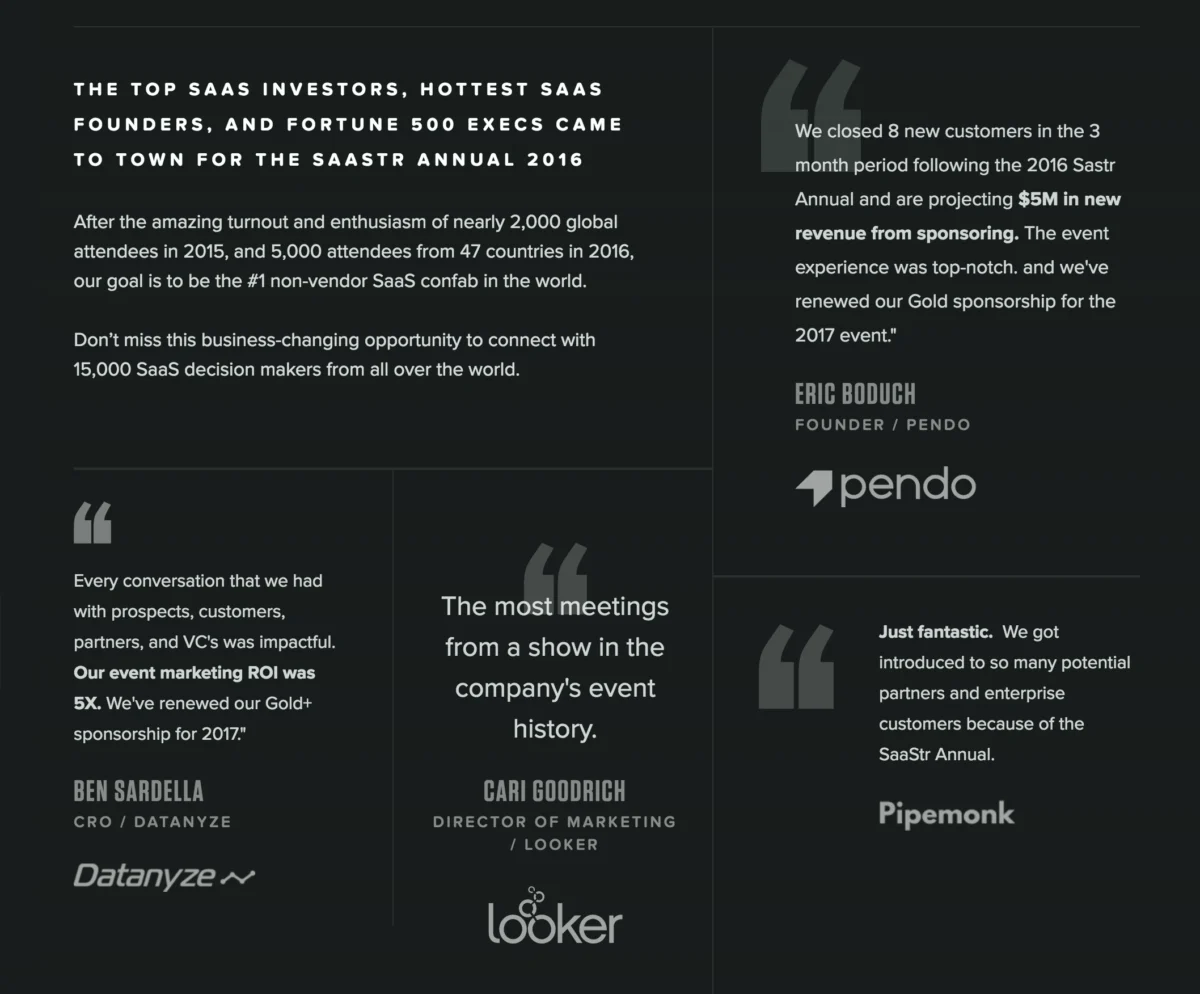
Industry heavyweights such as Brex, Looker, IBM, Hook, and Stripe—alongside numerous emerging SaaS category leaders—have consistently reported that physical trade shows and high-touch community events perform as well as, or better than, any other acquisition channel in their arsenal. Conversely, a vocal cohort of equally sophisticated companies routinely dismiss these exact same platforms, claiming abysmal return on investment (ROI).
The dividing line between these two groups is not product-market fit. It is not budget size. It is the tactical execution driven entirely by the marketing leadership team on the ground.
Chronology of an Evolution: How B2B Marketing Lost Its Focus
To understand how companies drifted into expecting universal competence from a single marketing leader, it is helpful to look back at the historical evolution of the Chief Marketing Officer (CMO) and VP of Marketing roles over the past twenty years.
The Era of the Generalist (Pre-2010s)
In the early days of cloud software, the marketing playbook was relatively narrow. Companies hired a VP of Marketing primarily to handle corporate positioning, manage product launches, and generate basic collateral for the sales team. Marketing was viewed largely as a supportive function to sales, rather than a primary revenue engine.
The Rise of Growth Hacking and Demand Gen (2010–2020)
As the SaaS market saturated, specialized disciplines exploded. Digital acquisition channels—Google Ads, SEO, paid social, and inbound funnel optimization—took center stage. Companies began demanding that their marketing leaders be fluent in data analytics, attribution models, and technical automation stacks.
The Modern Dilemma: The "Do-It-All" Expectation (Present Day)
Today, the modern VP of Marketing is routinely handed an impossibly broad job description. Founders and executive teams expect a single individual to act as a master storyteller, a brand visionary, a top-of-funnel SEO wizard, a public relations expert, a digital advertising strategist, and a master of high-touch field marketing and experiential events.
This chronological shift has created systemic organizational friction. Because the modern marketing landscape is impossibly vast, executives frequently hire leaders with a specific background—say, pure digital demand generation—and then express frustration when those same leaders struggle to execute a high-touch, relationship-driven steak-dinner dinner series or a massive trade show booth strategy.
Supporting Data: The Anatomy of Event ROI
The debate over event marketing versus digital channels is frequently fueled by surface-level metrics rather than execution audits. Industry benchmarks and anecdotal evidence from major tech conferences highlight a distinct behavioral pattern among successful event marketers:
- The Preparation Window: High-performing marketing teams begin orchestrating trade show pipelines 60 to 90 days prior to the event doors opening, utilizing targeted account-based marketing (ABM) campaigns to pre-book executive meetings.
- The "Show Up" Trap: Low-performing teams treat events like digital landing pages—they build a booth, show up, sit behind a counter, and wait for foot traffic to organically materialize.
- The High-Touch Multiplier: Companies that excel at field marketing integrate live events with exclusive, intimate off-site gatherings (such as VIP dinners and executive roundtables), driving conversion rates that routinely eclipse standard digital inbound leads by an order of magnitude.
When evaluated through this data-driven lens, the $700,000 post-event revenue spike is not an anomaly; it is the predictable byproduct of a specialized operational playbook executed by a leader who treats field marketing as a core competency rather than an afterthought.
Official Perspectives and Industry Insights
Reflecting on these dynamics, industry leaders emphasize the necessity of aligning organizational expectations with the authentic strengths of executive leadership.
"Field marketing like events do work. They are magical. But only if you are great at them," Lemkin stated in a widely discussed industry post. "At SaaStr itself, I saw one competitor close $700k in revenue the week after our European event. And a very similar competitor close $0."
The core takeaway from years of working with thousands of SaaS founders is that marketing leaders cannot—and should not be expected to—excel at every single functional sub-discipline simultaneously.
Whether a company’s DNA leans heavily toward Demand Generation, Brand Storytelling, Content SEO, or Field Operations, the leadership hire must possess a clear, undeniable superpower in at least one of these primary areas.
Implications for SaaS Founders and CEOs
For founders, CEOs, and executive recruiters, these insights carry profound strategic implications for how marketing organizations are structured, managed, and evaluated.
1. Hire for Your Number One Priority
When recruiting a VP of Marketing, executive teams must resist the temptation to look for a mythical unicorn who is world-class at brand, PR, demand gen, SEO, and field events. Instead, identify the primary channel through which your company’s next stage of growth must be unlocked. If your product requires enterprise-level relationship building, hire a leader with deep field and event marketing expertise. If your growth relies on high-velocity inbound traffic, prioritize a top-of-the-funnel demand generation expert.
2. Tailor Key Performance Indicators (KPIs) to Strength
While a VP of Marketing must ultimately take holistic ownership of the department’s output, anchoring their primary performance metrics to an area where they lack experience is a recipe for organizational failure. If your marketing leader’s background is rooted in digital content creation, holding them accountable for immediate, flawless trade show execution will yield mediocre results at best.
3. Build Complementary Support Systems
Recognize that no single executive is an island. If you hire a brand-and-content visionary to lead your marketing team, ensure they are supported by tactically skilled managers or specialized agencies who can execute the day-to-day mechanics of channels outside the VP’s core competency.
4. Banish the "Show Up" Mentality
Ultimately, the margin between marketing success and failure lies in the depth of execution. Whether deploying a podcast ad campaign, launching a newsletter sponsorship, or designing an experiential booth at a major tech conference, passive participation yields zero returns. Success belongs exclusively to those who master the craft.
By matching marketing expectations to the genuine, lived expertise of your VP of Marketing, organizations can eliminate recurring executive frustration, unlock predictable revenue streams, and finally solve the enduring mystery of the marketing paradox.