By TechCrunch Staff
September 20, 2026
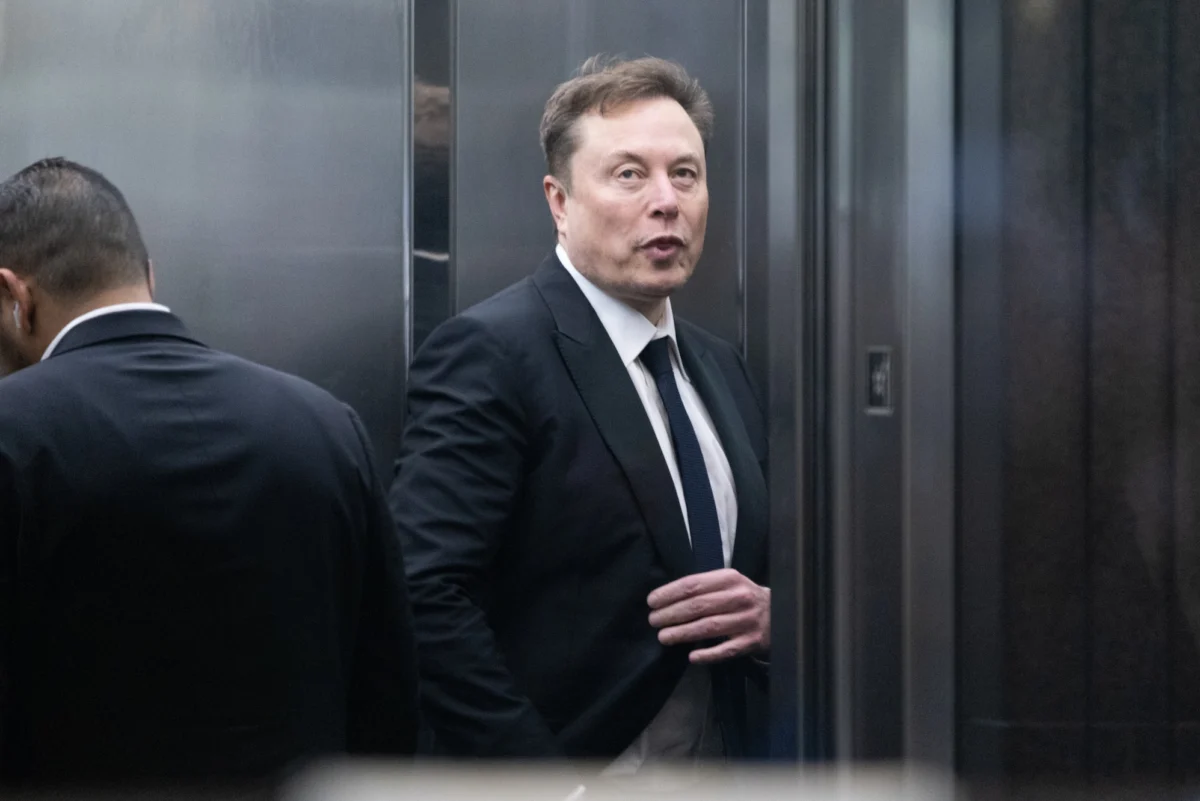
Elon Musk has once again turned his attention to the promise of high-speed underground transit. In a series of posts on X (formerly Twitter) this past weekend, the billionaire entrepreneur claimed that his infrastructure firm, The Boring Company, is actively working on a "simple precursor Hyperloop" designed to connect Austin and San Antonio. The ambitious project, if realized, promises to slash the travel time between the two burgeoning Texas cities to under 30 minutes, effectively collapsing the distance that currently plagues commuters on the heavily congested Interstate 35 corridor.
While the proposal has generated significant buzz, it arrives at a time when the tech industry is increasingly grappling with the intersection of visionary ambition and practical reality. As The Boring Company attempts to transition from niche transit loops to regional infrastructure, the project faces a mountain of regulatory, technical, and historical hurdles.
The Vision: A Texas-Sized Transit Corridor
The announcement originated from a somewhat unlikely source: a reply to an AI-generated video. The video, which depicted a futuristic, science-fiction aesthetic of human colonies on distant planets, served as a catalyst for Musk to outline his terrestrial goals. Upon re-posting the video with the declaration, "This is the future we shall bring into being," Musk pivoted to the immediate prospect of the Texas transit link.
The Boring Company’s official account quickly echoed the sentiment, stating that it "would be excited and honored to build this massive infrastructure project." This alignment between the company’s leadership and its public relations arm suggests a coordinated effort to reignite interest in the Hyperloop concept—a technology that has remained largely in the conceptual or experimental phase for over a decade.
For residents of the Austin-San Antonio corridor, the prospect of a 30-minute transit link is undeniably attractive. The region is one of the fastest-growing in the United States, and the I-35 highway is notoriously gridlocked. A high-speed, subterranean system could theoretically bypass surface traffic, offering a transformative solution to the region’s mounting mobility crisis.
A History of "Bored" Ambitions: Chronology of Promises
To understand the weight of Musk’s latest announcement, one must look at the checkered history of The Boring Company’s previous endeavors. The company was founded in 2016 with the stated mission of solving urban traffic through multi-level tunnel networks. However, the gap between initial announcements and completed infrastructure remains a primary point of contention for critics.
2017–2019: The Early Years of Hype
The Boring Company initially captured the public imagination with plans for expansive networks in Los Angeles and a high-profile proposal for a tunnel system connecting Chicago O’Hare Airport to the city’s downtown. Both projects were met with significant fanfare, only to be quietly shelved or indefinitely delayed as the company struggled with the complexities of urban tunneling.
2020–2023: The Pivot to "Loop"
Following the cooling of interest in the Chicago and D.C. projects, the company shifted its focus toward the "Las Vegas Loop." This project, which combines underground tunnels with surface-level electric vehicle transport, has become the company’s flagship operation. While it provides a functional service for convention-goers, it is a far cry from the high-speed, vacuum-sealed Hyperloop pods once promised.
2026: The Capital Injection
In September 2026, just days before the announcement of the Texas project, The Boring Company secured a massive $3 billion funding round led by investors from the United Arab Emirates. This infusion of capital provides the firm with the necessary runway to pursue more capital-intensive projects, potentially providing the financial backbone required to attempt an undertaking as complex as a Texas-spanning tunnel.
Supporting Data: The Economics of Subterranean Transit
The cost of tunneling remains the most significant barrier to entry for any high-speed transit project. Traditional tunneling methods, such as those used in municipal subway construction, often cost billions of dollars per mile. The Boring Company has historically claimed that its proprietary tunneling machines (TBMs) can reduce these costs by an order of magnitude.
However, industry experts remain skeptical. The $3 billion in recent funding, while significant, is widely viewed as a mere "down payment" for a project of the scale required for a Texas Hyperloop. A project connecting Austin and San Antonio spans approximately 80 miles. Even with drastic cost-cutting measures, the price tag for such an endeavor would likely reach into the tens of billions, necessitating public-private partnerships, state subsidies, and significant political maneuvering.

Moreover, the "precursor Hyperloop" terminology used by Musk is telling. It suggests a scaled-back version of the original vacuum-tube concept—likely an electric-powered, high-speed tunnel system similar to the Las Vegas Loop, rather than a true maglev-based, low-pressure tube system. By lowering the technical bar, the company may be attempting to move the project from the realm of science fiction into the realm of viable engineering.
Official Responses and Political Implications
The political climate in Texas is historically favorable toward private infrastructure projects. However, the sheer scale of an Austin-San Antonio tunnel would require extensive coordination with the Texas Department of Transportation (TxDOT) and local municipalities.
To date, neither the office of the Governor of Texas nor local municipal leaders in Austin or San Antonio have released formal statements regarding a partnership with The Boring Company. This silence is telling; in the past, municipal governments have been burned by "visionary" tech projects that failed to deliver promised benefits. The burden of proof now rests entirely on The Boring Company to present a concrete, feasibility-tested plan that goes beyond a series of social media posts.
The "Bad Reader" Problem: A Philosophical Critique
The announcement has triggered a wider cultural debate about the influence of tech CEOs on the future of urban design. The reliance on science-fiction tropes to drive massive real-world infrastructure projects has drawn sharp criticism from historians and urban planners.
Jill Lepore, a historian who has studied the ideological underpinnings of the tech industry, has noted that leaders like Musk often seem to draw their inspiration from "pulp science fiction" that contradicts their own political frameworks. The critique is that these figures view the world through a lens of technological determinism—where any problem can be "solved" by throwing enough engineering power at it, regardless of social, economic, or regulatory realities.
"They are bad readers," Lepore suggested in a recent interview. "They take the aesthetics of the future—the flying cars, the vacuum tubes, the Martian colonies—and try to force them into a present that is not yet ready for them, ignoring the complex, messy, and necessary work of civic governance."
Implications: The Future of Mobility or Another Tech Mirage?
As the dust settles on the announcement, the implications are two-fold.
First, from a technological standpoint, if The Boring Company can successfully deliver a functional high-speed corridor between Austin and San Antonio, it would represent a historic leap in civil engineering. It would prove that the "Boring" approach to tunneling is more than just a marketing gimmick and that private enterprise can solve large-scale transit challenges where government-led initiatives have stalled.
Second, from a societal standpoint, the project highlights the increasing trend of "CEO-driven infrastructure." When major transit decisions are made via social media announcements, it creates a lack of accountability and public discourse. The public is left to guess whether these projects are genuine efforts to improve the common good or simply tools for stock valuation and brand maintenance.
Ultimately, the Austin-San Antonio Hyperloop project stands at a crossroads. It has the capital, the brand recognition, and the audacity to succeed. Yet, it also carries the weight of a decade of broken promises. As the industry watches closely, the question is no longer whether Elon Musk can build a tunnel, but whether he can build a bridge between the world of science fiction and the reality of 21st-century urban life.
Until the first spade hits the dirt in Texas, the project remains, for now, exactly what it was when it was first teased: an intriguing, ambitious, and highly uncertain vision of a future yet to come.