The landscape of website globalization has undergone a seismic shift. Once viewed as an enterprise-grade luxury requiring substantial financial investment, meticulous human project management, and painstaking manual data entry, multilingual WordPress sites are now accessible to independent bloggers, small business owners, and large digital agencies alike.
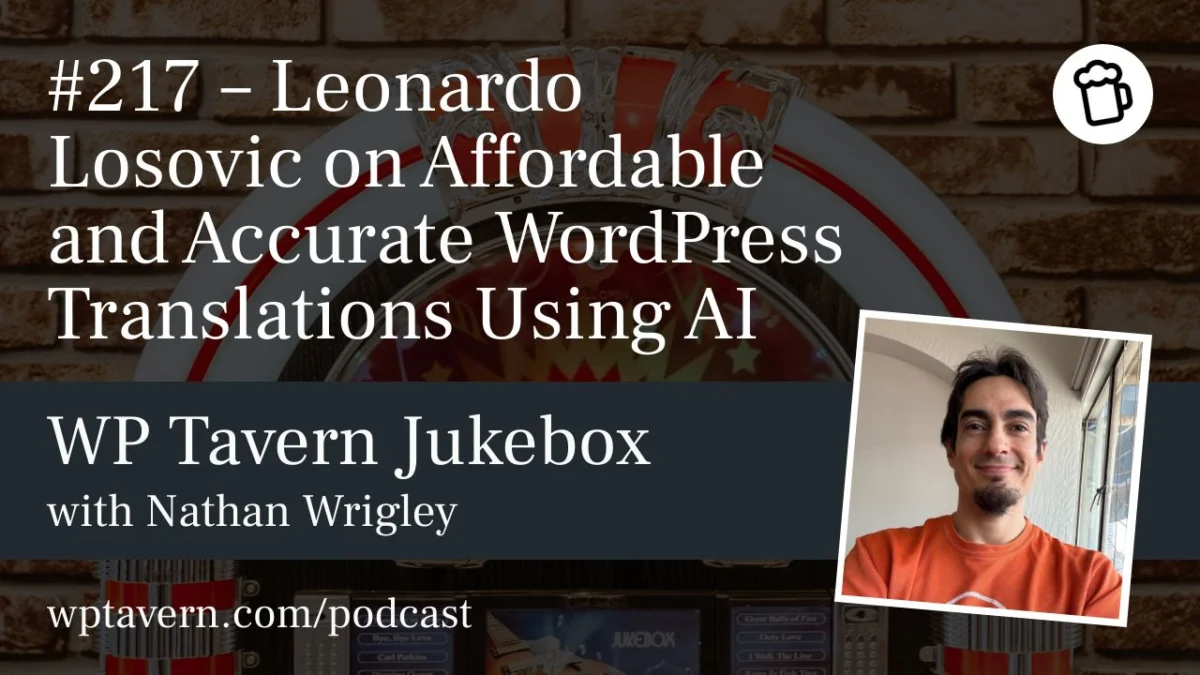
In a recent episode of the Jukebox podcast from WP Tavern, host Nathan Wrigley sat down with Leonardo Losoviz, a seasoned WordPress developer and the creator of Gato AI Translations for Polylang. The discussion unpacked the massive evolution of translation workflows, exploring how artificial intelligence has democratized the process of reaching international audiences while introducing new strategic challenges for digital creators.
Main Facts: The Intersection of AI and Multilingual Content
The core development driving this transformation is the integration of large language models (LLMs) into traditional content management workflows. Historically, translating a WordPress site from a primary language like English into secondary markets such as German, Spanish, or Japanese involved a multi-step bottleneck:
- Identifying and exporting translatable strings.
- Contracting professional translators at high hourly rates (often ranging from $50 to $100+ per hour).
- Waiting days or weeks for manual delivery.
- Manually re-integrating the translated text into the CMS without breaking formatting or meta tags.
Today, leveraging AI providers such as OpenAI, Anthropic, and Gemini has reduced these costs to mere cents per post—measured in token usage—while maintaining an exceptionally high baseline of accuracy.
Losoviz, who has developed WordPress plugins since 2012, shifted his focus from developer-centric tools like Gato GraphQL to user-facing solutions. His flagship translation tool acts as an automated wrapper for the popular Polylang plugin, enabling site administrators to translate entire articles, metadata, and tags across multiple languages with a single click from the WordPress post list dashboard.
Chronology of Translation Technology in WordPress
The Pre-AI Era: Manual and Cost-Prohibitive Workflows
For over a decade, WordPress translation relied heavily on static string files (.po/.mo), human-managed translation agencies, or early-generation machine translation tools like Google Translate and DeepL. While tools like DeepL offered a step up in machine translation quality, they often struggled with contextual nuances, idiomatic expressions, and specialized industrial terminology. Furthermore, managing the user interface (UI) for sites with four or five active languages created immense database clutter and administrative overhead.
The Rise of Generative AI (2023–2025)
As generative AI matured, developers began building plugins designed to tap directly into LLM APIs. This eliminated the need for external translation dashboards. Plugins evolved from merely replacing words to understanding the contextual semantic structure of entire blocks, headings, and SEO metadata.
The Horizon: WordPress 7.0 and Collaborative AI (2026 and Beyond)
Looking toward the future, the WordPress ecosystem stands on the precipice of major architectural shifts. Phase Three of the Gutenberg project—focused on collaborative editing (modeled after tools like Google Docs)—introduces real-time communication infrastructures within the post editor.
As Losoviz noted during his WordCamp Asia presentation, titled "The Invisible Gotchas of WP Translation," this infrastructure will soon stretch beyond human-to-human collaboration. Future workflows will likely feature AI assistants integrated directly into the editor interface, capable of flagging ambiguities, suggesting technical corrections via sticky post-it-style comments, and interacting dynamically with content creators to polish localized pages.
Supporting Data and Technical Architecture
While the financial barrier to entry has plummeted, the underlying technical execution remains a critical consideration for site performance and Search Engine Optimization (SEO).
Database Strategies: Static Duplication vs. Runtime Translation
Different translation plugins approach data architecture in distinct ways:
- Static Post Duplication (e.g., Polylang & Gato AI): When a user triggers a translation, the system generates parallel posts for each target language, complete with dedicated URLs, localized categories, tags, and featured image metadata. This approach ensures maximum page speed, allows for efficient server caching, and ensures that static site generators can export localized pages smoothly.
- Runtime String Translation (e.g., WPML, TranslatePress, Weglot): These solutions maintain a single primary post and dynamically swap out individual strings on the fly as users request different language versions.
Losoviz advocates for the static duplication method paired with Polylang (utilizing the free core version, rendering paid machine translation add-ons unnecessary given the superiority of modern LLMs). This setup allows URLs to be cleanly structured via subdirectories (mysite.com/fr/post-slug) or subdomains (fr.mysite.com), ensuring that Google correctly indexes relationships using hreflang meta tags.
Resource Management and Quality Control
Despite the speed of AI, Losoviz stresses the importance of a strict pre-translation checklist. Creators are advised to finalize the source post completely—fixing typos, adjusting heading hierarchies (H2 to H3), and ensuring alt text is correct—before executing a bulk translation. Running translations prematurely wastes API tokens and multiplies editing efforts across dozens of localized copies.
Official Perspectives and Industry Insights
Reflecting on his talk at WordCamp Asia, Losoviz addressed the psychological hurdle of moving from the abstract intent ("we should translate our site") to a precise operational plan.
While legal compliance mandates multilingual accessibility in specific regions (such as English and French requirements in Canada, or regional language laws across the European Union), the broader commercial argument rests on global market capture.
However, Losoviz offers a sobering reality check regarding the competitive value of translation in the age of AI. When asked whether universal translation drastically boosts business metrics, he remarked:
"Nathan, unfortunately, we’re screwed… Because when it’s so easy, everyone will do it. And when everybody does it, you’re not moving forward. You’re just running just to be on the same spot. If you’re the only one who is translating your site to 20 languages, you will be far ahead from everybody else. But because it’s easy to you, it’s easy to everybody."
Rather than serving as an instant competitive superpower, website translation has evolved into a baseline requirement—an "arms race" where businesses must adopt automated localization simply to keep pace with international rivals and maintain market parity.
Implications for Site Owners and Developers
The convergence of affordable AI translations and upcoming WordPress core features carries profound implications for the digital publishing and development communities:
- Democratization of Global Reach: Small businesses can now compete in foreign-language search results without allocating thousands of dollars to translation agencies.
- Shift in Professional Translation Roles: Human translators are transitioning from bulk translation providers to specialized editors. Their expertise is now deployed selectively—polishing high-stakes technical, legal, or industry-specific terminology where AI confidence scores dip.
- UI/UX Evolution in CMS Design: As WordPress integrates deeper AI capabilities through Phase Three and beyond, the line between content management and conversational AI interaction will continue to blur, transforming the editor into an active co-pilot for multilingual site maintenance.
For WordPress users hesitant to take the multilingual plunge, the technical hurdles have largely evaporated. The remaining challenge is no longer how to translate a website, but how to strategically manage a globally visible digital footprint in an automated world.