As the artificial intelligence arms race accelerates, the infrastructure supporting it has become the most valuable real estate in the digital economy. British "neocloud" firm Nscale is the latest to test the public markets’ fervor for this sector, targeting a $35 billion valuation in an upcoming New York Stock Exchange (NYSE) debut. However, as Nscale prepares to raise $3 billion, its IPO prospectus reveals a precarious business model: a staggering reliance on just two corporate titans for the vast majority of its future revenue.
Main Facts: The Anatomy of a High-Growth Gamble
Nscale’s impending IPO serves as a litmus test for the sustainability of the AI infrastructure boom. Born as a spin-out from the Australian cryptocurrency mining firm Arkon Energy only two years ago, Nscale has rapidly pivoted to become a provider of compute capacity—the lifeblood of modern AI development.
According to its recent IPO filing, Nscale has secured an eye-watering $103 billion in long-term contracts. On the surface, this figure paints a picture of a company with unparalleled demand. However, a deeper audit of the filing reveals that approximately 85% of that valuation is tied to two specific supply agreements: a $43.8 billion deal to supply Microsoft with compute through 2033, and a $44.6 billion agreement with AI research lab Anthropic.
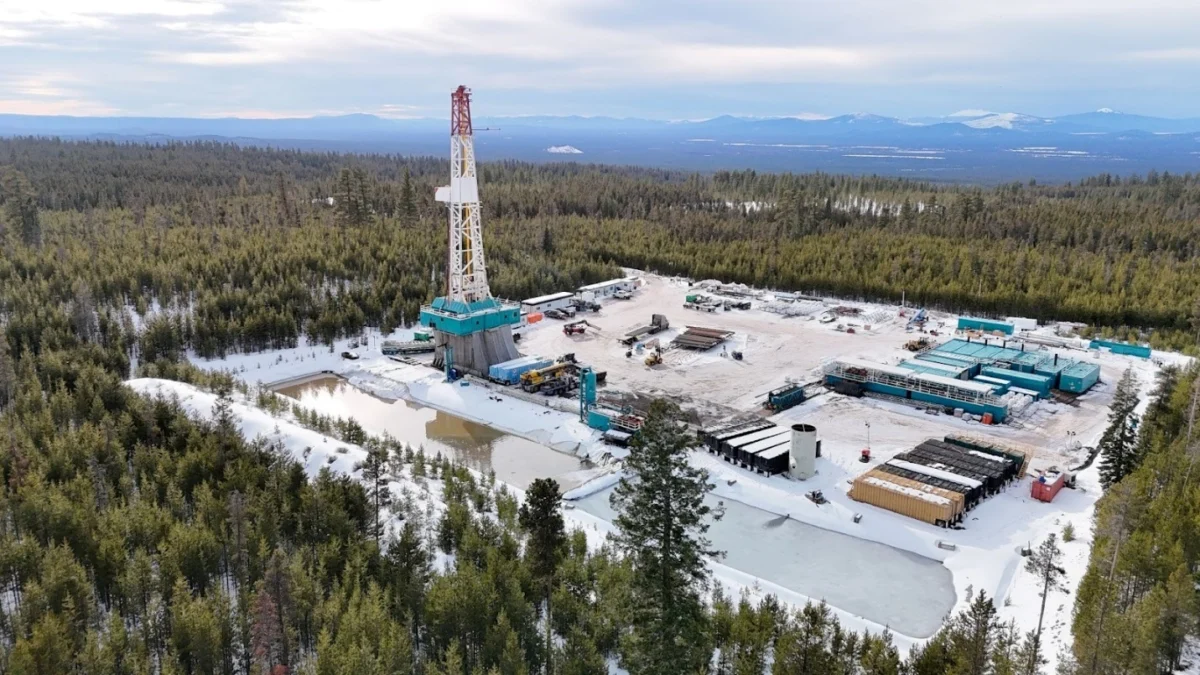
The company, which operates a distributed network of data centers across Norway, Portugal, Texas, and West Virginia, is seeking to raise $3 billion to fund its capital-intensive expansion. With a board of directors that reads like a "who’s who" of Silicon Valley royalty—including former Meta executives Sheryl Sandberg and Nick Clegg, as well as former OpenAI executive Fidji Simo—Nscale is clearly positioned to attract institutional capital. Yet, the financials tell a story of rapid growth paired with deepening volatility. For the six months ending June 30, Nscale reported $140.6 million in revenue, a significant leap from the $10.4 million recorded during the same period the previous year. Simultaneously, net losses ballooned to $1.02 billion, up from $369 million, highlighting the massive upfront costs required to build out GPU-dense data centers.
Chronology: From Crypto-Mining to Cloud Dominance
Nscale’s ascent is emblematic of the "pivot culture" that has defined the post-pandemic tech landscape.
- 2022: Nscale originates as a spin-out from Arkon Energy, an Australian company originally focused on cryptocurrency mining. As the crypto winter set in, the company leveraged its existing power and infrastructure assets to enter the high-demand compute market.
- 2023: The company begins securing its initial rounds of private capital, pivoting entirely away from mining and toward AI-specialized cloud infrastructure.
- Early 2024: Nscale secures a $2 billion Series C funding round, led by Aker ASA and 8090 Industries, valuing the startup at $14.6 billion.
- August 2026: Reports emerge that Nscale is targeting a $3 billion raise in a US-based IPO, aiming for a $35 billion valuation.
- September 2026: Major investor Nvidia, sensing the strategic importance of Nscale’s capacity, agrees to provide $1 billion in convertible debt as part of a larger $3.1 billion financing package, further cementing the symbiotic relationship between hardware providers and infrastructure operators.
Supporting Data: The Interconnected Web of AI Infrastructure
Nscale’s concentration risk is not an anomaly; it is a feature of the current AI ecosystem. A recent analysis by credit hedge fund Sona Asset Management, as cited by the Financial Times, highlights an industry-wide trend of extreme interdependence.
The "infrastructure daisy chain" is becoming increasingly complex. For example:
- CoreWeave: A direct competitor to Nscale, CoreWeave reportedly derives 67% of its revenue from a single client: Microsoft.
- Applied Digital: This data center builder relies on Oracle for 67% of its revenue, with an additional 30% stemming from its relationship with CoreWeave.
This creates a structural vulnerability. If a major player like Microsoft decides to shift its strategy—either by building its own in-house infrastructure, diversifying its supplier base, or curbing its AI spending—the ripple effects would be catastrophic for these specialized providers. As Sona Asset Management noted, while this interconnectedness fosters rapid growth during a boom, it means that a single strategic pivot by one of the "hyperscalers" (Microsoft, Google, Amazon) can trigger a cascading failure across the entire infrastructure sector.
Official Responses and Strategic Disclosures
The risks associated with Nscale’s business model are explicitly detailed in their own filings. The agreement with Anthropic is particularly precarious; it is contingent upon Nscale securing ongoing financing and hitting milestones that the company itself describes in its filing as "stringent." Anthropic retains the right to walk away or cancel the deal entirely if these benchmarks are not met, placing Nscale’s future revenue in the hands of its client’s satisfaction.
While Nscale has not issued a public statement regarding the concentration risk beyond its legal disclosures, its recent $3.1 billion financing round—backed by industry titan Nvidia—suggests that large players are currently incentivized to keep these providers afloat to ensure a steady supply of compute. Nvidia, which holds a near-monopoly on the high-end H100 and Blackwell chips needed for AI, has a vested interest in the success of Nscale, as the startup serves as a critical conduit for the deployment of Nvidia hardware.
Implications: Can the Market Sustain the Risk?
As Nscale heads toward the NYSE, it faces a market that is increasingly skeptical of "growth at all costs." The company is entering a competitive landscape that includes heavyweights like Nebius, Lambda, and Crusoe—the latter of which recently raised $3.9 billion at a $30.9 billion valuation.
The implications for the broader tech market are threefold:
- The "Single-Point-of-Failure" Risk: The reliance on Microsoft and Anthropic means Nscale is effectively a "captive" supplier. If these companies reduce their compute requirements, Nscale’s primary revenue stream could vanish overnight. Investors will have to weigh whether the $35 billion valuation accounts for the potential for contract renegotiation or termination.
- Capital Intensity: The jump in net losses from $369 million to over $1 billion shows that the cost of scaling AI infrastructure is enormous. For Nscale to remain viable, it must constantly raise capital or achieve significant economies of scale—both of which are difficult to maintain in a fluctuating interest rate environment.
- The Infrastructure Arms Race: The fact that Crusoe, CoreWeave, and Nscale are all raising multi-billion dollar rounds simultaneously suggests that we may be heading toward an "infrastructure bubble." If the supply of compute outstrips the actual demand for AI applications, the prices for cloud services could crater, leaving infrastructure providers with billions of dollars in debt and depreciating hardware.
Conclusion: A Test of Investor Discipline
Nscale’s IPO will provide a definitive answer to a lingering question: Are public market investors willing to treat AI infrastructure providers as stable utility companies, or do they see them as high-risk, high-reward growth bets?
The presence of heavyweights like Sheryl Sandberg and Nick Clegg on the board provides a veneer of corporate stability, but the underlying metrics tell a story of extreme concentration and heavy debt. For Nscale, the path forward requires not just building more data centers, but diversifying its client base to ensure that the $103 billion in contracts is not merely a hypothetical projection, but a bedrock of sustainable revenue.
As the company prepares for its debut on the NYSE, investors will be looking closely at the fine print. In the world of AI, speed is the currency of the realm, but for Nscale, the next few years will require something much more difficult: stability in the face of a rapidly shifting, and deeply codependent, technological landscape. Whether the company can mature from a crypto-spinout into a pillar of the AI age depends entirely on its ability to transcend its dependence on two of the world’s most powerful, and fickle, tech giants.