The landscape of independent publishing has undergone a seismic shift. For over a decade, the formula for digital publishing success appeared deceptively simple: target high-volume keywords, optimize for search engines, scale up content production, and monetize the resulting wave of eyeballs through programmatic display ads and affiliate links.
However, the rapid evolution of search engine algorithms—accelerated heavily by the introduction of generative artificial intelligence, zero-click search features, and AI Overviews—has fundamentally disrupted this model.
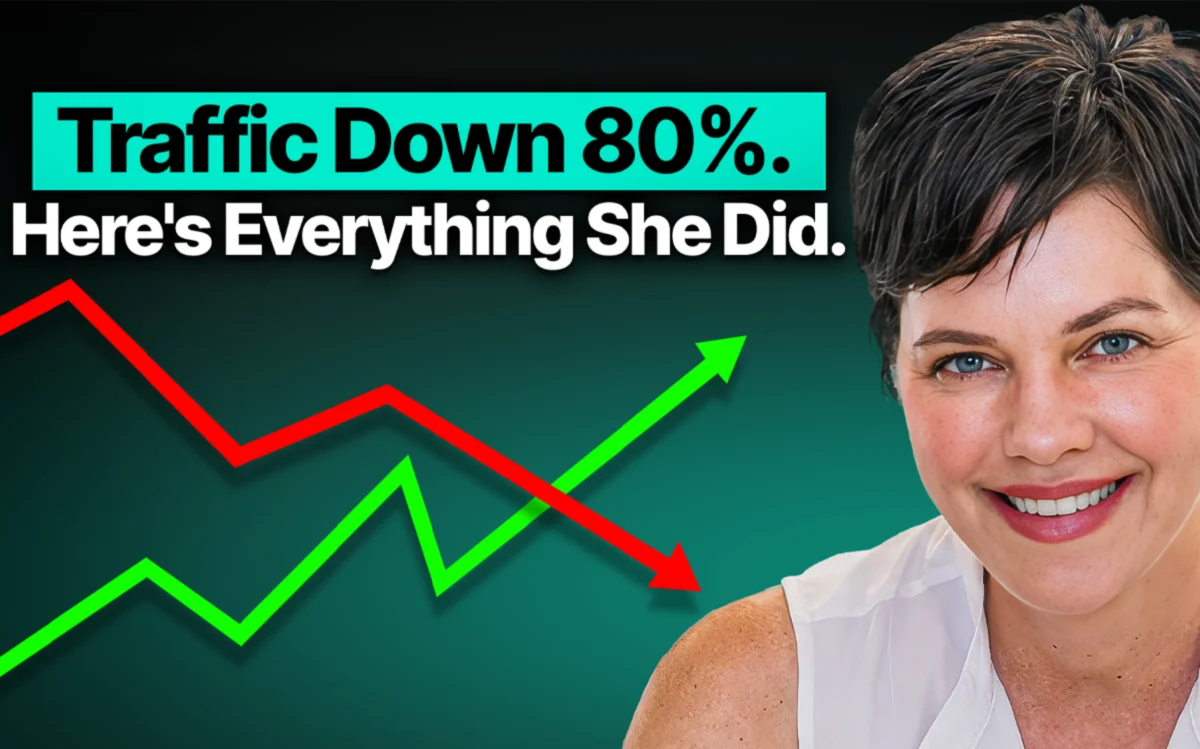
Nowhere has this disruption been felt more acutely than in the niche food-blogging community. A stark case study of this new reality comes from a recent episode of the Niche Pursuits podcast, featuring Carrie Forrest, the creator behind the popular healthy-living site Clean Eating Kitchen. Forrest offered an unvarnished look at how her once-thriving content empire weathered an 80% plunge in organic traffic, shedding light on the hard choices publishers must make to survive in a post-search-monopoly era.
Main Facts: The Anatomy of a Digital Downscaling
Forrest’s journey encapsulates the boom-and-bust cycle of modern search-engine optimization (SEO). Launching her platform out of a personal health recovery journey, Forrest eventually formalized her expertise by earning a master’s degree in public health and becoming a nutritionist. Her site grew steadily, riding the crest of Google’s algorithmic preference for authoritative, expert-driven health content.
At its peak, Clean Eating Kitchen was generating nearly 1 million page views per month. This high volume of traffic fueled a lucrative business model, yielding between $20,000 and $30,000 monthly in ad revenue alone, complemented by robust affiliate marketing commissions.
Today, those metrics look vastly different. Following successive waves of Google algorithm updates and the integration of AI-driven search results, Forrest’s monthly page views have fallen by approximately 80%, landing closer to 200,000. Because roughly 90% of her historical revenue was tied directly to programmatic ad networks like Mediavine, her income dropped in near-lockstep with her traffic, reducing her ad earnings to between $4,000 and $5,000 a month. Amazon affiliate earnings, once a reliable secondary income stream, have similarly dwindled to a fraction of their former totals.
Despite these stark reductions, Forrest remains a full-time digital publisher. However, the business supporting her is vastly leaner, more intentional, and fundamentally restructured away from reliance on organic search.
Chronology: From the SEO Gold Rush to the AI Correction
2009–2020: The Rise of the Search-Driven Empire
Forrest’s entry into blogging began long before the current algorithmic turbulence. Armed with her public health background, she capitalized on steady keyword research, consistent publishing schedules, and the accumulation of domain authority. During this era, search engines reliably rewarded comprehensive, keyword-matched content.
If search volume data indicated high interest in a specific query—even one tangentially related to her core brand, such as informational posts about "yellow fruits"—producing optimized content practically guaranteed a spot on the first page of search engine results pages (SERPs). This visibility translated immediately into traffic, ad impressions, and affiliate clicks.
2021–2023: The Illusion of Scaling and Tactical Shifts
At her apex, Forrest operated a heavy publishing machine. To maintain velocity, she scaled up operations significantly, employing approximately 13 subcontractors and publishing or republishing roughly 350 blog posts annually.

During this timeframe, publishers also chased emerging platform features designed to capture algorithmic favor. Forrest experimented heavily with Google Web Stories, a visual, tap-through format that briefly served as a massive traffic firehose. For roughly two to three years, Web Stories drove hundreds of thousands of page views per month to her properties.
2023–Present: The Algorithmic Cliff and the Pivot
The ground shifted dramatically around 2023. Google Web Stories largely vanished from prominent search placement, prompting Forrest to eventually implement noindex tags on those pages. Concurrently, broader algorithm updates and the introduction of AI Overviews siphoned away organic click opportunities, directly competing with independent publishers for user attention.
Faced with an 80% traffic contraction, Forrest abandoned her high-volume outsourcing model. She slashed expenses, let go of her team of subcontractors, and pivoted away from mass-produced, keyword-driven articles. Today, she writes her own content, reducing her annual output to around 50 focused posts and shifting her operational philosophy toward direct audience retention.
Supporting Data: The Changing Metrics of Digital Publishing
The financial and operational metrics shared during the podcast highlight the stark contrast between the peak SEO era and the current landscape:
- Traffic Contraction: Monthly page views dropped from a peak of nearly 1,000,000 down to approximately 200,000.
- Ad Revenue Shift: Mediavine display ad earnings fell from $20,000 – $30,000 per month to $4,000 – $5,000 per month.
- Operational Scale: The business downsized from employing 13 subcontractors publishing 350 posts a year to a solo operation publishing roughly 50 posts a year.
- Monetization Experiments: Paid workshops priced at $10 to $20 typically drew only 20 to 30 participants, yielding sub-optimal returns relative to the time investment required for preparation and delivery. "Buy me a coffee" tip jars brought in less than $100 over a full year, proving ineffective as a primary revenue line.
Tactical Evaluations: What Failed and What Survived
Forrest’s candid assessment of her monetization experiments provides a roadmap of strategies that failed to bridge the income gap, alongside alternative channels showing renewed promise.
Failed or Underperforming Tactics
- Low-Cost Workshops: While interactive workshops generated nominal sales, the time-intensive nature of preparation, marketing, and delivery made $10–$20 ticket prices economically unviable for replacing thousands of dollars in passive ad revenue.
- Tip Jars: Micro-donation setups failed to gain traction, reinforcing the reality that passive audiences rarely contribute voluntary financial support without a clear, high-value exchange.
- AI-Generated Video: Despite testing impressive AI video creation tools following professional workshops, audience response was tepid. The automated formats felt inauthentic, failing to foster the genuine personal connection vital to her brand.
- Generic SEO Content: Broad, top-of-funnel keyword articles (such as generalized ingredient profiles) brought in traffic but failed to build loyal readership, accelerating her decision to abandon high-volume search-chasing.
Surviving and Thriving Channels
- Email Marketing as a Core Pillar: Having built her email list since 2014, Forrest now treats it as her most vital asset. Email bypasses algorithmic gatekeepers entirely, offering a direct, reliable line of communication to dedicated readers. She utilizes it not just for broadcasting new recipes, but for resurfacing evergreen content, promoting digital products, and integrating contextually relevant affiliate links.
- Private Affiliate Partnerships: Moving beyond low-commission standard programs like Amazon Associates, Forrest has pursued direct partnerships with specialized brands. These direct relationships offer commission rates of 20% or higher, significantly increasing the yield per transaction despite lower overall traffic volumes.
- Strategic Short-Form Video: Rather than abandoning video, Forrest has integrated short-form clips (via Instagram and YouTube Shorts) directly into her content workflow. By tying a short video to a specific recipe, she leverages platform-native discovery while subtly boosting overall brand visibility and contextual authority.
Implications for the Future of Independent Publishing
The experiences shared by Carrie Forrest serve as a cautionary tale and a strategic blueprint for the broader digital publishing industry. For over a decade, the barrier to entry for content creation was low, and the rewards for mastering search engine algorithms were exceptionally high.
However, the dominance of AI-generated summaries and zero-click search features means that informational queries are increasingly answered directly on the search engine results page, starving independent creators of the ad impressions they once relied upon.
The primary takeaway is that the traditional, search-only business model can no longer be treated as a secure foundation. Publishers who survive the ongoing algorithmic transition are those shifting away from mass-volume content farms toward community-centric models. Trust, brand authenticity, direct audience ownership through email, and specialized, high-margin partnerships are rapidly replacing programmatic display ads as the bedrock of sustainable digital businesses.
While the numbers associated with modern publishing may be smaller, Forrest’s trajectory demonstrates that a site can retain considerable economic viability after a major drop—provided the publisher adapts by trading reliance on search algorithms for direct, unmediated connections with their core audience.