SAN FRANCISCO — In the high-stakes ecosystem of Software-as-a-Service (SaaS) startups, few operational questions generate as much internal debate as public pricing. Founders and revenue leaders continually grapple with a foundational dilemma: Should the cost of the software be laid bare for competitors and prospects to see, or should it remain veiled behind a mandatory "Contact Sales" button?
According to insights from industry-leading community and venture platform SaaStr, the definitive answer for early-stage companies is a resounding yes. However, as organizations scale, move upmarket, and tackle complex enterprise sales, that calculus shifts dramatically. Understanding when to reveal your pricing—and when to obscure it—can be the difference between hyper-growth and stalled momentum.
Main Facts: The Core Dilemma of SaaS Pricing
The debate over pricing transparency boils down to a classic startup trade-off: velocity versus monetization.
At its core, publishing pricing on a website removes immediate friction from the buyer’s journey. In a modern digital economy where self-serve adoption is increasingly the gold standard, prospective buyers expect immediate answers. When a pricing page is missing, it creates an unnecessary barrier, often prompting potential customers to bounce to a competitor whose costs are clear.
However, transparent pricing introduces its own set of strategic compromises. Standardized pricing tables almost always leave money on the table, particularly when dealing with larger, more complex accounts. When a SaaS vendor locks themselves into a public matrix, they forfeit the flexibility to capture maximum willingness-to-pay from well-capitalized buyers. Furthermore, for solutions that span multiple departments or require custom integrations, a static pricing table can oversimplify—and ultimately misrepresent—the true value of the technology.
The Two Schools of Thought
- The Transparency Advocates: Best suited for early-stage startups, self-serve models, and lower-to-mid-market products. The goal is to reduce sales friction, build immediate trust, and accelerate time-to-conversion.
- The Custom-Quote Model: Dominant in the upper mid-market and enterprise (Enterprise SaaS) spaces. This approach prioritizes maximizing contract value, accommodating complex packaging, and navigating multi-stakeholder procurement processes.
Chronology: The Evolution of a SaaS Pricing Strategy
To truly understand how pricing transparency functions, it helps to examine how a typical SaaS company’s strategy evolves across its lifecycle. The approach to pricing is rarely static; it must mature alongside the business model.
Phase 1: The Early Days (Inception to Seed Stage)
In the nascent stages of a startup, survival depends on velocity and market validation. Founders are fighting for every sign of traction, and the last thing a young company needs is an inefficient sales process.
- The Strategy: 9.5 times out of 10, startups should start with transparent, published pricing.
- The Rationale: It eliminates a major point of friction. Early buyers—often SMBs or tech-forward mid-market teams—want to know if a tool fits their budget before they invest time in a demo. Transparency builds early trust and lowers customer acquisition costs (CAC) when marketing dollars are tight.
Phase 2: The Scale-Up Phase (Series A to Series B)
As the product matures and the company builds out a dedicated outbound sales team, the customer profile begins to diversify. Deals get larger, and buyers demand more customization.
- The Strategy: Introduction of tiered enterprise plans sitting alongside self-serve options (hybrid model).
- The Rationale: The company begins testing the waters upmarket. While self-serve customers still enjoy transparent pricing, enterprise prospects are guided toward sales representatives who can scope custom deployments.
Phase 3: The Enterprise Leap (Series C and Beyond)
When a SaaS company routinely closes six-, seven-, and eight-figure deals, the public pricing page largely becomes obsolete for high-value segments.
- The Strategy: Transitioning away from public pricing for core enterprise offerings, or removing pricing pages entirely in favor of consultative, enterprise-grade sales motions.
- The Rationale: Enterprises expect to negotiate. A public price point for a multi-million-dollar platform is not only irrelevant—since no enterprise ever pays "list price"—but it can also constrain the sales team’s ability to bundle services, professional implementation, and multi-year discounts.
Supporting Data: What Industry Leaders and Giants Teach Us
While early-stage operators obsess over conversion rates and self-serve funnels, market data from hyper-growth giants reveals a clear divergence in pricing strategies based on Average Contract Value (ACV).
The Enterprise Blueprint: Veeva and Palantir
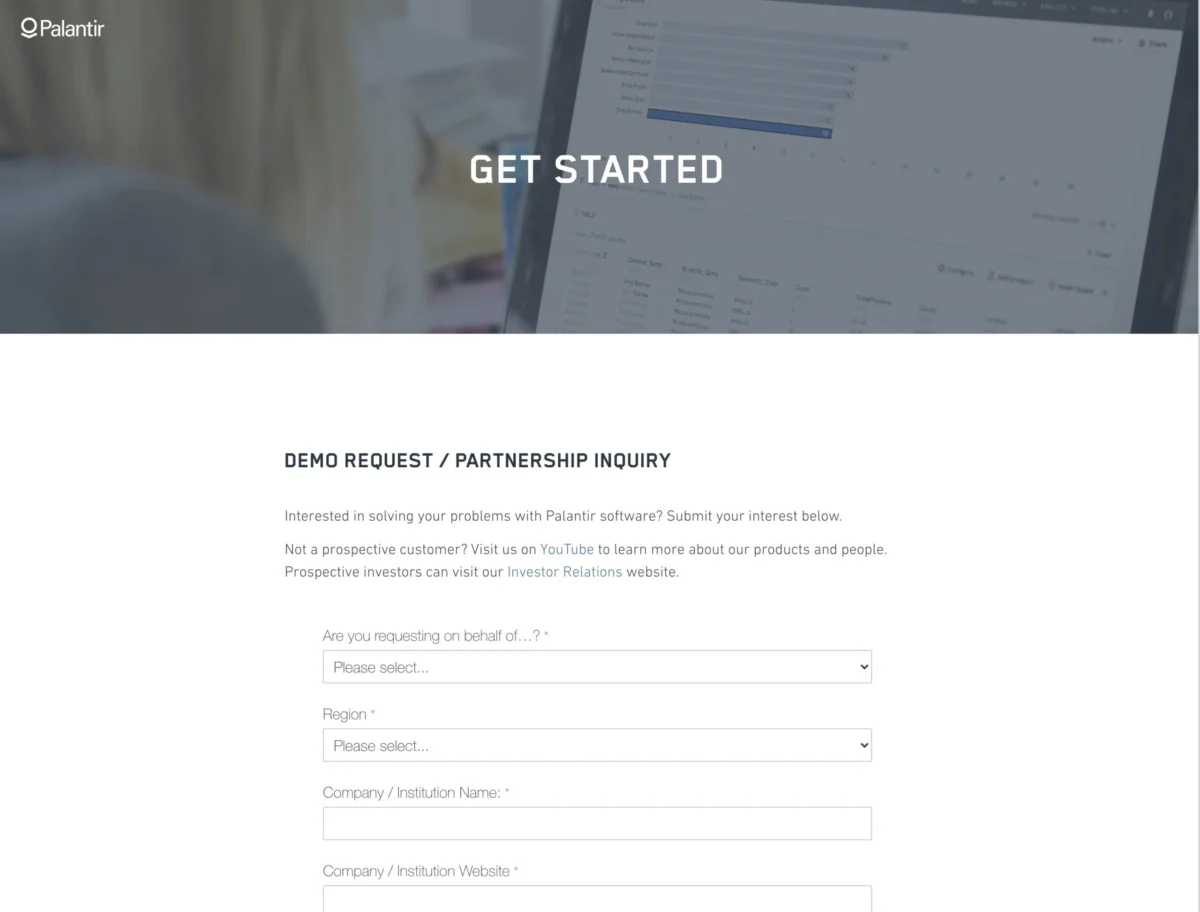
Consider companies that routinely command massive seven- and eight-figure contracts, such as cloud-software leader Veeva Systems or big-data titan Palantir Technologies. A quick visit to their respective websites yields a noticeable absence: they do not have public pricing pages.

[ACV Spectrum & Pricing Transparency]
-----------------------------------------------------------------
Low ACV ($100 - $5,000/yr)       ---> 100% Transparent / Self-Serve
Mid-Market ($10,000 - $50,000/yr) ---> Hybrid (Tiered Grids / Contact Sales)
Enterprise ($100,000+ to Millions) ---> Opaque / 100% Custom Quotes
-----------------------------------------------------------------
For these organizations, a pricing table would be entirely counterproductive. Their solutions are deeply integrated, highly bespoke, and often require months of technical discovery before a formal proposal can be generated. Forcing these solutions into a neat website tier would cheapen the value proposition and confuse buyers.
The Friction Cost of Upmarket Transitions
As companies scale and add an upmarket sales force, moving away from transparent pricing inevitably introduces some friction into the sales process—specifically for smaller or lower mid-market leads who prefer a quick transaction. However, leadership teams willingly accept this trade-off because the marginal revenue gained from enterprise negotiations far outweighs the friction-induced drop-off in smaller segments.
Conversely, for large enterprise buyers, adding transparency provides virtually zero benefits. Enterprise procurement departments do not look at a website and say, "Oh, it costs $50,000 per user? Let’s sign the wire transfer." They expect a rigorous, customized negotiation process regardless of what is published online.
Official Responses and Expert Perspectives
Industry experts and veteran SaaS founders continue to weigh in on the nuanced balance between open pricing and strategic opaqueness.
According to community insights synthesized by SaaStr, founders must remain pragmatic rather than dogmatic about pricing.
"In the early days, the last thing you need is more friction. Start with transparent, published pricing at first. It takes one less piece of friction out of your sales process," notes recurring SaaS advisory consensus.
However, veteran revenue leaders caution against holding onto static pricing for too long. As products expand their feature sets—moving from single-point solutions to broad, platform-level architectures—pricing pages can quickly become misleading. A customer looking at a basic tier may fail to grasp the enterprise-grade capabilities of the platform, leading them to disqualify the vendor prematurely.
Furthermore, industry discussions around discounting highlight the "confounding logic" of modern SaaS sales. When pricing is completely public, sales reps often find themselves fighting uphill battles against published anchors when attempting to structure enterprise discounts or multi-year prepay incentives.
Implications: Strategic Takeaways for SaaS Founders
For founders, executives, and revenue architects navigating the complexities of go-to-market (GTM) strategy, these insights offer a clear roadmap:
- Default to Transparency Early On: If you are pre-product-market fit, seed-stage, or building a product aimed at developers, SMBs, or lower-tier mid-market buyers, publish your pricing. Do not make potential customers guess what your product costs. Removing friction accelerates user acquisition and helps you gather critical feedback on price elasticity faster.
- Anticipate the Pivot: Recognize that your pricing strategy has an expiration date in its current form. As your ACV climbs and your target customer shifts from a transactional buyer to a committee of enterprise stakeholders, your pricing model must evolve.
- Adopt a Hybrid Approach During Transition: Many successful scale-ups maintain a clear, transparent self-serve tier for lower-end users while routing high-volume or enterprise prospects through a "Talk to Sales" funnel. This captures the best of both worlds: maintaining volume velocity at the bottom while preserving pricing power at the top.
- Align Pricing with Value, Not Just Features: As solutions become richer and more complex, ensure your sales team is empowered to sell the transformation and ROI rather than getting bogged down in static line-item pricing tables.
Ultimately, pricing transparency is not a permanent ideological stance; it is a tactical tool. Use it aggressively to remove friction when you are small, and be prepared to fold it into a consultative, customized sales motion as you scale your enterprise ambitions.