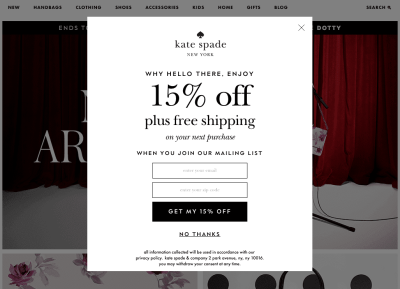
In the modern digital marketplace, few user experience tropes are as universally recognized—and as universally reviled—as the aggressive newsletter pop-up. Picture the scenario: you arrive at an e-commerce website, eager to browse a new collection of products. Before you have even laid eyes on a single item, evaluated a price tag, or read a word about material quality and shipping options, a brightly colored modal slams down over the viewport. It demands your email address in exchange for an ephemeral discount, forcing you to hunt frantically for a microscopic "X" or instinctively tap away to reclaim your screen.
To the consumer, this is an annoying, friction-laden disruption. But to the business behind the screen, it is a calculated mechanism designed to satisfy rigid Key Performance Indicators (KPIs). For years, marketing teams have operated under the assumption that visibility equals value, and that capturing leads—by any means necessary—is the ultimate metric of digital success.
However, a quiet revolution is taking place in the world of interface design. As conversion rate optimization (CRO) experts and UX researchers dig deeper into long-term consumer behavior, a stark reality is coming to light: quantity does not equal quality. The relentless pursuit of top-of-funnel lead volume through intrusive pop-ups is backfiring, resulting in bloated mailing lists, inflated marketing costs, and deeply alienated shoppers. The future of e-commerce interface design is not about shouting louder; it is about building trust through respectful timing, contextual relevance, and seamless integration.
Main Facts: The Illusion of High-Volume Lead Generation
At the heart of the modern e-commerce dilemma is a fundamental misalignment between corporate KPIs and genuine user intent. Businesses rely on metrics to measure growth, and few metrics are as seductive as the rapid accumulation of email subscribers. When a marketing team rolls out a large, unmissable newsletter modal that triggers the second a user lands on a site, the initial data dashboard often looks like a resounding success.
The core facts of this design failure reveal a systemic disconnect:
- The Interruption Penalty: Extensive UX research—including foundational studies by the Nielsen Norman Group—consistently shows that users view task-oriented interruptions as major annoyances. When a promotional message disrupts a user’s workflow, the immediate reaction is defensive.
- The Vanity Metric Trap: Aggressive modals generate high volumes of leads, but these numbers are frequently skewed by disposable email addresses, creative aliases, and randomized text strings entered solely to bypass the paywall or discount lock.
- The Financial Toll of "Bad Leads": Acquiring low-intent subscribers is not a neutral act; it actively costs companies money. Bloated email lists drive up email service provider (ESP) fees, depress open and click-through rates, increase spam complaint rates, and risk damaging a brand’s domain reputation.
- The Behavioral Shift: Modern consumers have developed banner blindness and reflexive dismissal habits. They close pop-ups so fast that they often do not even register the value proposition being offered.
Ultimately, the trade-off of using heavy-handed modals is a short-term spike in quantitative metrics purchased at the direct expense of qualitative engagement and brand loyalty.
Chronology: Anatomy of a Design Failure and Course Correction
To understand how digital retail arrived at this juncture, it is helpful to examine the lifecycle of a typical e-commerce lead-generation project. The trajectory from aggressive disruption to holistic integration follows a distinct chronological path:
Phase 1: The Obsession with Top-of-Funnel Metrics
The journey usually begins in a boardroom meeting where stakeholders express concern over flatlining or insufficient subscriber growth. Marketing teams are tasked with "boosting the pipeline." Armed with tools that make designing modal overlays frictionless, designers build increasingly elaborate, high-contrast, center-screen pop-ups. Weeks are spent testing button colors, micro-copy, drop shadows, and exit-intent triggers to maximize initial conversion rates.
Phase 2: The False Dawn of Success
Upon deployment, the new pop-up performs exactly as engineered. Within the first two weeks, subscriber counts surge. Dashboards light up with green arrows, and management celebrates the influx of new "leads." During this honeymoon phase, the disconnect between sign-ups and actual revenue has not yet materialized in the quarterly reports.
Phase 3: The Awakening and Revenue Realization
Several weeks or months later, the cracks begin to show. While the mailing list is massive, email campaign revenue remains stagnant. Open rates plummet, bounce rates skyrocket, and customer acquisition costs (CAC) creep upward. An audit of the subscriber database reveals that a staggering percentage of the new leads are inactive or fake accounts. Concurrently, customer feedback and bounce rate analytics indicate that first-time visitors are fleeing the site prematurely, repelled by the hostile entry experience.
Phase 4: The Pivot to Contextual Design
Realizing that the aggressive approach is doing more harm than good, progressive retailers initiate a redesign. They strip away the intrusive modal entirely. In its stead, they weave subtle, context-aware newsletter touchpoints throughout the natural customer journey—embedding sign-up options near product pricing, within category pages, and at the end of successful checkout flows. The raw number of sign-ups decreases, but the lifetime value (LTV) of those subscribers rises exponentially.
Supporting Data: What the Research Tells Us About User Attention
The shift away from intrusive pop-ups is heavily supported by empirical research into human-computer interaction and cognitive psychology.
When a user visits an e-commerce site, they enter with a specific mental model and goal—whether it is to compare prices, inspect product materials, or check delivery timelines. Introducing an uninvited modal forces an immediate context switch. According to cognitive load theory, forcing the human brain to abruptly pivot away from an active task consumes valuable mental resources and triggers a defensive response.
Studies on modal versus non-modal dialogues underline this friction. Non-modal elements—such as inline banners, collapsible panels, or subtle notification trays—allow users to absorb information at their own pace without blocking access to primary content. When tests are run comparing intrusive entry pop-ups against contextualized inline sign-ups, the findings consistently demonstrate that while modals capture more accidental emails, contextual placements capture intentional ones.
Furthermore, email marketing benchmarks consistently highlight that engagement metrics (open rates, click-to-open rates, and conversion-per-email) are inversely proportional to the aggressiveness of the opt-in method. A smaller list of users who actively chose to subscribe out of genuine brand affinity will always outperform a massive list of disengaged or coerced recipients.
Official Responses and Industry Perspectives
Industry leaders, UX architects, and conversion specialists are increasingly vocal about the need to retire the aggressive pop-up playbook.
"Good interface design shows the right things at the right moment," notes leading UX educator and interface designer Vitaly Friedman. "We need to understand when to display a call to action, and how to build a relationship with the user before prompting them to act."
Many modern design agencies and e-commerce platforms are rewriting their internal playbooks to prioritize user respect over short-term growth hacks. Forward-thinking Chief Marketing Officers (CMOs) are beginning to align their metrics more closely with customer lifetime value rather than raw lead counts.
Critics of the traditional pop-up point out that the internet ecosystem is maturing. With stricter privacy regulations (such as GDPR and CCPA) and more sophisticated email filtering algorithms, treating user data acquisition as a numbers game is no longer sustainable. Platforms that persist in using heavy-handed tactics are finding themselves penalized by both search engines—which factor intrusive interstitials into mobile ranking algorithms—and increasingly cynical consumers.
Implications: The Rise of Smart Interface Design Patterns
The movement away from disruptive modals carries profound implications for the future of digital product design, e-commerce strategy, and user experience architecture.

1. The Death of the Immediate Hard Sell
Retailers must accept that trust cannot be demanded on arrival; it must be earned through transparency, quality, and respect for the user’s autonomy. E-commerce sites are shifting toward a "slow dating" model of user acquisition: let the visitor explore products, read reviews, and understand shipping policies before introducing any form of conversion prompt.
2. Contextual Integration as the New Standard
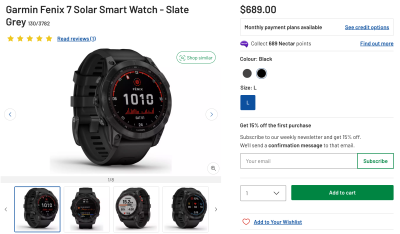
Future-proof interfaces utilize smart design patterns where calls to action emerge organically from the content. For instance, placing a newsletter option directly adjacent to product pricing or specifications—as seen on mature retail platforms like Argos—frames the subscription as a utility (e.g., "track price drops for this item") rather than an administrative demand.
3. Patience as a Competitive Advantage
Adopting a respectful interface strategy requires organizational patience. Marketing departments must be willing to accept lower top-of-funnel lead counts in exchange for higher-quality subscriber bases. Companies that make this leap find themselves with healthier mailing lists, stronger brand affinity, and ultimately, more sustainable revenue growth.
Summary
The era of the shiny, disruptive newsletter pop-up is drawing to a close. As users grow increasingly intolerant of digital friction, businesses are discovering that true conversion is rooted in empathy and timing. By replacing aggressive modals with humble, context-aware interface patterns, e-commerce brands can stop chasing vanity metrics and start building the kind of genuine, long-lasting customer relationships that drive real business success.