
In the post-pandemic digital landscape, the Quick Response (QR) code has transcended its origins as a niche industrial tracking tool to become a ubiquitous bridge between the physical and digital worlds. From touchless restaurant menus and transit boarding passes to interactive marketing campaigns and virtual business cards, QR codes are now an essential component of the modern consumer experience. However, their ubiquity has also led to a "scanner fatigue" where poorly implemented codes are not only ignored but actively detrimental to brand perception.

Stanislav Khrustalev, a veteran of customer experience design, argues that while QR codes are a powerful technology, they are merely one tool in a vast arsenal of customer engagement strategies. To truly derive value from them, business owners must move beyond simply generating a link and focus on the ergonomics, psychology, and technical precision of the user interaction.

The Evolution of the QR Code: From Industrial Tool to Retail Standard
The QR code was invented in 1994 by Denso Wave, a subsidiary of Toyota, primarily to track vehicle parts during the manufacturing process. Its ability to store significantly more data than a standard linear barcode made it ideal for logistics. For decades, the technology remained largely unseen by the general public.

The paradigm shift occurred with the widespread integration of native QR scanning capabilities into smartphone camera apps. No longer requiring a third-party application, the consumer barrier to entry effectively vanished. Businesses quickly pivoted, using the technology to bypass the friction of manual URL entry. Today, we see a divergence in implementation: companies like Technopark effectively use codes on delivery vehicles to drive app downloads, while others, such as the logistics firm Gruzovichkof, miss key opportunities by providing text-based instructions without a scannable bridge, forcing users to manually search for apps.

Strategic Implementation: A Chronology of the Customer Interaction
To ensure a positive experience, business owners must view the QR code through the lens of the "mini-journey." Every scan is an intentional act by the consumer, and if that act is met with technical or design friction, the user will abandon the attempt.

1. Visibility and Physical Context
The first rule of QR deployment is physical accessibility. Codes must be placed at eye level and within a comfortable reach. A notable example of thoughtful placement is IKEA’s implementation of feedback terminals. While some might initially view the low placement of their QR codes as a design error, it is, in fact, an inclusive accessibility feature designed to be easily reached by customers in wheelchairs.
Conversely, businesses must be wary of "visual noise." If a code is cluttered with surrounding graphics, logos, or text, the user’s focus dissipates. Effective design requires a "clear zone" around the code to ensure that the scanner can isolate the pattern from its environment.
2. The Psychology of the Call to Action (CTA)
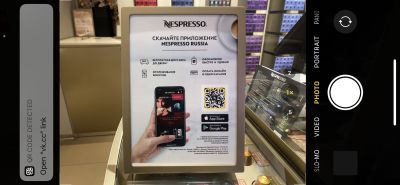
A naked QR code is an enigma. Customers need to know exactly what they are scanning for and, more importantly, what they gain from the interaction. A clear, explicit CTA—such as "Scan to download our app for 10% off"—manages expectations and provides a value proposition. Nespresso, for instance, excels here by pairing their QR codes with infographics that articulate the specific benefits of the digital destination, reducing the cognitive load on the consumer.

3. The Durability Factor
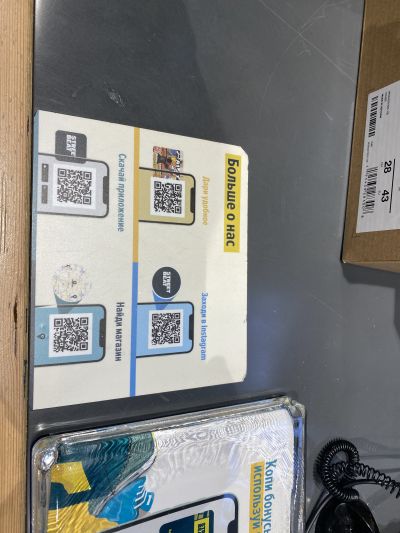
In brick-and-mortar retail, the surface choice is critical. Placing stickers on high-traffic areas like checkout counters, as seen in some Street Beat retail locations, leads to premature erosion. As the sticker peels or scratches, the code becomes illegible. A better practice is to place codes behind glass or on durable, non-contact surfaces to ensure longevity and a professional aesthetic.
Technical Nuances: Solving the "Unscannable" Problem
Even with perfect placement, technical failures can render a campaign useless. The following variables must be tested before a campaign goes live:

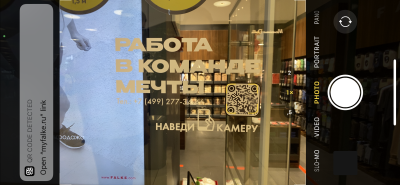
- Surface Transparency and Contrast: QR codes require high contrast. Placing a code on a transparent glass window without a solid, opaque backing is a common failure point. Nespresso’s boutiques have previously struggled with this, with staff forced to manually hold a piece of paper behind the glass to facilitate a scan—a clear indicator of a failed design process.
- Environmental Variables: Outdoor placements must account for lighting. A code that is perfectly scannable at noon may be invisible under poor street lighting at night.
- The "Native Camera" Requirement: A major pitfall is requiring users to download a proprietary app to scan a code. When the Auchan supermarket chain launched its "Scan & Pay" system, the company discovered that hundreds of users were attempting to use their standard phone cameras, only to receive error messages because the codes required the proprietary Auchan app. This created significant user frustration and hindered adoption.
- Resolution and Pixelation: When printing, the resolution must be sufficient for the intended distance. A code meant to be scanned from a distance on a billboard needs a much higher resolution than a code printed on a small menu.
Digital Integration: When (and When Not) to Use QR
QR codes are not a "one-size-fits-all" solution. In digital environments, their utility depends on the device. On a desktop website, a QR code is highly effective for transitioning a user to a mobile app. However, placing a QR code on a mobile website is redundant and confusing; the user is already on a mobile device and cannot scan an image displayed on their own screen. In such cases, a simple deep-link button is the superior choice.

Implications for Business Strategy: Data and Personalization
Beyond mere convenience, QR codes provide a powerful mechanism for data analytics. By using UTM parameters—tags added to a URL—businesses can track exactly which campaign, banner, or location generated a scan.

Furthermore, personalization can be achieved through these parameters. For instance, a restaurant can print unique QR codes for every server, allowing the feedback page to automatically display the name of the staff member being evaluated. This creates a more intimate and professional connection between the brand and the consumer.
The Power of Consolidation
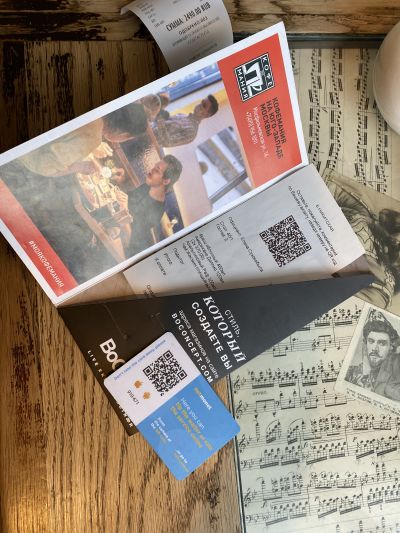
A common mistake is the "fragmentation of intent." Businesses often print three or four different QR codes for different actions (e.g., one for tips, one for reviews, one for social media). This is overwhelming. The most effective strategy is to create a single, branded landing page that serves as a hub, offering the user a choice of actions. This keeps the physical marketing material clean and focused.

Conclusion: The Path Forward
The QR code is a bridge, not a destination. Its success depends entirely on the seamlessness of the transition it provides. By respecting the user’s time, ensuring technical robustness, and prioritizing a clean, value-driven design, businesses can turn a simple graphic into a high-conversion touchpoint. As technology continues to evolve, the businesses that will succeed are those that view every scan as a critical moment in the customer journey—a moment that must be earned, respected, and rewarded.