Main Facts
Google has officially rolled out a significant update to Google Search Console, introducing a dedicated "Multimodal" search filter designed to give webmasters and e-commerce merchants unprecedented visibility into how users interact with image-driven searches. Located within the Search Console performance reporting suite, this new feature allows site owners to track URLs that users viewed or clicked when conducting searches initiated by or involving images.
Because modern consumers increasingly rely on visual search tools—such as Google Lens, Circle to Search, and camera-equipped browser search bars—to discover products, this update bridges a critical analytics gap. Historically, marketers could track traditional web clicks and standard image search impressions, but tracing the exact performance of multimodal, image-triggered queries remained murky.
The core attributes of this new Google Search Console filter include:
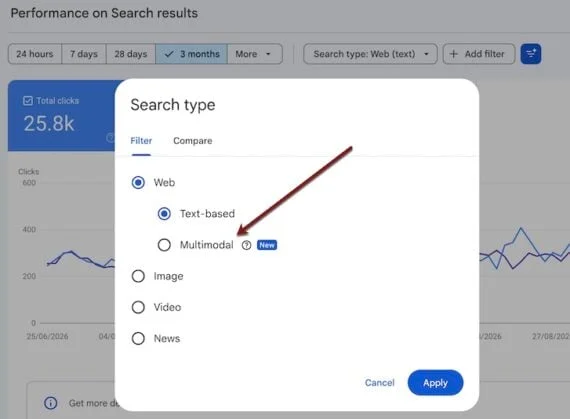
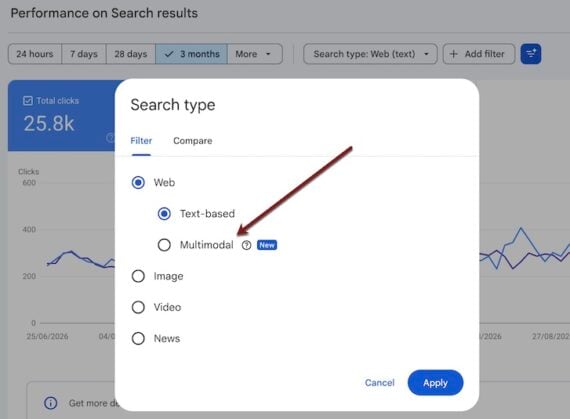
- Precise Navigation Path: Accessible via Search Console > Performance > Search results > Search type: Web > Multimodal.
- No Text Queries: Because the search mechanism originates from an image rather than a typed string, the report does not display traditional search queries.
- URL-Centric Metrics: The report tracks specific landing page URLs, total impressions, clicks, average click-through rate (CTR), and average search position resulting from visual discoveries.
- A Major Boost for E-Commerce: Retailers on platforms like Shopify, WooCommerce, and custom builds now possess a dedicated discovery channel analytics tool, enabling them to evaluate how effectively their product photography drives traffic from visual shoppers.
Chronology
The evolution of visual search has been a multi-year progression for Google, culminating in this latest administrative tracking update. Understanding the timeline of visual search integration helps contextualize why this Search Console update is a watershed moment for digital marketing.

- Early Developments (2017–2020): Google laid the groundwork for visual discovery with the launch and refinement of Google Lens. Initially a mobile-first application capable of translating text and identifying landmarks, Lens rapidly evolved into a commercial product discovery engine.
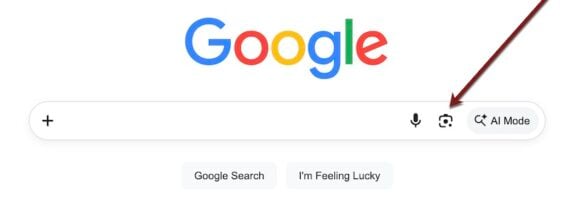
- Expansion Across Interfaces (2021–2023): Google integrated image-based search mechanics into multiple touchpoints, including the desktop browser search bar (via the camera icon), mobile app widgets, and eventually ecosystem-wide tools like "Circle to Search" on Android devices. Despite widespread consumer adoption, webmasters flew blind regarding performance analytics.
- The Analytics Blindspot (2024–2025): While search engine optimization (SEO) professionals could optimize image alt tags, file names, and image sitemaps, they lacked a unified reporting mechanism inside Search Console to isolate traffic driven purely by visual matching and multimodal queries.
- The Search Console Update (September 2026): Google formally introduces the "Multimodal" search filter under the Web search type. For the first time, site administrators gain direct, native insight into the impressions and clicks generated when users query Google using images instead of text.
Supporting Data & Technical Mechanics
While the Multimodal filter provides invaluable visibility, understanding its technical boundaries ensures that webmasters interpret the data correctly. The report does not display the exact user-uploaded image that triggered a match, nor does it list text strings. Instead, it aggregates performance metrics around the resulting destination URLs.
Accessing the Report
To view your site’s multimodal performance data:
- Log in to Google Search Console.
- Navigate to the Performance report.
- Click on the Search results tab.
- Locate the Search type filter and change it from the default setting to Web > Multimodal.
Performance Indicators & Metrics
Once active, the dashboard yields standard Search Console metrics—Impressions, Clicks, Average CTR, and Average Position—specifically filtered for visual-discovery pathways.
- Impressions: The number of times your site’s URLs appeared in Google’s visual/multimodal search results pages.
- Clicks: How many times users clicked through from those visual results to your landing pages.
- CTR (Click-Through Rate): The ratio of clicks to impressions, serving as a primary indicator of how compelling your product imagery and snippets are compared to competing visual matches.
- Position: Where your URLs rank on average within the visual search match grid.
Official Responses and Industry Insights
Search engine optimization experts and web platform leaders have responded enthusiastically to the update, noting that visual search optimization (VSO) has officially graduated from a speculative SEO tactic to a measurable, data-driven discipline.
Industry authorities emphasize that visual search engine algorithms operate differently than traditional text-based crawlers. While text SEO relies on semantic relevance, keywords, and natural language processing, visual search relies on computer vision—analyzing shapes, colors, textures, object angles, and contextual decor.
Noted search optimizer Marie Haynes and other industry figures have highlighted the symbiotic relationship between Generative AI (genAI) tools and visual search optimization. By prompting genAI platforms to analyze top-performing visual assets or suggest complementary contextual styling, merchants can reverse-engineer what Google’s computer vision algorithms prioritize.
Furthermore, e-commerce platform ecosystems have begun adapting. While platforms like Shopify automatically ingest images into standard XML sitemaps, experts recommend supplementing these with dedicated image-only sitemaps (or utilizing specialized plugins for WooCommerce and other CMS platforms) to ensure rapid, error-free indexation and accurate tracking within Search Console’s new multimodal reports.
Implications for E-Commerce and Digital Marketing
The introduction of the Multimodal filter has profound implications for digital strategists, content creators, and online retailers. As search engines continue to evolve into multimodal discovery engines—where users fluidly transition between text, voice, and imagery—optimizing for visual search is no longer optional.
1. Shift from Keywords to Visual Context
Traditional SEO strategy begins with keyword research. Multimodal SEO, however, begins with visual asset auditing. Retailers must look at their product catalogs through the lens of a camera. Because visual search matches objects regardless of angle or color, but heavily favors exact positional alignment and contextual color matches, product photography must diversify. Merchants should incorporate:
- Multiple Angles: Front, side, back, and detail shots.
- Close-Up Textures: High-resolution crops highlighting fabric weave, material finish, or surface grain.
- Contextual Styling: Showcasing products within complete environments (e.g., a lamp styled on a nightstand rather than isolated on a pure white background) to capture broader visual query intents.
2. Addressing the Resolution Bottleneck
Low click-through rates within the multimodal report often point to poor image quality. A common pitfall for e-commerce sites is relying on compressed, low-resolution thumbnail images pulled from category or collection pages. When these thumbnails appear in visual search results, they frequently fail to entice clicks against higher-resolution competitor photos. Merchants must audit low-performing URLs in the Multimodal report, upgrade their underlying imagery to high-definition formats, and test their visual appeal by running sample images through Google Lens.
3. Leveraging Technical Image SEO
To maximize the utility of the new Search Console filter, webmasters must execute foundational technical image optimizations:
- Descriptive File Names: Avoid generic names like
IMG_1042.jpg. Instead, use descriptive, hyphenated file names such asbrass-sputnik-chandelier.jpg. - Robust Alt Text: Write alt attributes that accurately describe not just the product, but key identifying features like color, material, and style.
- Image Sitemaps: Ensure image sitemaps are submitted correctly under Indexing > Sitemaps in Search Console to feed Google’s computer vision index efficiently.
4. Integrating Generative AI into Visual Audits
Digital marketers can now leverage genAI dashboards and visual recognition tools to simulate search performance. By requesting AI-generated analyses of top-performing multimodal assets—such as identifying commonalities among top-ranking terracotta tiles, amber mushroom lamps, or brass light fixtures—marketers can proactively adjust their creative assets to align with visual search trends.

Conclusion
Google Search Console’s new Multimodal filter marks a major milestone in search engine transparency. By shedding light on how users discover content through images, Google has provided e-commerce merchants and SEO professionals with the exact data needed to refine visual strategies, improve user engagement, and capture high-intent traffic in an increasingly visual digital marketplace.