DALLAS — In the modern digital media ecosystem, securing an ad impression on the right screen is no longer a guarantee of success. An ad can successfully load, hit a targeted demographic, and still entirely miss the eyes and minds of its intended audience. This friction point—the gap between mere delivery and actual engagement—served as the core catalyst for the second stop of the national roadshow hosted by Viant and ADWEEK.
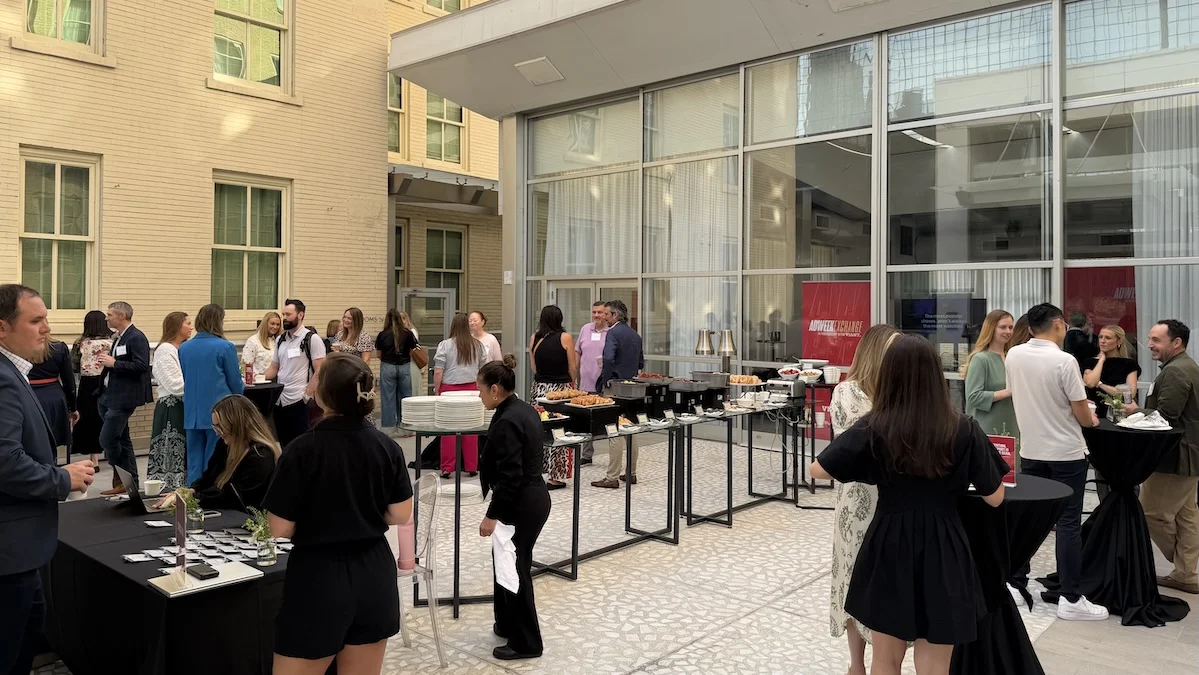
The ADWEEK Exchange, held in Dallas, brought together industry leaders, top brand marketers, and media executives to dissect a singular, urgent question: How can modern marketers reliably measure true ad attention, and how can that data be leveraged to fundamentally improve campaign performance, creative development, and media allocation?
Main Facts: The Intersection of Attention and Connected TV
The event highlighted a pivotal shift in the advertising industry. Traditional metrics such as reach, gross rating points (GRPs), and raw impressions are increasingly viewed as insufficient metrics for determining campaign success. Instead, the industry is racing to integrate "quality signals"—chiefly, second-by-second attention metrics and deep Connected TV (CTV) content context—into daily programmatic and strategic decision-making.
Key takeaways from the Dallas gathering include:
- The Attention Deficit in Metrics: High view counts or broad impressions do not correlate with viewer engagement. Content context dramatically alters viewer attention levels.
- The CTV Evolution: Major brands like Zoom, AT&T, and ALSAC (St. Jude Children’s Research Hospital) are pivoting heavily toward CTV to solve unique brand perception, emotional connection, and demographic expansion challenges.
- The Context Gap: While CTV offers rich targeting capabilities, it has historically lacked transparency regarding the exact editorial content surrounding an ad—a pain point addressed by emerging solutions like title-level metadata integration.
- Actionable Analytics: Attention data must be used as a real-time campaign optimization tool rather than a post-mortem reporting metric.
Chronology: From Measurement Theory to Real-Time Action
The day’s agenda moved deliberately from theoretical measurement frameworks to practical brand applications and, finally, to real-time execution strategies.
Opening the Dialogue: The Anatomy of Attention
The conference kicked off with Yan Liu, CEO of TVision, who posed the foundational question that would anchor the day’s panels: How can marketers properly measure and utilize attention data to drive better ad performance?

To demonstrate the fallacy of relying solely on quantitative reach, Liu presented a stark comparison. He contrasted one of YouTube’s most-viewed historical videos, “Johny Johny Yes Papa,” with a dramatic scene from the political thriller series Paradise. While the viral children’s video generated astronomical view counts, the Paradise clip captured five times more actual viewer attention.
"This example shows that reach, impressions, or ratings don’t tell the entire story," Liu explained. "When you think about your media, you need to pair that with a quality signal—which is attention."
Brand Strategies in Focus: Solving Unique Puzzles
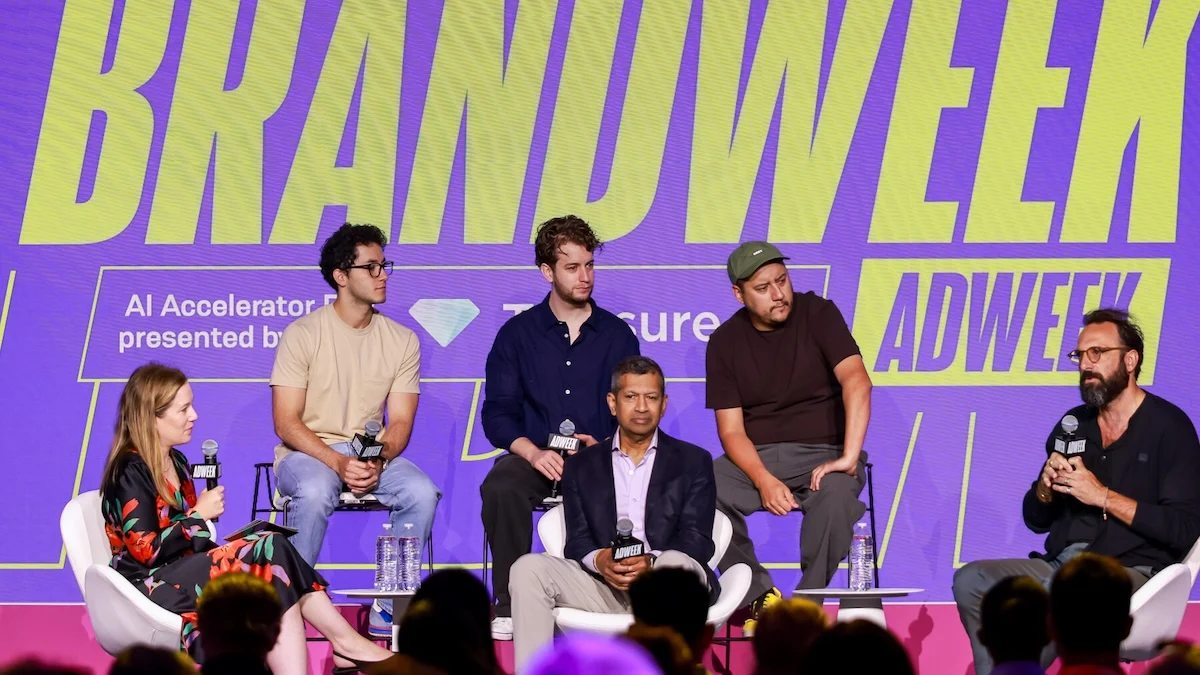
Following the opening address, ADWEEK CEO Will Lee moderated a high-profile panel featuring Whitney Magnuson (Zoom), Scott Ludwig (AT&T), Rebekah Payne (ALSAC), and Chris Vanderhook (Viant). The discussion focused on how these diverse organizations are leveraging CTV to solve their unique market challenges.
- Zoom: Having become a ubiquitous pandemic-era verb for video conferencing, Zoom faced the challenge of brand expansion. Magnuson noted that consumers needed to understand Zoom is no longer just for meetings, but offers comprehensive customer service, marketing, and sales tools. To shift this perception, Zoom utilized high-profile, humor-driven campaigns featuring Colin Jost and Kate McKinnon. While employing linear TV for broad top-of-funnel reach, Zoom directs the majority of its budget to CTV to precisely target enterprise and business buyers.
- AT&T: Ludwig addressed the difficulties of operating in a mature, highly saturated telecommunications market where differentiating network coverage on price alone is nearly impossible. For AT&T, CTV provides an avenue to build emotional resonance and deliver tailored narratives that connect with consumers on a personal level.
- St. Jude (ALSAC): Payne discussed the dual mandate of maintaining deep loyalty among older, long-standing donors while aggressively introducing the mission to younger generations. While traditional three-minute patient documentaries built the nonprofit’s historic donor base, St. Jude is now pioneering shorter, evocative CTV formats—such as the "Just a Kid" spot featuring a patient playing dress-up—to spark initial interest before following up with deeper storytelling.
Closing the Loop: Real-Time Optimization
Tim Vanderhook, CEO and co-founder of Viant, concluded the event by shifting the focus firmly from measurement to execution. He warned marketers against treating attention metrics as static dashboard decorations, urging them instead to treat attention as a dynamic lever for in-flight campaign adjustments.
Supporting Data and Technical Insights
To move beyond anecdotal evidence, industry leaders at the Exchange shared hard data points and structural solutions designed to cure inefficiencies in programmatic buying and CTV.
TVision’s Second-by-Second Methodology
TVision’s proprietary tracking technology measures what is actively appearing on a screen and whether a human set of eyes is directed toward it, capturing data on a second-by-second basis. To prove the commercial value of this data, Liu highlighted a recent empirical study tracking a subscription brand and a home services brand.

The findings were definitive: conversions consistently rose in direct alignment with increased attention scores. This correlation provides media buyers with a defensible, data-backed rationale for shifting budgets away from low-attention placements toward high-engagement environments.
Solving the CTV Context Problem
Despite its growth, CTV buying has historically suffered from a notable blind spot: ad placement transparency. Chris Vanderhook, COO and co-founder of Viant, pointed out that brands typically buy CTV inventory at the ad-pod level without knowing the exact program or editorial context their creative runs alongside.
To bridge this gap, Viant’s recent acquisition of IRIS.TV plays a crucial role. By aggregating title-level signals directly from content editors, the technology enables programmatic buyers to match their ad creative with contextually relevant shows, safeguarding brand safety while boosting relevance.
Official Responses and Industry Perspectives
The insights shared in Dallas underscored a broader cooperative movement between measurement companies, ad tech platforms, and major advertisers.
- Yan Liu (TVision): Emphasized that the era of passive viewing metrics is drawing to a close. "When you think about your media, you need to pair that with a quality signal—which is attention."
- Whitney Magnuson (Zoom): Highlighted the necessity of narrative evolution on modern screens. "The problem is that in the past few years, Zoom became the verb of a very specific industry, which was video conferencing." CTV allowed Zoom to break out of that linguistic and perceptual box.
- Scott Ludwig (AT&T): Stressed the importance of moving past commoditization. "How can you be about more than a price point?" For AT&T, the answer lies in leveraging advanced video platforms to forge genuine emotional ties.
- Rebekah Payne (ALSAC): Addressed the delicate balance of generational marketing. By utilizing shorter-form CTV touchpoints, nonprofits can successfully solve the modern top-of-funnel dilemma: "How do we grow that new donor base?"
- Tim Vanderhook (Viant): Reminded attendees that data collection is merely a means to an end. "The goal is not to have a pretty attention chart. It’s about increasing reach with the same budget that you actually had."
Implications for the Future of Advertising
The conversations at the ADWEEK Exchange in Dallas point toward a fundamental restructuring of how media dollars will be managed over the coming years.
- The Death of Vanity Metrics: As empirical evidence mounts linking attention to hard conversions, buying media based solely on impressions or estimated reach will increasingly be seen as an inefficient use of capital. Advertisers will demand transparency down to the second and the individual.
- Creative and Context Synergy: The integration of technologies like IRIS.TV into programmatic workflows means that creative messaging can no longer be treated as a one-size-fits-all asset. Brands will need to curate and adjust creative variations to match the emotional tone and viewer engagement levels of specific programming genres.
- Budget Efficiency Through Optimization: As Tim Vanderhook noted, the ultimate promise of attention data is not necessarily requiring larger budgets, but maximizing the productivity of existing ones. By establishing attention baselines early in a campaign and dynamically reallocating spend toward high-performing placements, brands can achieve greater effective reach without inflating costs.
As the Viant and ADWEEK roadshow continues its national tour, the message from Dallas is clear: the future belongs to marketers who stop counting screens and start measuring minds.