NEW YORK — For the better part of a decade, the advertising and media industries have locked themselves in a cyclical debate over the soul of creativity. As generative artificial intelligence evolved from rudimentary pixel experiments into hyper-realistic video generators, the existential dread among copywriters, directors, and traditional artists mirrored historical anxieties surrounding photography, digital editing, and computer-generated imagery.
Yet, as industry leaders gathered at Brandweek, the conversation shifted away from apocalyptic predictions of replacement toward a more pragmatic, visionary reality: AI is no longer a novelty toy or an existential threat; it is an entirely new linguistic medium for human creators.
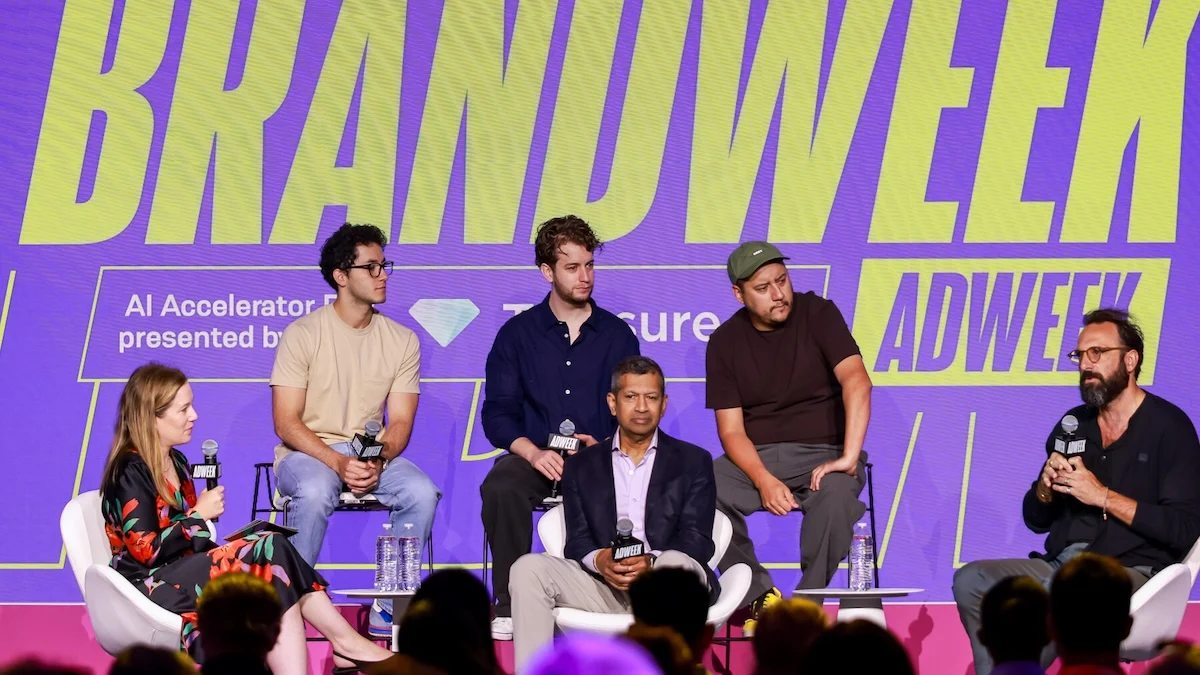
This paradigm shift took center stage during a high-profile fireside chat co-hosted by ADWEEK and AI-native creative suite Higgsfield AI. ADWEEK Chief Content Officer Zoë Ruderman sat down with Mahi de Silva, co-founder and chief strategy officer of Higgsfield, to dissect the current ecosystem of AI storytelling tools. The session also served as the official unveiling of the winners of the inaugural Adathon—a high-stakes competition challenging global agencies to push the absolute limits of generative video technology.
Main Facts: The Evolution of AI in Modern Creative Work
The central thesis emerging from the Brandweek showcase is that generative AI has graduated from experimental R&D labs into everyday agency workflows. No longer restricted to isolated text-to-image prompts or choppy short-form clips, modern AI-native creative suites like Higgsfield are empowering artists to bypass traditional physical constraints—such as astronomical production budgets, complex lighting setups, location permits, and camera rentals.
Key takeaways from the intersection of AI and modern advertising include:
- The Democratization of Production: Creators can visualize complex cinematic concepts directly from their imaginations, drastically slashing both production timelines and capital expenditure.
- Redefining the Toolset: Industry leaders are drawing direct parallels to the introduction of Adobe Photoshop three decades ago, framing AI not as an autonomous creator, but as a digital brush that requires human direction.
- The Triumph of Narrative Over Tech: Winning entries in recent creative competitions proved that audiences and judges reward clever storytelling, humor, and emotional resonance over mere technical flexing.
- The Unbreakable Human Element: While AI can accelerate execution, industry stakeholders widely agree that the foundational core of storytelling—empathy, original perspective, and intent—remains exclusively human.
Chronology: From Digital Novelty to Industry Adoption
To understand where the creative industries stand today, it is essential to trace the rapid trajectory of generative video tools over the past year and a half.
Phase 1: The Skeptical Era (Late 2024)
When Higgsfield launched approximately 17 months prior to the Brandweek showcase, the broader cultural perception of AI video was heavily skewed toward novelty. To the general public and many traditional creatives, early AI models were viewed as amusing, uncanny toys that produced distorted hands, melting faces, and erratic motion sequences. Skepticism ran rampant, with many agency executives dismissing generative tools as a passing tech fad that lacked commercial viability.
Phase 2: Integration and Workflow Optimization (Mid-to-Late 2025)
As underlying models matured, forward-thinking studios began experimenting with AI not as a complete replacement for human production, but as a hyper-efficient pre-visualization and ideation tool. Directors used generative video to build animatics, pitch treatments, and test lighting styles in minutes rather than weeks. The friction of prompting began to diminish with the introduction of intuitive, "booster-seat" interfaces designed for artists rather than software engineers.
Phase 3: The Adathon Challenge (Early 2026)
Seeking to test the true creative capabilities of these platforms under pressure, Higgsfield, in partnership with ADWEEK, launched the Adathon. Agencies and independent brand creatives were given a strict four-week window to conceptualize, produce, and finalize a commercial entirely utilizing AI tools. The challenge forced participants to move beyond technical demonstrations and construct compelling narratives capable of holding consumer attention.
Phase 4: Brandweek Revelation and the Meta-Narrative (October 2026)
Culminating at Brandweek, the results of the Adathon were unveiled to the public. The winning submission—crafted by AI-R Studio, the specialized AI arm of Mexico City-based creative tech agency PicoLove—shattered expectations by turning the camera back on the technology itself. The winning commercial featured a fictional director being instructed to replace his AI cast with "something more human," concluding with the tongue-in-cheek tagline: "Don’t kill the AI stars. They’re just trying to improve your video."
Supporting Data and Technical Insights: A New Language for Creators
During the fireside chat, Mahi de Silva unpacked the technical philosophy driving Higgsfield’s platform and addressed the friction points that often alienate traditional creatives.
"It’s not here to replace you," de Silva told the Brandweek audience. "It is a new language for creators, and it’s a new form of expression—the ability for them to fully realize what’s in their brain without the physical limits of cameras, lighting, location, and budget."
De Silva emphasized that the platform is engineered to function as a "booster seat" for artists. Rather than forcing creative directors to spend hours mastering complex prompt engineering syntax, modern AI suites are designed to integrate seamlessly into existing workflows. This allows teams to iterate at a fraction of the traditional budget and timeline.
Addressing lingering industry skepticism, de Silva offered a historical comparison that resonated with the marketing crowd:
"Thirty years ago, we used to have this debate about Adobe Photoshop, and today nobody thinks twice about using digital tools for creating content. AI is really just a tool."
Official Responses and Perspectives: Judging the Adathon
Midway through the session, Zoë Ruderman welcomed Michael Ventura—acclaimed author of Applied Empathy and Constellation Thinking—to the stage to help unpack the Adathon competition and analyze the criteria used to judge the submissions.
Ventura, serving as one of the competition’s primary judges, shared his methodology for evaluating work in a medium where technical wizardry can easily mask a lack of substance.
"I think you’ve got to look at it first from how they’re using the tool," Ventura explained. "Once you get past that, what I’m interested in is: What’s the creative idea? Where’s the discernment? Can you see that someone made a good choice going this direction vs. that direction? And is there a story here?"
Ventura noted that the submissions that rose to the top of the competitive pool successfully resisted the temptation to merely flex technical capabilities. Instead, they leveraged the technology to build resonant narratives.
Highlighting the winning entry from AI-R Studio, Ventura praised its self-aware approach: "The thing I loved about their submission was that we were in on the joke. There was a meta-narrative at play." By leaning into the absurdity and the anxieties surrounding AI casting, the creators managed to disarm the audience while simultaneously showcasing the sophisticated execution of the software.
Implications: The Future of Agency Business Models and Human Storytelling
As generative AI solidifies its place in the commercial pipeline, the broader implications for the advertising, media, and entertainment industries are profound.
1. Compression of Timelines and Budgets
The traditional commercial production pipeline—often involving weeks of location scouting, casting calls, crew coordination, and post-production scaling—is undergoing a structural compression. Brands can now test dozens of creative concepts in real-time, tailoring localized messaging for hyper-specific demographics without inflating production overhead.
2. The Evolution of the Creative Director
The role of the creative director is shifting from a hands-on technical supervisor or logistical manager to an editorial orchestrator. Success in the AI era relies less on manual execution skills and more on discernment—the ability to curate, shape, and direct synthetic outputs toward a unified emotional and strategic vision.
3. The Unsurpassable Value of Human Experience
Despite the rapid ascent of platforms like Higgsfield, de Silva offered a reassuring boundary during his closing remarks. No matter how advanced neural networks become, certain elements of art will remain strictly human.
"There is no replacement for the human art of storytelling," de Silva concluded. "How you tell that story, the imagery of it, the voice behind the story—AI is never going to get there."
Ultimately, the consensus at Brandweek 2026 was clear: Generative AI will not replace human creativity, but human creators who master generative tools will inevitably replace those who do not. As the industry looks toward Midtown and the future of commercial production, the mandate for creators is not to fear the machine, but to learn its language.