In the rapidly evolving landscape of digital marketing, artificial intelligence has fundamentally altered how brands create visual content. Yet, ask any digital creator or business owner scrolling through social media today, and they will likely echo a common frustration: why do so many AI-generated images look strikingly similar?
From glossy, overly smooth portraits to predictable product mockups floating in generic neon-lit spaces, the internet is rapidly saturating with a visual uniformity often dismissed as "AI slop."
According to AI strategist Lauren deVane, co-creator of a recent masterclass alongside Michael Stelzner, this superficial uniformity is not an indictment of the technology itself. Rather, it is a reflection of user skill.
"One of the biggest misconceptions about AI imagery right now is that everything AI produces is AI slop," deVane explains, comparing the phenomenon to judging all piano music by listening to a toddler bang haphazardly on the keys in a dentist’s office. "Mozart exists. We just are judging it based on this kid smashing keys."
As artificial intelligence shifts from early diffusion models—which painstakingly chipped away at fields of static visual noise—to advanced, language-backed engines capable of contextual reasoning, the ceiling for AI-generated imagery has skyrocketed. Today’s top-tier AI visuals are routinely indistinguishable from professional studio photography. To harness this power, however, marketers must move past lazy, one-sentence prompts and adopt a rigorous, structured approach to digital artistry.
The Evolution of AI Imagery: From Noise to Context
To understand how to fix generic AI art, marketers must first understand how modern image generation works under the hood.
Earlier iterations of generative AI relied entirely on diffusion processes. These systems started with a blank canvas of random digital noise and gradually refined it, akin to a sculptor chipping away at a block of marble to reveal a hidden shape. While revolutionary for their time, these older models struggled with fundamental anatomy—frequently producing mutated hands, uncanny valley eyes, and an unmistakable plastic sheen.
Today, models like OpenAI’s GPT Image represent a fundamental paradigm shift. Rather than relying solely on pixel-level diffusion, these systems have internalized the statistical patterns of billions of images paired with rich textual descriptions. When a user inputs a prompt like "a cat on a surfboard," the system does not merely collage existing photos of cats and surfboards; it synthesizes an entirely original composition based on deeply learned visual and linguistic patterns.
Crucially, because ChatGPT Image is anchored to a massive large language model (LLM), it possesses the capacity for contextual thought, semantic analysis, and external reference interpretation. If a marketer uploads a photograph of a unique peach-pineapple-mango sparkling water can and instructs the model to "create a world around it," the AI can independently parse the specific fruit notes and construct a tailored, cohesive environment. Older diffusion models would have required users to explicitly spell out every background detail, color nuance, and lighting cue.
Furthermore, text-rendering capabilities have evolved by leaps and bounds. Modern engines can accurately handle complex paragraphs of typography, specify font weights, dictate layout alignments, and execute sophisticated graphic design compositions.
The catch? Most users fail to leverage these advanced capabilities. By feeding the AI a lazy instruction—such as "make me a flyer, here’s the information"—creators invite the model to default to safe, predictable, and profoundly average aesthetic choices. The resulting "ChatGPT slop flyers" are the direct byproduct of vague human input, not technological limitation.
Practical Marketing Applications: Scaling Visual Content
For product-based and service-oriented businesses alike, mastering advanced AI generation solves a foundational operational bottleneck: the perpetual demand for fresh, high-volume content.
Traditional commercial photography is expensive, time-consuming, and notoriously difficult to scale. Consider a Consumer Packaged Goods (CPG) brand with a single core product line available in ten distinct flavors. Organizing separate physical photo shoots for every seasonal campaign, flavor variant, and platform specification is financially prohibitive.
With modern AI frameworks, however, a brand can write a single, robust prompt template, upload a baseline reference image for each flavor, and instantly generate hundreds of distinct, highly contextual product scenes. The AI reads the reference product, extracts its exact branding elements, and builds an appropriate, custom-tailored environment around it.

A prime real estate example of this methodology in action is Club Critterz, a family enterprise managing over 800 distinct SKUs of 3D-printed animal figures. By utilizing standardized prompt templates that ingest reference images for each individual animal, the company can automatically generate unique, hyper-realistic 3D-rendered product environments for every single SKU. The resulting imagery maintains rigorous brand cohesion because every asset flows from the same structural template.
Beyond product catalogs, this capability transforms fast-paced digital advertising. Brands that traditionally refresh their ad creative on a sluggish quarterly schedule can now iterate and deploy new imagery on a weekly basis. Whether launching a surprise summer campaign or testing micro-targeted regional ads, marketers can keep their products looking dynamic without scheduling endless studio sessions.
B2B enterprises and service-based brands benefit equally from these workflows. For instance, digital brands can construct entire high-converting sales funnels—complete with custom hero banners, intricate section illustrations, and thematic iconography—that share a unified aesthetic universe. By establishing a single source of visual truth via reference material, every asset generated inherently reinforces the brand’s visual identity.
Preparation: The Art of Developing Creative Taste
Before a marketer ever opens ChatGPT or a multi-model workspace, two foundational prerequisites must be met: a distinct, articulated vision of how the brand should look and feel, and the linguistic vocabulary required to express that vision.
Lauren deVane draws a sharp line between simply having good design taste and being capable of articulating it. Many professionals can instinctively spot high-end design when they see it, yet struggle to verbalize the specific technical attributes that make it successful. Unfortunately, artificial intelligence requires explicit verbal instruction to replicate excellence.
Developing this articulation requires deliberate, active observation. Creators should spend time dissecting professional imagery, constantly asking themselves: Do I like this, and precisely why?
For professionals who have not spent years immersed in graphic design, modern tools can serve as accelerated taste engines. Creators can upload collections of visual inspiration to advanced LLMs like Claude or ChatGPT, prompting the system to deconstruct the common threads. The AI can isolate preferred lighting setups, camera angles, color grading palettes, and compositional structures, translating intuitive aesthetic preferences into a repeatable prompt foundation.
Best Practices for Reference Imagery
- Keep It Relevant: Only upload reference assets directly tied to the specific task at hand. If the goal is a close-up facial headshot, uploading a full-body photograph confuses the model regarding framing.
- Precision Over Volume: Two crystal-clear images (one face, one full-body if applicable) are infinitely more effective than twenty cluttered, contradictory photos.
- Lock Down Logos: While major global brands like Nike or Adidas are deeply embedded in an AI’s baseline training data, smaller businesses must upload high-resolution logos and explicitly instruct the model to preserve them without alteration.
- Deploy Exact Hex Codes: Never rely on generic color descriptions like "deep blue and vibrant orange." Providing exact hex values ensures absolute color fidelity across campaigns.
- Build Character Contact Sheets: For recurring brand mascots or models that must appear across multiple scenes, generate a comprehensive character contact sheet featuring front, side, and full-body angles in a single frame. Use this master reference for all future prompts.
- Keep Formats Simple: Modern AI image models readily ingest standard JPEGs and PNGs. There is no need to manually convert vector files (like EPS or SVG); clean screenshots are often more than sufficient for the model to parse.
The Seven-Pillar Prompt Framework
To eliminate guesswork and consistently produce original, high-impact visuals, deVane advocates for a structured methodology known as the Seven-Pillar Prompt Framework.
This framework functions less like a rigid checklist that must be filled out blindly every time, and more like an audio mixing board. Each pillar represents a distinct dimension of an image. The more granular detail a creator provides within each pillar, the more the final output reflects human intent. Any pillar left blank forces the model to improvise, resulting in generic, average defaults.
+-----------------------------------------------------------------+
|               THE SEVEN-PILLAR PROMPT FRAMEWORK                 |
+-------------------+---------------------------------------------+
| 1. Medium         | Photograph, 3D Render, Line Art, etc.       |
| 2. Subject/Action | Specific entity and what it is doing        |
| 3. Setting        | Environmental details, props, background    |
| 4. Composition    | Camera framing, angle, layout symmetry      |
| 5. Lighting       | Natural, directional, warm/cool sources     |
| 6. Aesthetic      | Stylistic vibe, color grading, mood         |
| 7. Intent         | Psychological impact and emotional goal     |
+-------------------+---------------------------------------------+
1. Medium
Establish the foundational format of the visual output. Are you creating a commercial photograph, a vector illustration, a hyper-detailed 3D render, or a minimalist logo? If choosing an illustration style, specify the technique—such as fine art painting, Sharpie line art, or textured crayon drawing.
2. Subject and Action
Move far beyond basic nouns. Instead of instructing the AI to generate "a person," specify "a middle-aged artisan looking intently into a polished copper mirror with a calm, focused expression." Instead of "a soda can," define "a chilled aluminum can of sparkling water, dripping with heavy condensation and balanced precariously on its bottom edge." Action breathes life and narrative into the frame.
3. Setting and Scene
Discard vague environmental terms. Asking for "a retro diner" yields a predictable, cookie-cutter image featuring a standard jukebox and brown leather booths. Instructing the model to generate "a mid-century modern diner featuring dark walnut wall paneling, flickering neon exterior signs casting purple light on wet asphalt, and worn checkered floor tiles" forces the AI to build something unique. Every descriptive detail introduced crowds out a generic default.
4. Composition
Define how the camera frames the scene. Specify whether the shot is a wide-angle environmental view, an intimate macro close-up, a dramatic low-angle perspective, or a precise overhead flat lay. In graphic design contexts, explicitly state whether the layout should be strictly symmetrical, deliberately minimalist, or organically maximalist. Without compositional direction, models default to centered, eye-level mediocrity.
5. Lighting
Lighting dictates emotional resonance faster than almost any other design variable. Go beyond simple color descriptions. Specify whether the scene is illuminated by soft, diffused natural morning light filtering through linen curtains, or dramatic, high-contrast chiaroscuro lighting cast by a single floor lamp in the corner of a dark room.
6. Aesthetic and Vibe
Channel broad stylistic influences without simply demanding that the AI plagiarize a specific artist. Instead, deconstruct why a particular artistic style resonates—such as the pastel color grading, meticulous symmetry, and flat framing popularized by cinema—and translate those traits into descriptive prompt language. AI models excel at synthesizing complex stylistic descriptions into cohesive visual moods.
7. Intent
What psychological reaction or behavioral response is the image engineered to evoke? For a high-end skincare advertisement, should the viewer immediately sense the clinical efficacy of the formula, or feel an urgent desire to complete a purchase? Modern LLM-backed image generators are sophisticated enough to process emotional intent, translating psychological goals into nuanced facial expressions, warmth of lighting, and chromatic temperatures.
Expanding Creative Control: Multi-Model Workflows and Magnific
While standalone platforms like ChatGPT offer remarkable baseline generation capabilities, professional marketers scaling production frequently turn to multi-model ecosystems to maximize creative output.
Platforms like Magnific (formerly Freepik) provide a distinct operational advantage: volume and variation. By default, standard standalone prompt interfaces return a single image per execution. Generating multiple variations requires extended thinking protocols and explicit manual requests, and even then, options remain severely constrained. In contrast, advanced multi-model hubs can generate up to eight distinct image variations from a single prompt simultaneously.
This high-volume capability is vital because generative AI remains an inherently iterative medium. The notion that a complex prompt will achieve perfection on the first try is a myth. Lighting nuances, text rendering accuracy, product placement coordinates, and compositional balance rarely align flawlessly on the initial render. Having eight diverse options drastically increases the likelihood of securing an immediately usable asset—or at least a strong foundation ready for minor refinement.
Furthermore, multi-model platforms allow creators to run direct, side-by-side comparisons using different underlying engines—such as running a single prompt through GPT Image and Google’s Imagen simultaneously. Because different foundational models excel at distinct tasks, comparative testing allows marketers to deploy the absolute best tool for the specific job.
Model Context Protocol (MCP) and Workflow Automation
Recent technological advancements have introduced Model Context Protocol (MCP) connectors, allowing deep integrations between prompt-writing environments like Claude and generation suites like Magnific.

Through these integrations, marketers can operate entirely within a conversational interface, utilizing specialized prompt-engineering skills to draft instructions and execute image generations without constantly toggling between disparate browser tabs and software applications. Generated assets automatically populate within both the active chat window and the user’s central digital library.
When utilizing advanced prompt engineering frameworks—such as deVane’s custom Prompty Poppins skill—users instruct the AI assistant to simultaneously adopt the personae of a professional creative director, director of photography, master lighting technician, and high-end stylist. Assigning these distinct professional roles yields exponentially more sophisticated prompt architecture than a generic, unguided request.
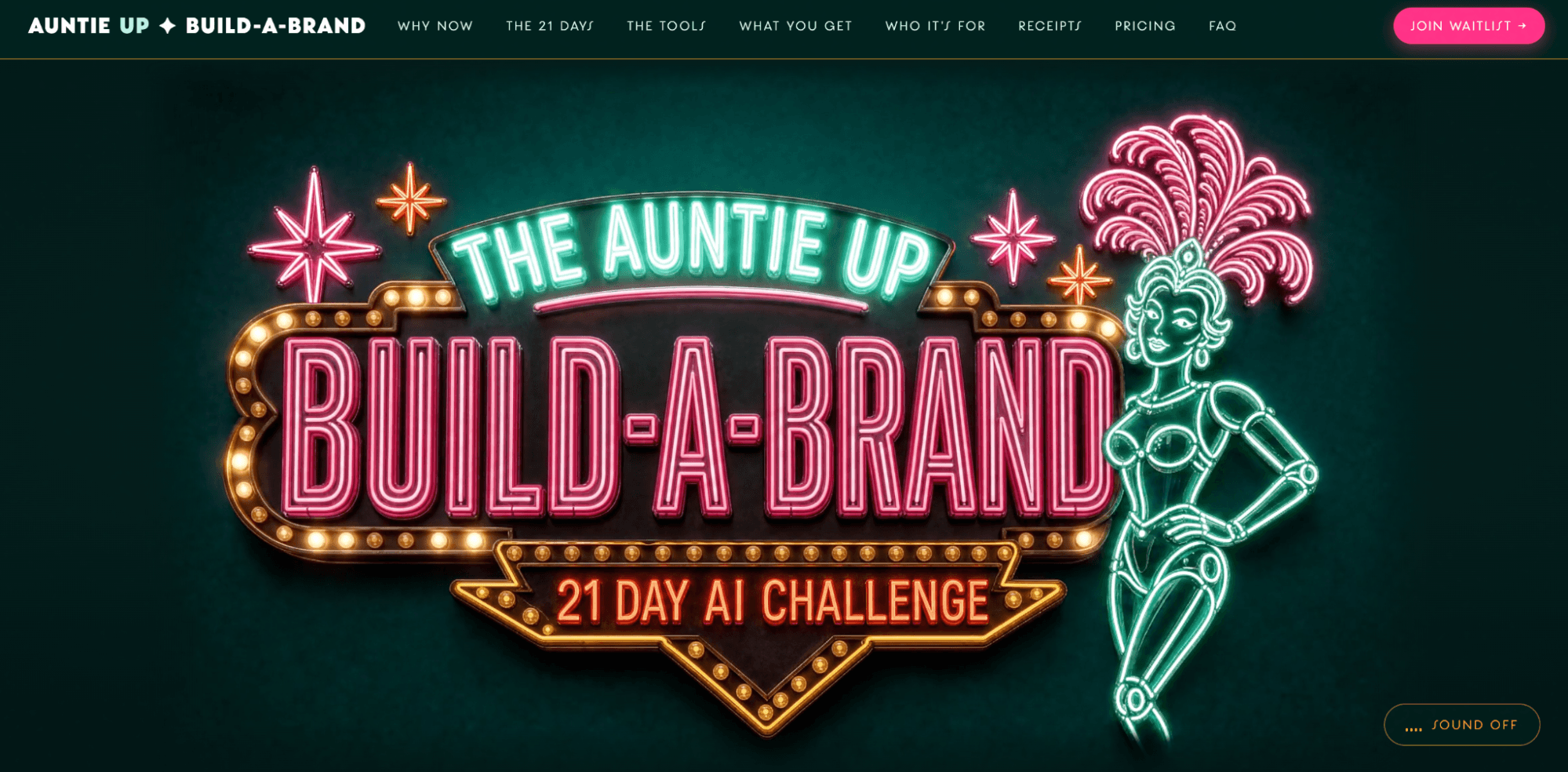
This streamlined orchestration enables remarkable efficiency. Marketers can build entire digital sales pages natively within an AI-assisted workflow: writing website code, generating custom neon-and-robot hero imagery via Magnific, and even spinning up matching motion video assets using advanced video models like Seedance or Google Omni—all preserved within a single, continuous conversation thread.
Additionally, native plugins for industry-standard design suites like Adobe Photoshop and Adobe Illustrator allow creative professionals to pull AI-generated elements directly into their traditional editing workflows, bridging the gap between automated generation and manual polishing.
Implications for the Future of Brand Design
As generative AI continues its rapid maturation, the competitive divide in digital marketing will no longer be defined by who has access to the technology, but by how skillfully they wield it.
The era of easy differentiation through novelty is over. When anyone can generate a passable image with a single sentence, generic visuals signal a lack of brand intentionality and strategic depth. Conversely, marketers who embrace structured methodologies like the Seven-Pillar Prompt Framework and leverage advanced multi-model workflows will command a decisive advantage.
By treating AI not as a magic button, but as a collaborative, highly capable digital assistant that responds directly to the precision of human intent, brands can scale breathtaking, wholly original visual ecosystems that defy the tide of digital sameness and truly resonate with audiences.