
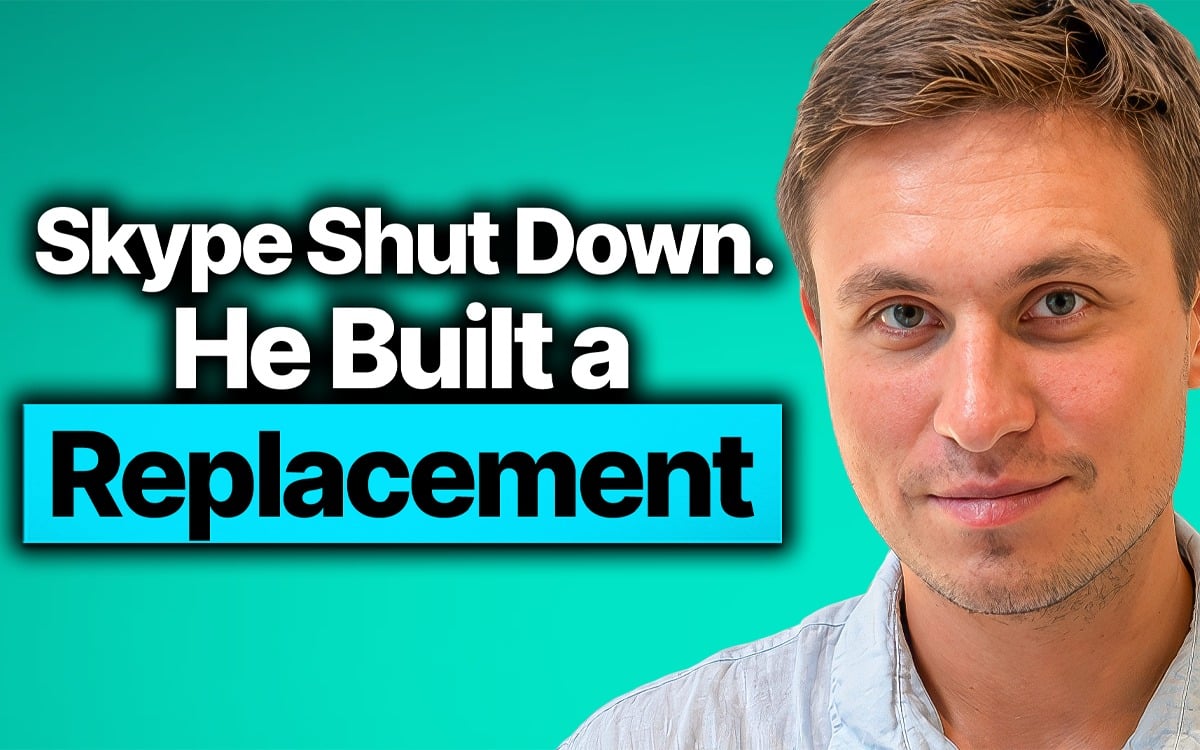
In the fast-paced world of software development, the "fail fast" mantra is often repeated, but rarely executed with the surgical precision of Denis Yurchak. In a recent episode of the Niche Pursuits podcast, Yurchak pulled back the curtain on his rapid ascent as a solo founder, detailing how he transformed a dying legacy product into a thriving software-as-a-service (SaaS) business.
In little over a year, Yurchak’s flagship venture, Yadaphone, has scaled to over 20,000 active users and is generating $17,500 in monthly recurring revenue (MRR). Not content with a single success, he has also launched eSIMPal, a travel-focused connectivity startup already pulling in an additional $2,000 per month. This article explores the mechanics of his growth, the strategic pivots that fueled his success, and the lessons he offers for the modern solo founder.
The Genesis: Identifying the Market Gap
To understand Yadaphone’s success, one must look at the landscape of international telecommunications. For years, Skype served as a universal, low-friction utility for expatriates, travelers, and business professionals needing to contact traditional institutions—banks, government offices, and local services—without the overhead of expensive telecom roaming plans.
When Microsoft began scaling back Skype’s legacy features, a vacuum was created. Yurchak, a former software engineer with a background in international relations, was uniquely positioned to notice the fallout. While many developers saw a tech giant sunsetting an old tool, Yurchak saw a migration of thousands of frustrated users looking for a replacement that wasn’t a complex, subscription-heavy enterprise suite.
"People were complaining on platforms like X (formerly Twitter)," Yurchak explained during the interview. "They didn’t want fancy AI chat features or team collaboration tools. They just wanted to call a bank in their home country while sitting in a coffee shop in a different continent."
By focusing on this specific, low-friction utility, Yurchak built an MVP (Minimum Viable Product) that addressed a painful, immediate problem. He didn’t build a better Skype; he built a simpler, more accessible version of what users already loved about the original.
Chronology: A Roadmap to Rapid Scaling
The growth of Yadaphone was not accidental; it was a result of disciplined execution and rapid validation.
The Foundation (Pre-Yadaphone)
Yurchak did not land on this success overnight. His journey involved six years of software engineering and several failed attempts at launching products. His pivot from a degree in international relations to programming was driven by the realization that he wanted to control the entire product lifecycle rather than serving as a cog in a large corporate machine.
The Launch and Reddit Validation
After identifying the demand for a lightweight calling tool, Yurchak launched the first iteration of his product. The initial traction did not come from sophisticated SEO campaigns or expensive ad buys, but from the community-driven feedback loops on Reddit. Posting his tool in relevant subreddits allowed him to receive direct, honest criticism. Seeing live Stripe notifications from strangers was the turning point that transformed a weekend project into a viable business.
The Listicle Strategy
Perhaps the most brilliant aspect of Yurchak’s growth strategy was his exploitation of "legacy content." When Skype shut down, the internet was littered with blog posts and "Best Alternatives" listicles that were suddenly obsolete. Yurchak systematically reached out to the owners of these high-ranking articles. He offered his product as a direct, functional replacement for the now-defunct Skype, turning stale content into a high-intent traffic funnel.
"One strong article placement led to roughly 50 signups per day," Yurchak noted. This strategy allowed him to bypass the "cold start" problem of SEO and immediately tap into traffic that was already looking for a solution.
Supporting Data: The Business Model
Yadaphone’s success is a case study in why sometimes the "simplest" business model is the most effective.
- Pricing Strategy: Rejecting the modern obsession with forcing users into expensive, recurring monthly subscriptions, Yurchak opted for a credit-based system. This significantly lowered the barrier to entry. Users could purchase small amounts of credit to test the service, building trust through micro-transactions before committing further.
- The Enterprise Pivot: While the platform began with retail users, it quickly caught the eye of small businesses. Currently, 30 enterprise clients account for 30–40% of his monthly revenue. These users pay for team access and shared credit pools, providing a stable, predictable revenue stream that complements the transactional nature of individual users.
- Customer Retention: Yurchak’s focus on direct communication has led to an incredibly low churn rate. Over the course of a year, only one enterprise customer left, which he attributes to landing page confusion rather than a product defect.
The Emergence of eSIMPal
The creation of Yurchak’s second venture, eSIMPal, serves as a powerful reminder of why founders should listen to their users.
As Yadaphone’s landing page traffic grew, Yurchak noticed an increasing number of inquiries regarding travel eSIMs. Visitors were misinterpreting the site’s messaging, assuming the service provided global data connectivity. Instead of ignoring this "misunderstanding," Yurchak treated it as a market signal.
After discovering that partnering with existing providers was too slow and costly, he built his own solution. eSIMPal was born from this adjacent demand, proving that when a founder pays close attention to the questions users ask, the roadmap for the next product often reveals itself organically.
Implications: The Solo-Founder Operating System
Yurchak’s success offers a blueprint for the "Lean Solo Founder." He operates under a strict philosophy: guard your time and mental space.
1. Automation Over Management
Yurchak avoids the "people manager" trap. By keeping his tools self-serve and automating support through robust documentation, he keeps his overhead low. He refuses to build features that require constant human oversight.
2. Marketing as a First-Class Citizen
Many engineers spend 90% of their time coding and 10% on marketing. Yurchak flips this. His daily routine prioritizes distribution: marketing first, support second, and coding only when absolutely necessary to solve a bottleneck or address a bug.
3. The Power of "Small"
The most significant takeaway from the interview is that you don’t need a massive team to reach a $200k+ annual run rate. By solving a specific, boring problem for a defined group of people, Yurchak has created a business that is both highly profitable and sustainable.
Final Thoughts: The Path Forward
Denis Yurchak’s story is a compelling counter-narrative to the "hustle culture" of venture-backed startups that chase massive growth at the expense of profit. His success is built on the pillars of speed of execution, customer-centric feature development, and aggressive distribution.
For the aspiring software developer or entrepreneur, the lesson is clear: do not look for the next revolutionary invention. Look for the products people are already using that are being neglected or retired. Find the communities that are complaining about a lack of simple solutions. Then, build the tool that solves their pain with as little friction as possible.
As Yurchak proved, when you align your product with the actual needs of the market—and back it with smart, non-intrusive marketing—you don’t need to reinvent the wheel. You just need to provide a better, more reliable way for people to keep moving.