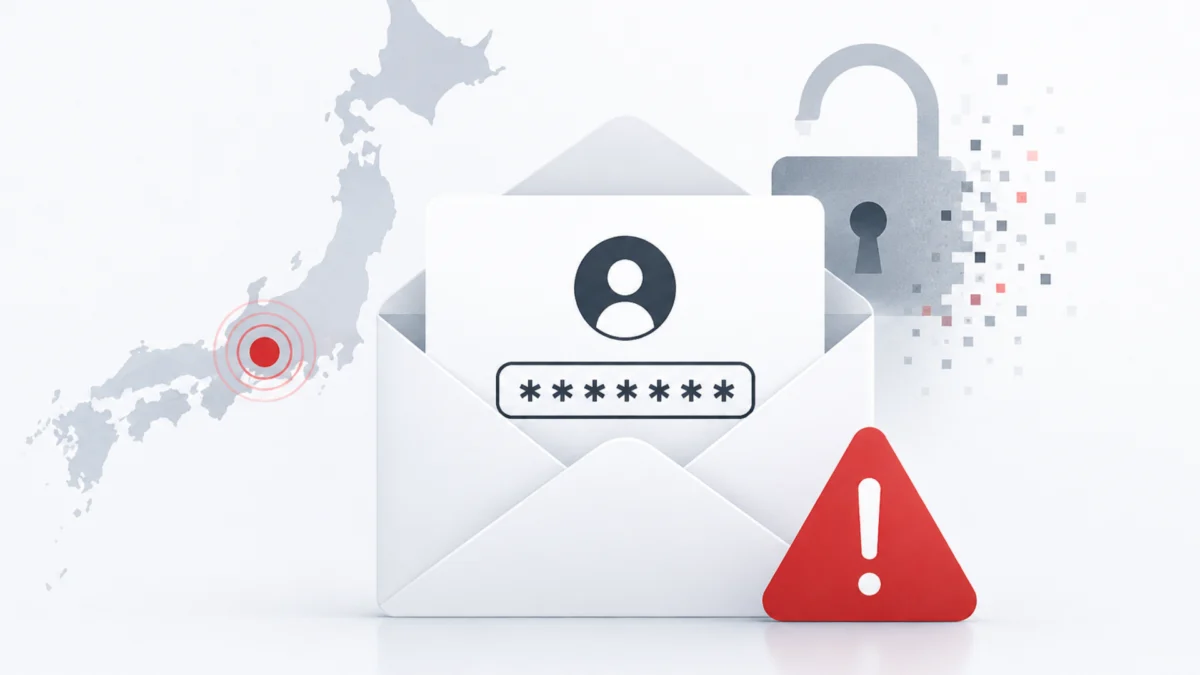
In a stark reminder of the systemic risks inherent in shared digital infrastructure, Japanese telecommunications giant KDDI has confirmed a significant data breach impacting its internal email systems. The intrusion, which potentially exposes the credentials of up to 14.22 million users, highlights the fragility of modern ISP ecosystems, where a single vulnerability in a third-party component can cascade across multiple service providers, compromising millions of users simultaneously.
The breach, discovered by KDDI security teams on June 17, 2026, involves a wide-reaching compromise of a shared email platform that services not only KDDI’s own subscriber base but also those of five other Japanese internet service providers (ISPs). As investigations continue, the incident has sparked urgent discussions regarding the transparency of software supply chains and the security standards governing the storage of consumer credentials.
Chronology of the Breach
The timeline of the incident reflects a rapid detection and response cycle, though the aftermath remains a source of significant concern for the cybersecurity community.
- June 17, 2026: KDDI’s security monitoring systems flagged suspicious activity on the shared email infrastructure. Internal investigators determined that attackers had successfully exploited a vulnerability in a third-party software component embedded within the platform. KDDI engineers moved immediately to isolate the affected systems, successfully blocking the intruders’ access later that same day.
- June 17–22, 2026: Following the neutralization of the threat, KDDI initiated an internal forensic investigation and established communication with the five impacted ISP partners. Simultaneously, the company began the mandatory notification process, reaching out to the Personal Information Protection Commission (PPC) and the Ministry of Internal Affairs and Communications of Japan.
- June 23, 2026: KDDI issued a formal public disclosure, acknowledging the potential exposure of up to 14.22 million email addresses and their associated passwords.
- June 24, 2026–Present: KDDI continues to work with the affected ISPs to conduct a granular audit of the exposed data. The company has instructed all affected customers to initiate password resets and implement two-factor authentication (2FA) where available.
The Anatomy of the Vulnerability
At the heart of the breach lies a “hidden” vulnerability within a third-party software package utilized by the shared email platform. While KDDI has confirmed that this component served as the entry point for the attackers, the company has conspicuously withheld the name of the software and its vendor.
From a cybersecurity perspective, this lack of transparency presents a major challenge. Without the disclosure of the specific software—or a corresponding Common Vulnerabilities and Exposures (CVE) identifier—other service providers worldwide remain in the dark. If these organizations are utilizing the same software, they are currently unable to audit their own systems for the same flaw.
This scenario underscores a recurring friction point in incident response: the tension between a company’s desire to protect its reputation and the industry’s need for collective defense. By keeping the vulnerable software unnamed, KDDI has inadvertently shielded the threat landscape from the visibility required to prevent similar breaches elsewhere.
Supporting Data and Exposure Scope
The figure of 14.22 million compromised records is currently being treated as a “worst-case ceiling.” KDDI’s investigation aims to distinguish between active users, former customers, and dormant accounts that have not been accessed in years.
The Credential Crisis
The severity of this breach is defined by the inclusion of passwords alongside email addresses. In the hierarchy of data leaks, this represents the highest level of risk. While a leaked email address can lead to an increase in spam and phishing attempts, a leaked password grants unauthorized actors the keys to the kingdom.
KDDI has stated that a portion of the passwords were stored using hashing or encryption, providing a layer of protection against direct exploitation. However, the company has declined to specify:
- The Proportion: How many passwords were encrypted versus stored in plaintext?
- The Methodology: What hashing algorithms were used? (e.g., outdated algorithms like MD5 or SHA-1 would be considered functionally equivalent to plaintext).
Without this data, cybersecurity experts cannot provide an accurate risk assessment. In the current threat environment of 2026, any password stored without robust, modern cryptographic salting and hashing is effectively compromised.
Official Responses and Remediation
KDDI has acted in accordance with standard corporate protocols, cooperating with regulatory bodies and notifying the affected ISPs. However, the company’s public-facing response has been criticized for its vagueness regarding the technical specifics of the breach.
In a statement, a KDDI spokesperson emphasized that the company is "prioritizing the containment of the threat and the protection of customer data" while working alongside the impacted ISPs to bolster security measures.
For the affected ISPs, the situation is a reputational nightmare. Their reliance on a shared, third-party-dependent platform has forced them into a position where they must manage the fallout of a breach they had no direct control over. They are now tasked with the heavy lifting of informing their respective customer bases and managing the spike in support inquiries.
Implications for the ISP Industry
The KDDI incident serves as a definitive case study in the risks of centralized, shared infrastructure.
Credential Stuffing and Downstream Abuse
The primary threat to the average user is the phenomenon of “credential stuffing.” Because consumers frequently reuse passwords across multiple platforms, a breach at an ISP level is often the “master key” for an attacker. Once a user’s email credentials are stolen, the attacker can use automated scripts to test those same credentials against banking, social media, and retail accounts.
The Reputation of Mailbox Providers
Beyond the personal risk to consumers, this breach poses a systemic threat to email deliverability. Hijacked consumer mailboxes are prime assets for malicious actors looking to distribute spam, malware, or phishing links. When a major ISP’s mail server suddenly starts originating high volumes of malicious traffic, global spam filters react accordingly. This can lead to the blacklisting of legitimate mail originating from those same providers, affecting every customer who uses that ISP, even those whose accounts were not compromised.
The Need for Two-Factor Authentication (2FA)
The breach has highlighted the urgent need for universal 2FA adoption. KDDI is actively pushing users to enable 2FA; however, the reality is that many consumer-grade ISP webmail interfaces still lack modern, easy-to-use 2FA options. The industry is now facing pressure to modernize these platforms to protect users against the inevitable reality of credential theft.
Conclusion: A Call for Transparency
As the investigation into the KDDI breach enters its next phase, the industry waits for two critical disclosures: the identity of the vulnerable software and the specific methods of credential storage that were in place at the time of the attack.
Until these details are made public, the security community must operate under the assumption that the credentials of 14.22 million users are in the hands of malicious actors. For the affected customers, the advice is clear: assume your credentials are compromised. Change passwords immediately—not just for the affected email services, but for any other platform where the same password was used.
The KDDI breach is not just an incident of unauthorized access; it is a wake-up call for the telecommunications sector. It underscores the reality that in an interconnected world, the security of an entire network is only as strong as the most obscure third-party component in its supply chain. Until transparency becomes the default in incident reporting, the wider industry will remain perpetually vulnerable to the same silent, systemic failures.