As Google Ads continues to lean heavily into automated campaign tools, machine learning, and artificial intelligence, digital marketers face a new operational reality. While automated algorithms excel at uncovering hidden opportunities and scaling reach, industry experts warn that mistaking basic platform optimization for a holistic marketing strategy can lead to costly missteps.
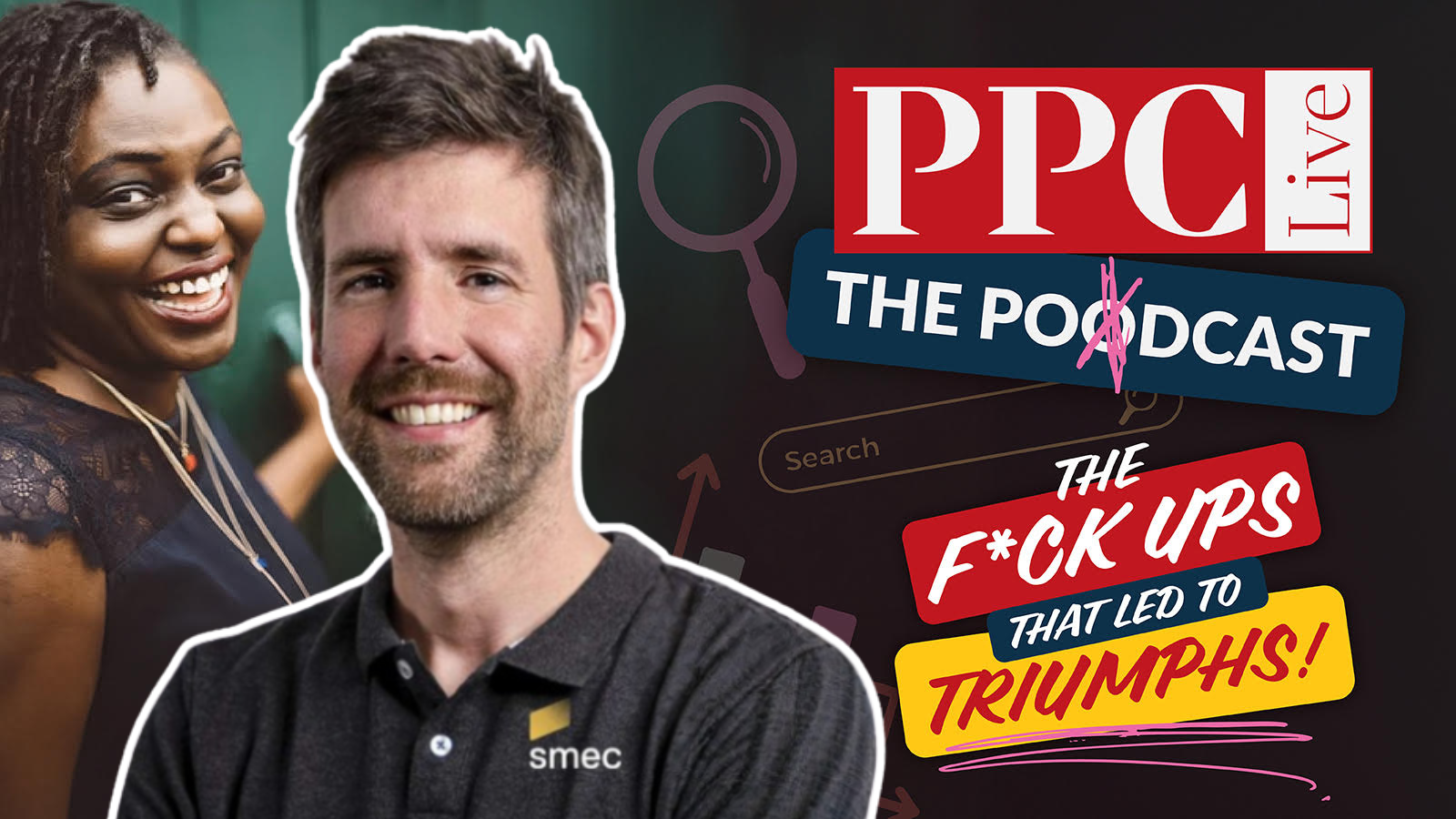
Recently, Mike Ryan, Head of E-Commerce Insights at Smarter Ecommerce (SMEC), sat down for an episode of the PPC Live podcast to dissect the evolving landscape of paid search. During the candid conversation, Ryan explored critical missteps surrounding features like AI Max, the dangers of knee-jerk reactions to platform updates, and how modern advertisers can successfully navigate Google’s increasingly automated ecosystem without sacrificing business context.
Main Facts: The Intersection of AI, Strategy, and Human Oversight
The core thesis of Ryan’s insights centers on a fundamental disconnect between machine learning capabilities and actual business realities. Google’s automated tools are designed to maximize conversions, traffic, or return on ad spend (ROAS) based on quantitative metrics. However, they lack the qualitative, real-world context that dictates a company’s broader commercial strategy.
For instance, Ryan shared a case study where AI Max dramatically expanded a client’s traffic by aggressively targeting a much larger competitor. While standard performance metrics—such as click-through rates and initial conversion volume—looked impressive on paper, the strategy conflicted with the brand’s intentional commercial decisions. The advertiser had deliberately avoided targeting those specific search terms to prevent a costly bidding war. AI Max, functioning purely on algorithmic optimization, could not factor in that crucial business context.
This disconnect highlights why modern PPC professionals must adopt a "trust but verify" mindset. Automated campaign features require rigorous, ongoing oversight from day one. Advertisers cannot simply look at top-line headline performance and assume everything is operating in alignment with business goals.
Chronology and Industry Timeline: From Viral Claims to Algorithm Updates
Understanding how automated features behave requires looking at a timeline of recent events, platform shifts, and the rapid spread of information within the PPC community.
Early Observations vs. Broad Conclusions
In the early days of rolling out new AI-driven campaign types, Ryan made an observation that AI Max seemingly favored the Search Partner Network. He shared these preliminary findings publicly on LinkedIn, sparking widespread industry discussion.
However, as more campaign data accumulated over subsequent weeks, it became clear that this behavior was not a universal rule. The initial observation had been drawn from a limited dataset. This incident highlighted a growing challenge in the digital marketing industry: viral PPC claims are exceptionally difficult to take back once they enter circulation. Industry leaders carry a distinct responsibility when sharing insights, as practitioners often make immediate, high-stakes campaign decisions based on early observations.
The August 17 Google Update Panic
A similar rush to judgment occurred following Google’s August 17 update, which expanded Smart Bidding exploration and introduced new promotion modes. In the immediate aftermath of the change, Ryan’s research indicated that many advertisers panicked, proactively increasing their target ROAS across accounts—even on campaigns that were not budget-constrained and therefore required no intervention.
Uncertainty surrounding how the update would impact performance drove advertisers to adopt an unnecessarily conservative posture. Ryan pointed out that this widespread panic actually created a lucrative counter-intuitive opportunity. While cautious competitors scaled back their spend and raised their return thresholds, bold advertisers who lowered their ROAS targets were able to capture valuable market share.
Furthermore, Google’s official guidance at the time advised waiting one to two full conversion cycles to accurately measure the impact of the update. Many of the sweeping conclusions circulating immediately after August 17 violated this fundamental rule of data analysis, being drawn long before sufficient performance data had materialized.
Supporting Data and Structural Pitfalls in Automated Accounts
Navigating automation successfully requires clean data and strategic account architecture. According to Ryan, many advertisers inadvertently sabotage Google’s machine learning by structuring their accounts incorrectly.

The Danger of Over-Segmentation
A common hangover from legacy Google Ads strategies is hyper-granular account segmentation. Historically, separating campaigns into tiny, highly specific buckets gave media buyers granular control over bids and budgets. In the era of Smart Bidding, however, over-segmentation starves the algorithm of necessary conversion data.
Ryan’s research suggests that automated bidding strategies require a minimum of 30 conversions per month to function consistently, with 60 or more being the ideal threshold. When accounts are sliced into dozens of micro-campaigns, individual segments lack the statistical volume required for machine learning to optimize effectively.
CFO-Driven Structures vs. Algorithm Realities
In one notable account structure Ryan encountered, an e-commerce brand had divided its campaigns into extremely granular margin buckets dictated strictly by the company’s Chief Financial Officer (CFO). Each bucket was assigned its own rigid ROAS target.
While this approach sounded sophisticated and financially disciplined on paper, it severely fragmented the account data. The algorithm struggled constantly to achieve the disparate targets because the data pool within each bucket was simply too shallow.
To bridge the gap between financial governance and algorithmic efficiency, Ryan highlights custom labels as an underutilized solution. By feeding custom labels into campaign strategies—incorporating metrics like product margins, sell-through rates, and return rates—advertisers can supply Google’s AI with vital business context. This allows the system to optimize around true business profitability rather than blindly chasing raw conversion numbers.
Official Responses and Platform Controls
Google provides several built-in guardrails and channel controls for advanced campaign types like Performance Max and AI Max. However, knowing these tools exist is only half the battle; advertisers must understand how they operate under the hood.
Utilizing Guardrails and Transparency Reports
Advertisers do not have to fly blind when utilizing automated expansion tools. Guardrails are available to curb unwanted behavior, including:
- Negative Keywords: Restricting irrelevant or undesirable search queries.
- Brand Inclusions and Exclusions: Dictating which brand terms campaigns can or cannot participate in.
- Search Partner Network Settings: Controlling whether off-network inventory is utilized.
- Match Type and Match Source Reporting: Offering visibility into exactly where traffic expansion originates.
The Nuance of Performance Max Channel Controls
Google recently introduced features allowing Performance Max advertisers to adjust the relative importance of individual channels. While this sounds like a straightforward dial to turn, Ryan issued a warning regarding how these controls manifest in practice.
Increasing the designated "importance" of a specific channel may not simply drive more volume there; rather, it can give the underlying algorithm greater tolerance around your target Cost Per Acquisition (CPA) or ROAS. This nuance can easily produce unexpected financial outcomes if advertisers do not monitor the resulting shifts in efficiency closely.
Implications for the Future of PPC
The evolution of automated search advertising fundamentally changes the required skill set for digital marketers. Tactical execution—once the hallmark of a skilled PPC specialist—is increasingly handled by algorithms.
Consequently, curiosity, critical thinking, and cross-functional business acumen are rapidly becoming the core competencies of successful paid media professionals. The implications for the industry are clear:
- Strategy Over Settings: Advertisers must shift from tactical segmentation to strategic segmentation. Every structural change within an ad account must serve a validated business purpose rather than mimicking outdated best practices.
- Interrogating the Data: As platforms roll out complex AI features and frequent updates, marketers must resist the temptation to draw instant conclusions from early data anomalies. Patience and adherence to proper testing windows are paramount.
- Aligning Finance and Marketing: Bridging the gap between corporate financial goals (like margins and net profit) and marketing algorithms requires creative data inputs, such as custom labels, rather than rigid, data-starving account structures.
Ultimately, automation is a powerful engine, but human marketers must remain firmly in the driver’s seat. By pairing rigorous verification processes with deep business context, advertisers can harness the scaling power of AI without losing sight of their overarching strategic goals.