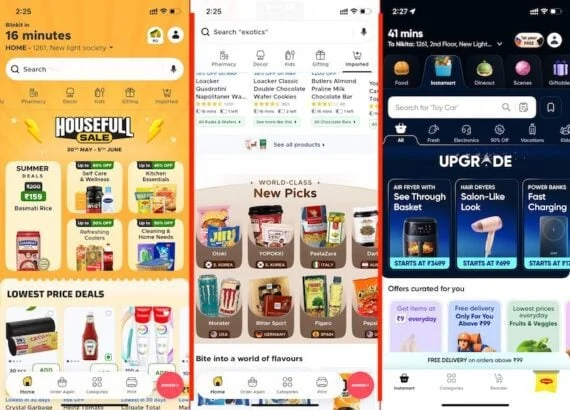
In the bustling urban centers of India, the definition of "convenience" has undergone a radical transformation. What once required a trip to a local kirana store or a scheduled grocery delivery now happens in the time it takes to brew a cup of coffee. Quick commerce—a high-speed delivery model promising door-to-door fulfillment within 30 minutes—has moved from a pandemic-era experiment to a cornerstone of the Indian consumer economy.
As of mid-2026, the sector is not merely growing; it is exploding. According to a joint report published in April 2026 by Deloitte and Google, quick commerce is projected to reach $50 billion in annual revenue by 2030, accounting for 10% of India’s total e-retail spend. This shift marks a pivotal moment for global brands, domestic retailers, and the millions of consumers who have turned household names like Blinkit, Swiggy Instamart, and Zepto into daily verbs.
Main Facts: The Anatomy of a High-Speed Market
The quick commerce model relies on a dense network of "dark stores"—micro-fulfillment centers strategically located in high-traffic residential neighborhoods. By minimizing the distance between the warehouse and the doorstep, these platforms have optimized the logistics of last-mile delivery to an unprecedented degree.
The market is currently defined by three dominant players:
- Blinkit: Operated by the parent company Eternal (formerly Zomato), it boasts a massive footprint of 2,243 dark stores.
- Swiggy Instamart: A formidable competitor leveraging Swiggy’s extensive delivery network.
- Zepto: A pure-play quick-commerce entrant that has rapidly scaled its operations to challenge established incumbents.
These platforms prioritize high-frequency, low-ticket-value items. Unlike traditional e-commerce, where consumers might browse for electronics or apparel, quick commerce focuses on daily consumables: snacks, dairy, fresh vegetables, beverages, baby care, and personal hygiene products. The business logic is simple yet demanding: profitability is driven by customer retention and order frequency rather than high average order values.
A Chronology of Rapid Adoption
The rise of quick commerce in India did not happen overnight. Its trajectory reflects the unique socio-economic conditions of the country:
- 2020–2021: The COVID-19 pandemic acted as the primary catalyst. With lockdowns restricting physical movement, the demand for doorstep delivery of essential goods surged. Startups began experimenting with "hyper-local" delivery models.
- 2022–2023: Consolidation began. Players like Blinkit were acquired by larger food-tech entities (Zomato), providing the capital infusion necessary for aggressive expansion. The "10-minute delivery" promise became a marketing standard.
- 2024–2025: Regulatory and structural shifts. As the industry matured, platforms navigated complex Indian FDI (Foreign Direct Investment) laws. In 2025, major players underwent corporate restructuring to ensure compliance with Indian ownership requirements regarding inventory holding.
- 2026 (Present): The focus has shifted from mere existence to scaling. Platforms are moving beyond Tier 1 cities (like Mumbai, Delhi, and Bangalore) into Tier 2 and Tier 3 cities, targeting the massive consumer base in India’s heartland.
Supporting Data: The Economics of Speed
The scale of this transition is supported by compelling data. Eternal, in its April 2026 fiscal-year-end shareholders’ letter, revealed that 109 million Indians utilized its ecosystem—encompassing food delivery and quick commerce—during the previous fiscal year, generating a staggering $10 billion in revenue.
The economic viability of these platforms rests on efficient unit economics and a burgeoning middle class with rising disposable income. Research from SW Cybernetics highlights the costs associated with this ecosystem. Advertising on platforms like Blinkit has become a necessity for brands looking to maintain visibility. With sponsored ad costs averaging $0.11 per click and CPM (cost per mille) rates for banner ads reaching $2.11 to $3.16, the cost of customer acquisition is significant. Furthermore, brands often pay a monthly "slotting fee" of $1,000 to $5,000 to secure shelf space in dark stores, on top of a 10% to 25% commission on sales.
Official Perspectives and Regulatory Nuances
The regulatory environment in India remains a complex puzzle for foreign entities. Many international brands fail because they conflate India with Southeast Asian or Chinese markets. India’s legal framework is distinct, particularly concerning retail ownership.
Under current regulations, foreign companies are generally prohibited from owning an India-based retailer that buys goods from multiple vendors and sells them directly to consumers (the multi-brand retail model). However, a foreign company can operate its own direct-to-consumer (DTC) channel or sell through an independent distributor.

This is why the "marketplace" model is the standard. Platforms like Blinkit, Swiggy Instamart, and Zepto function as intermediaries. The restructuring of these companies into Indian-owned entities has allowed them to legally manage the inventory in their dark stores, effectively bridging the gap between platform technology and brick-and-mortar logistics.
Implications for Global Brands
For international brands, the quick commerce wave offers a golden ticket to the Indian market, but only if they adapt to the "India Playbook."
1. Localization is Non-Negotiable
Foreign goods—from American snacks like Doritos and Cheetos to Japanese Pocky—are highly sought after. However, success depends on pricing. Indian consumers are notoriously value-conscious. Brands that offer "trial-sized" or lower-price-point versions of their products gain significantly higher traction than those that maintain global pricing structures.
2. The Power of Search and AI
Quick commerce platforms are not just warehouses; they are sophisticated data engines. They use AI to personalize search results and recommend products based on individual user behavior. For a brand, visibility is a science. Optimizing listings with localized search terms and using paid search ads are essential strategies to ensure a product appears in the top results for a user’s 10-minute shopping window.
3. Packaging and Compliance
India’s packaging and labeling requirements are stringent. Brands must ensure that their products are not just visually appealing but also compliant with local regulations. Furthermore, the role of micro-influencers and the distribution of free samples have proven to be the most effective ways to build the initial trust necessary for repeat purchases.
4. The Tier 3 Expansion
Perhaps the most significant implication is the untapped potential in Tier 3 cities. With 700 million people—nearly half of India’s 1.45 billion population—residing in these regions, the next phase of the quick commerce revolution will be defined by how well platforms can replicate their Tier 1 success in smaller, more geographically dispersed markets.
The Future: Beyond the 30-Minute Delivery
As we look toward 2030, quick commerce is set to become an inextricable part of the Indian lifestyle. The convenience of "Blinkit-ing" an item is not just about saving time; it is about the integration of technology into the mundane chores of daily life.
However, the industry faces hurdles. Sustainability, labor rights for delivery partners, and the mounting pressure to achieve profitability without sacrificing the speed that defines the model will be the primary challenges for the next five years. For now, the "30-minute promise" remains a powerful engine of growth, transforming India into the world’s most dynamic laboratory for retail innovation.
Global brands that choose to engage with this ecosystem must be prepared to invest not just in advertising, but in understanding the nuanced, high-speed, and deeply local nature of the Indian consumer. Those who master this will find themselves at the forefront of the world’s fastest-growing retail market.