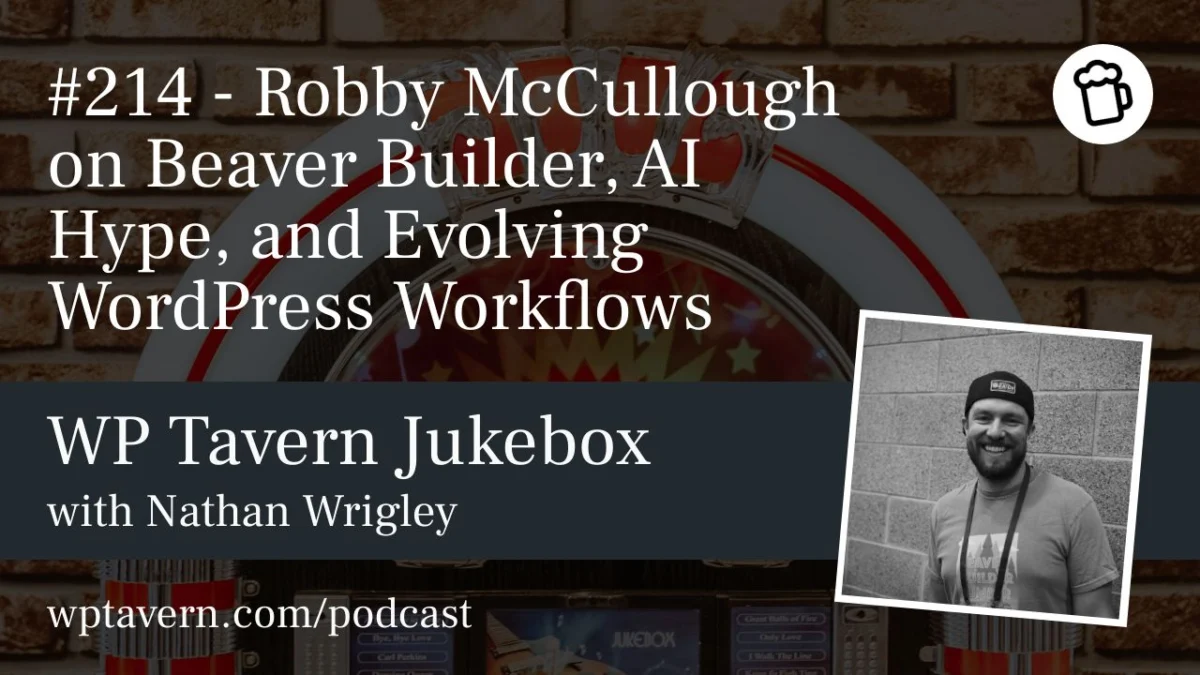
As the digital landscape shifts beneath the feet of developers and entrepreneurs alike, long-standing staples of the web ecosystem are finding themselves at a critical crossroads. Recently, Nathan Wrigley of the WP Tavern Jukebox Podcast sat down with Robby McCullough, co-founder of Beaver Builder, to discuss the past, present, and future of WordPress page builders.
For nearly 12 years, Beaver Builder has been an anchor in the WordPress community, weathering shifts from hand-coded sites to the rise of visual editors, and now, the burgeoning wave of artificial intelligence. Their wide-ranging conversation delved into the business realities of running a legacy product, the evolution of AI tools from hype to agentic reality, and the enduring importance of human connection in an increasingly automated world.
Main Facts
The core of the discussion centered on the resilience of traditional page builders in an era dominated by rapid technological disruption. McCullough, who co-founded Beaver Builder 12 years ago, reflected on how the tool helped democratize web design by lowering the barrier to entry for non-technical users.
- The AI Inflection Point: While many tech companies rushed to incorporate superficial GPT wrappers into their software a year ago to appease corporate stakeholders, Beaver Builder deliberately waited. McCullough noted that today’s AI tools have evolved past mere gimmicks into genuinely useful, agentic coding systems that can assist in web development.
- The Philosophy of Extensibility: Despite the rise of "vibe coding" (building entire websites simply by prompting an AI), McCullough and Wrigley emphasized that WordPress offers unmatched foundational "plumbing"—such as metadata management, custom post types, and a robust user management system—that static AI-generated sites often lack.
- Product Roadmaps: Beaver Builder is currently experimenting with two primary AI integration approaches: allowing users to import externally generated AI landing pages directly into the Beaver Builder interface, and introducing an agentic chat experience to edit specific page elements on the fly.
Chronology of an Industry: From Hand-Coding to AI
To understand where web development is heading, McCullough and Wrigley looked back at the evolutionary stages of the modern internet.
1. The Era of Hand-Coding and Dreamweaver
Before visual page builders became mainstream, building a website required a deep working knowledge of HTML, CSS, JavaScript, and PHP. Early web design tools, reminiscent of the Dreamweaver era, were often criticized for generating messy, over-complicated spaghetti code. Building a custom layout required painstaking manual labor.
2. The Page Builder Revolution
Entering the market 12 years ago, Beaver Builder was part of a vanguard that transformed WordPress adoption. By allowing users to drag and drop components onto a visual canvas, page builders stripped away the fear of breaking site architecture. This user-friendly approach contributed significantly to WordPress scaling its market share to over 40% of the global web. However, early on, they faced heavy skepticism from purists advocating for the "WordPress way" of manual theme development.
3. The Gutenberg Era and Perpetual Skepticism
When WordPress core introduced the Gutenberg block editor, industry predictions repeatedly claimed that third-party page builders would become obsolete within a year. Yet, products like Beaver Builder adapted, proving that visual layout engines still held immense value for agencies, freelancers, and clients who needed granular control over their designs.
4. The Present: The AI Gold Rush
Today, the industry faces its next major existential shift. Developers can prompt an AI model to spin up a fully functioning multi-page website in seconds. This has triggered a new wave of anxiety and excitement for product founders trying to stay relevant while managing the relentless pace of technological change.
Supporting Data and Market Realities
Running a mature product business in the WordPress ecosystem involves balancing legacy support with cutting-edge innovation. McCullough offered a candid look at the challenges product teams face today:
- The 40% Footprint: With WordPress powering over 40% of the web, millions of active sites rely on established infrastructure. McCullough pointed out that these sites will not transition to entirely new paradigms overnight, ensuring a long tail of legacy maintenance.
- Development Friction: Building new features traditionally required allocating significant developer resources. McCullough shared that AI tools have effectively lowered the friction of feature creation, allowing small teams to prototype and test ideas much faster than before.
- The "Bring Your Own Key" Model: Beaver Builder’s experimental AI approach aims to avoid closed black boxes. Instead of locking users into proprietary token systems, the team is exploring flexible models where users can integrate their own agents while retaining full developer access to underlying markup and CSS.
Official Perspectives and Business Anxieties
Balancing a business through shifting tech sands is no small feat. McCullough, who experienced major personal milestones this year—including welcoming a newborn baby and moving into a new home—addressed the emotional and operational toll of steering a software company through an uncertain climate.
- Optimism as a Survival Strategy: McCullough credits a "hopeless optimistic" mindset for Beaver Builder’s longevity. Despite facing repeated threats—from legacy web design stigmas to Gutenberg and now AI—the team continues to iterate.
- The Anxiety of the Unknown: The rapid pace of AI advancement means founders can no longer accurately predict what the market will look like in a year. While corporate enterprises push for AI compliance, independent developers must weigh the utility of new tools against the risk of alienating users who value craftsmanship and control.
- The Importance of Maintenance: While the industry is obsessed with the creation phase of AI-generated websites, McCullough and Wrigley highlighted a neglected sector: maintenance. Websites built via AI prompts will still need long-term updates, localized edits, and seasonal redesigns. This is where visual editors like Beaver Builder are expected to retain their utility—serving as robust post-creation editing tools.
Implications for the Future of Web Design
As the conversation turned toward the horizon, both podcasters reflected on the broader societal and technical implications of an AI-driven world.
The Loss of Craftsmanship vs. Radical Efficiency
A recurring theme was the melancholy associated with losing traditional web design rituals. Writing raw CSS, manually picking color palettes in Figma, and assembling pages layer by layer are skills that risk becoming digital archaeology. Just as older generations looked back fondly on analog technologies, today’s developers may view manual coding as a vestige of the past.
However, the efficiency gains are undeniable. For busy professionals and parents like McCullough, dictation-driven workflows and agentic coding offer unprecedented productivity boosts.
The Paradox of Simulated Human Interaction
Perhaps the most poignant observation of the interview touched on human psychology. As AI tools become increasingly conversational, capable of mimicking human breath patterns, pauses, and emotional cadence, users risk substituting genuine human collaboration with synthetic interactions.
McCullough and Wrigley noted that while hyper-focus on productivity can isolate remote workers, it may simultaneously spark a cultural counter-movement. A growing craving for authentic human connection could revitalize real-world communities, local clubs, and in-person tech events—including the long-awaited revival of the global WordPress WordCamp circuit.
Conclusion
The intersection of page builders and artificial intelligence does not spell the immediate end for platforms like Beaver Builder. Instead, it highlights a transition from raw creation to sophisticated editing and management. As McCullough and his team continue to experiment behind closed doors, the enduring lesson is clear: while technology will always march forward at a breathtaking pace, the human desire for community, understandable code, and reliable tools will remain the bedrock of the web.