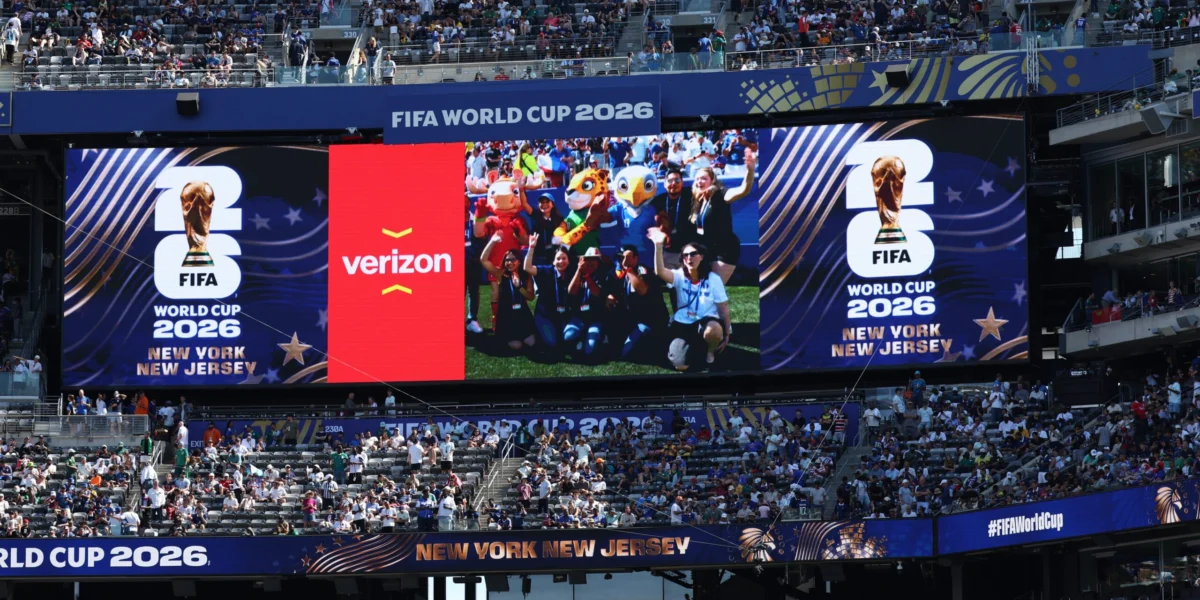
In a moment that blurred the lines between high-stakes international athletics and the cutting edge of silicon-based innovation, the 2026 FIFA World Cup witnessed a historic milestone today. During the Round of 16 match between Brazil and Norway at the New York/New Jersey Stadium, the halftime break transformed into a technological showcase as Atlas, the advanced humanoid robot developed by Boston Dynamics, took to the pitch.
In the first-ever robotics-powered halftime activation in FIFA history, Atlas not only delivered the official match ball but also stunned the global audience by flawlessly executing signature goal celebrations popularized by football legends, including Brazil’s Matheus Cunha and Norway’s Erling Haaland. This display served as more than just an entertaining spectacle; it was a high-stakes, real-world demonstration of the mobility, balance, and learning capabilities of modern humanoid robotics, signaling a new era for brand integration in global sports.
The Main Event: When Silicon Met the Pitch
As the whistle blew for halftime, the crowd’s attention shifted from the tactical adjustments of the players to the center circle. Emerging with a purposeful, fluid gait, Atlas moved with a level of human-like agility that left thousands of spectators—and millions watching from home—visibly captivated.
The robot’s performance was not merely a pre-programmed loop. It represented the culmination of years of research in reinforcement learning and whole-body control. By successfully navigating the uneven, high-stakes environment of a professional football pitch to deliver the ball, Atlas underscored that the theoretical promises of robotics are rapidly becoming tangible realities. Following the delivery, the robot transitioned into a series of complex physical gestures, mimicking the distinct, high-energy celebratory movements of football stars, demonstrating a level of mechanical dexterity previously unseen in a public, live-broadcast environment.
Chronology of a Technological Breakthrough
The road to this historic halftime performance was paved with years of strategic development and meticulous planning.
- The Partnership Formation: Following the announcement that Hyundai Motor Company and its subsidiary, Boston Dynamics, would serve as the Official Robotics Partner for the 2026 FIFA World Cup, the two entities began conceptualizing how to integrate robotics beyond traditional sponsorship.
- The "Next Starts Now" Campaign: Hyundai launched its global "Next Starts Now" platform, designed to frame the company as a future-focused mobility leader. This included the "School of Football" content series, which served as a digital precursor to the live event, featuring Atlas in training scenarios.
- The Development Phase: Behind the scenes, Atlas underwent rigorous testing. Engineers utilized thousands of hours of simulation to train the robot in reinforcement learning, ensuring that it could handle the sensory input of a stadium environment, such as crowd noise, lighting fluctuations, and turf variations.
- Final Rehearsals: In the days leading up to the New York/New Jersey match, the team conducted precision rehearsals to ensure that the synchronization between the command operators and the robot’s autonomous balancing systems remained seamless.
- The Live Execution: On match day, the activation proceeded as a live demonstration of "retargeting technology," which allows the robot to adapt human-centric movements in real-time, effectively bringing the digital and physical worlds together on the pitch.
Supporting Data: The Mechanics of Innovation
The performance of Atlas was not a "magic trick" but a showcase of three core pillars of robotics engineering:
- Retargeting Technology: This system allows the robot to translate human movement data—such as a specific goal celebration—into mechanical torque and motion paths. It is the bridge between human expression and robotic execution.
- Reinforcement Learning: By running thousands of simulations, Atlas is trained to refine its balance and movement strategies. This allows the robot to handle variables it may not have encountered in a lab, such as the specific grip of grass turf versus concrete.
- Whole-Body Control (WBC): Unlike industrial robots that are often constrained to static movements, Atlas utilizes WBC to coordinate every joint simultaneously. This is what gives the robot its fluid, human-like posture and allows it to recover its balance autonomously if it slips or encounters an obstruction.
While an operator initiates the commands, the robot’s actual movement—its gait, its grip on the ball, and its self-correction—is driven by its own onboard processors, proving that the machine is capable of navigating a complex, dynamic environment with minimal human intervention.
Official Perspectives: Strategy Made Visible
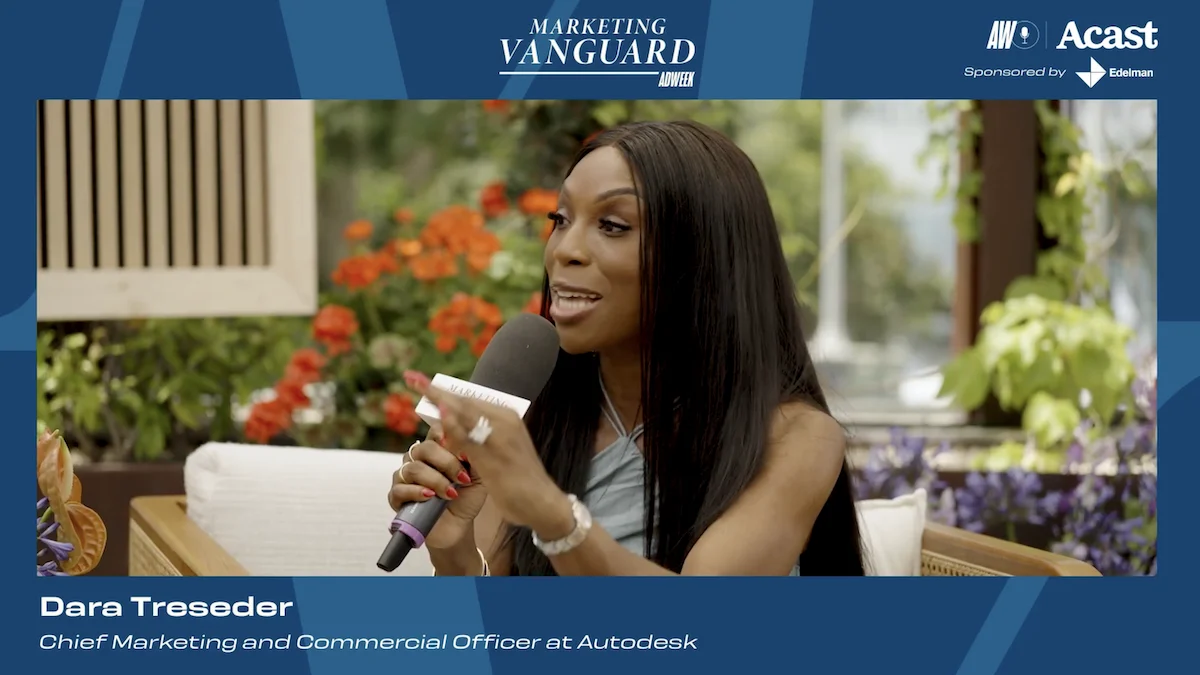
For Hyundai, this was not just a marketing stunt; it was a fundamental shift in corporate identity. Sungwon Jee, Executive Vice President and Global Chief Marketing Officer at Hyundai Motor Company, emphasized the necessity of breaking through the clutter of modern media.
"We’re not just competing with other sponsors on that pitch," Jee noted in an interview with ADWEEK. "We’re competing with every reel, every short-form, every piece of content flooding people’s screens every second of every day. In that context, incremental creativity isn’t enough. You need a moment so undeniably real, so present, that it breaks through."

Jee believes that the World Cup provides a unique, unmatched stage for this, as the tournament inherently represents the "next generation" of talent and ideas. By positioning Hyundai at the intersection of football and robotics, the company is effectively rebranding itself as a comprehensive "mobility" firm rather than a traditional automotive manufacturer. "The ball delivery wasn’t just a moment," Jee added. "It was the strategy made visible."
Beyond the Pitch: Security and Infrastructure
The presence of robotics at the 2026 World Cup extends well beyond the halftime spotlight. While Atlas provides the vision of what the future holds, Boston Dynamics’ "Spot"—the quadrupedal, dog-inspired robot—has been quietly performing essential, high-utility functions throughout the tournament.
Deployed for autonomous patrols at various venues, Spot is utilized to assist in security operations, asset protection, and site monitoring. This serves as a vital proof-of-concept for the commercial utility of robotics in large-scale infrastructure. While Atlas is the "face" of the innovation, Spot is the "function," proving that these machines are not just scientific curiosities, but reliable tools that can improve operational efficiency and safety in the world’s most high-pressure environments.
The Long-Term Implications of the "Next Starts Now" Era
The implications of this event are significant for both the robotics industry and the world of sports marketing.
For Sports Marketing:
The success of the Atlas activation sets a new benchmark for brand engagement. Future sponsors will likely move away from passive billboard advertising toward "active demonstrations" that utilize technology to interact directly with the game. If a robot can deliver the ball today, one must wonder what form of integration will be possible by the next tournament.
For Robotics and Society:
The most profound takeaway from the Hyundai-Boston Dynamics initiative is the shift in public perception. By placing a humanoid robot in the center of the world’s most popular sporting event, the companies are normalizing the presence of AI-driven machines in public spaces. As Jee noted, "The message is simple: They’re not coming. They’re already here."
This normalization is crucial. As these robots transition from research labs to the real world, public trust and familiarity are the first hurdles to widespread adoption. By associating Atlas with the joy, emotion, and prestige of the World Cup, the manufacturers have successfully humanized a machine, making the prospect of future human-robot collaboration seem less like science fiction and more like a natural evolution of our technological infrastructure.
Conclusion: A New Standard for Global Events
As the 2026 FIFA World Cup continues, the echoes of the halftime show will likely persist. Hyundai’s decision to move beyond static, incremental advertising and instead invest in a live, high-risk, high-reward demonstration has paid off, cementing the tournament not just as a festival of football, but as a crucible for the future of human-machine interaction.
The "Next Starts Now" campaign has succeeded in its primary goal: it has proven that robotics is no longer relegated to the background of industrial warehouses. It is a part of our culture, our entertainment, and our daily lives. With the match ball delivered and the crowds left in awe, one thing is certain: the world of professional sports has been permanently altered. The robots have arrived, and they have successfully kicked off a new, unpredictable chapter in the story of modern technology.