The traditional marketing agency model, once defined by billable hours, creative vanity, and siloed execution, is undergoing a seismic shift. In the age of generative AI and machine learning, the gap between agencies clinging to the status quo and those architecting a new future is widening into a chasm.
We are no longer in an era where AI is merely a “bolt-on” tool for efficiency. The most forward-thinking firms are fundamentally reimagining their DNA. They are shifting from being mere service providers to becoming strategic AI-native partners, developing custom-built agents, integrating sophisticated consulting frameworks, and redefining the very boundaries of strategy, creative, and operational excellence.
The Evolution: From Execution to Architecture
For decades, agencies operated on a model of "input-to-output": the client paid for the time and talent required to produce a campaign. Today, the value proposition is flipping. As AI commoditizes execution—writing copy, generating images, and segmenting data—agencies are pivoting toward high-level orchestration.
The leaders in this space are not just using AI to work faster; they are using it to build proprietary systems that offer their clients a competitive moat. This transition involves three distinct layers:
- People Transformation: Upskilling internal client teams to work alongside AI.
- Process Re-engineering: Automating the "drudgery" of marketing to focus on high-impact strategy.
- Systemic Integration: Moving away from fragmented campaigns toward unified, AI-powered ecosystems that connect the entire buyer journey.
The Pioneers Redefining the Agency Landscape
To understand where the industry is heading, we must look at the innovators currently disrupting the status quo. These firms, all of whom are featured partners at the upcoming Marketing AI Conference (MAICON), offer a roadmap for how businesses can transition from experimentation to operational scale.
1. Algomarketing: The Architects of Transformation
Algomarketing distinguishes itself through a dual-path approach: People Transformation and Process Transformation. Rather than delivering a finished product, they embed senior practitioners directly into the client’s workflow. By auditing existing practices, they identify inefficiencies and co-build AI-native agents designed to automate those specific roadblocks. Their model is essentially "consulting-as-code," ensuring that when the engagement ends, the client is left with a more intelligent, autonomous workforce.
2. Demand Spring: Closing the Revenue Gap
In the B2B sector, where complexity often leads to stalled growth, Demand Spring acts as a revenue marketing consultancy. They bridge the divide between strategy, tech, and execution. By focusing on AI advisory—covering everything from ABM (Account-Based Marketing) to AEO (Answer Engine Optimization)—they help organizations move past the "shiny object" phase of AI. Their focus is on governance and operationalization, ensuring that AI tools are not just deployed, but managed to produce measurable, bottom-line growth.
3. EMMIE Collective: The Fractional Powerhouse
The EMMIE Collective is challenging the traditional "agency of record" model by offering on-demand, fractional expertise. They embed high-level Marketing and Revenue Operations talent directly into client teams. This model is built for agility; rather than paying for a bloated agency team, clients get access to specialized operators who are experts in platforms like Marketo, HubSpot, Salesforce, and Tableau. It is a lean, data-driven approach that prizes operational speed over overhead.
4. Fjorge: The Invisible Engine
While many agencies fight for the spotlight, Fjorge operates as a behind-the-scenes digital partner. They function as a technical backbone for creative and marketing agencies that may lack the internal bandwidth for complex development. Whether building custom web applications, mobile experiences, or e-commerce infrastructure, Fjorge provides the technical precision that allows other agencies to deliver on their creative promises.
5. Intercept Group: The AI-Native Hybrid
Intercept Group is a prime example of the "human-in-the-loop" philosophy. While they offer a full suite of services—strategy, creative, digital media, and sales enablement—their delivery is powered by proprietary AI workflows. They leverage machine learning to accelerate the research and production phase, yet they maintain a strictly human-led approach to the creative strategy. Their "Intercept Labs" serves as an R&D arm, allowing clients to stress-test new AI marketing approaches in a controlled environment before full-scale deployment.
6. Level Agency: Orchestrating the Customer Journey
Level Agency focuses on "AI Orchestration." For brands with complex, high-consideration buying cycles, Level treats the entire customer journey as a single, data-rich ecosystem. They build repeatable systems that synchronize strategy, execution, and data science. By connecting the dots across CRM, search, and content, they ensure that AI is not just creating content, but optimizing the entire funnel for maximum conversion.
7. Seer Interactive: Two Decades of Data-Driven Evolution
With over 20 years in the industry, Seer Interactive represents the shift from traditional search marketing to sophisticated AI consulting. Through their "AI Lab," they conduct relentless internal experimentation, which informs their client-facing "SeerAdvance" offering. Their longevity is their greatest asset; they have the historical data to understand what worked in the past, combined with the cutting-edge research to dictate what will work in the future of AI search.
8. Soarion Digital: Mastering the Age of AI Search
Soarion Digital is tackling the specific challenge of "AI Search"—the reality where users ask platforms like Perplexity, ChatGPT, or Gemini for answers rather than clicking on blue links. They have developed a rigorous process to help clients become the "go-to answer" in these search tools. By focusing on citation-driven content and third-party validation, they help brands build the authority necessary to be referenced by AI models, turning AI referral traffic into a predictable growth channel.
Implications for the Modern CMO
The implications of this shift are profound. For the Chief Marketing Officer, the mandate is no longer just about hiring an agency that can "do the work." It is about selecting a partner that can help the business become an AI-ready organization.
The Shift from "Service" to "System"
The traditional agency model was transactional. The new model is systemic. Companies that continue to treat AI as a content-generation tool are missing the forest for the trees. The real value lies in integrating AI into the underlying architecture of the business—the data stack, the sales process, and the customer service journey.
The Human-AI Equilibrium
A recurring theme among these agencies is that AI does not replace the strategist; it elevates them. The most successful models are those that automate the "grunt work"—data synthesis, routine reporting, and baseline content production—to free up human experts to handle empathy, brand vision, and complex problem-solving. This human-AI equilibrium is the new baseline for agency performance.
Data Governance as a Competitive Advantage
As agencies move deeper into AI, data governance has moved from the back office to the front of the pitch. Agencies that can help clients navigate the legal, ethical, and privacy implications of AI usage are finding that they can charge a premium for their expertise. Trust is becoming the most valuable currency in the marketing ecosystem.
Looking Ahead: The MAICON Vision
The rapid evolution of these agency models proves one thing: we are still in the early innings. As AI models become more multimodal and agents become more autonomous, the definition of an "agency" will continue to morph.
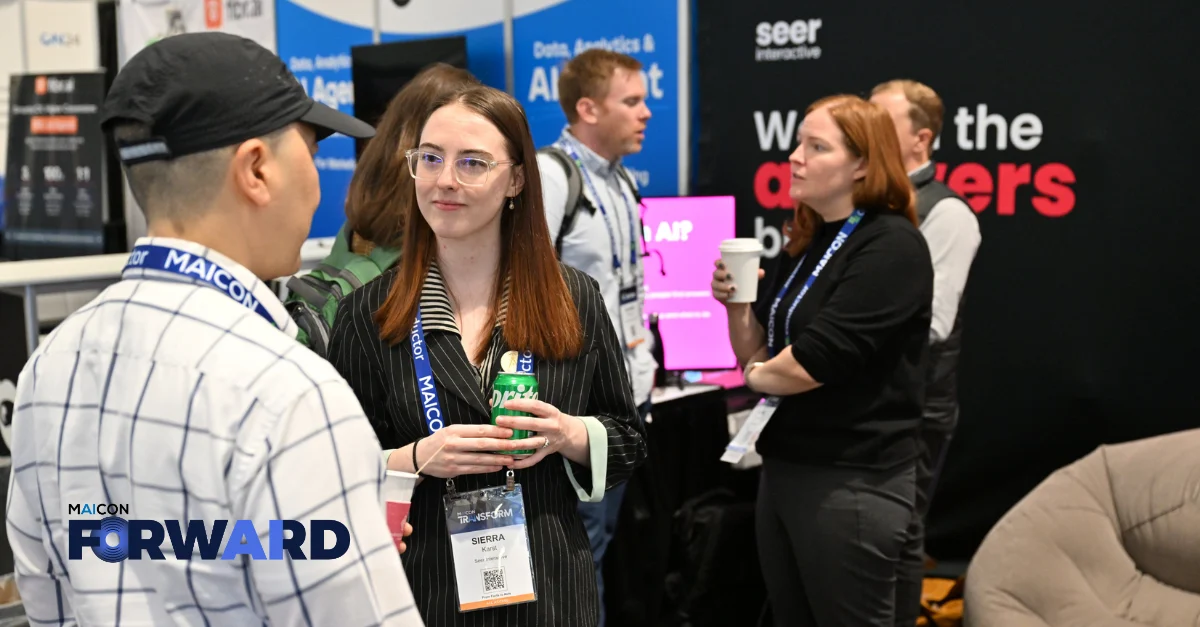
For business leaders looking to stay ahead of this curve, the path forward requires more than just reading the latest headlines. It requires a deep dive into the practical application of these technologies. The Marketing AI Conference (MAICON) 2026, scheduled for October 13–15 in Cleveland, Ohio, serves as the industry’s central hub for this conversation. By bringing together these forward-thinking agencies and the leaders they support, MAICON aims to move the needle from theoretical experimentation to real-world impact.
In the end, the agencies that survive this transition will be those that stop selling "hours" and start selling "outcomes." The future of marketing isn’t just about better creative or faster production; it’s about the intelligent orchestration of technology to create deeper, more meaningful human connections at scale. The question for your brand is not whether to adopt AI, but which partner will help you build the systems to thrive in this new reality.