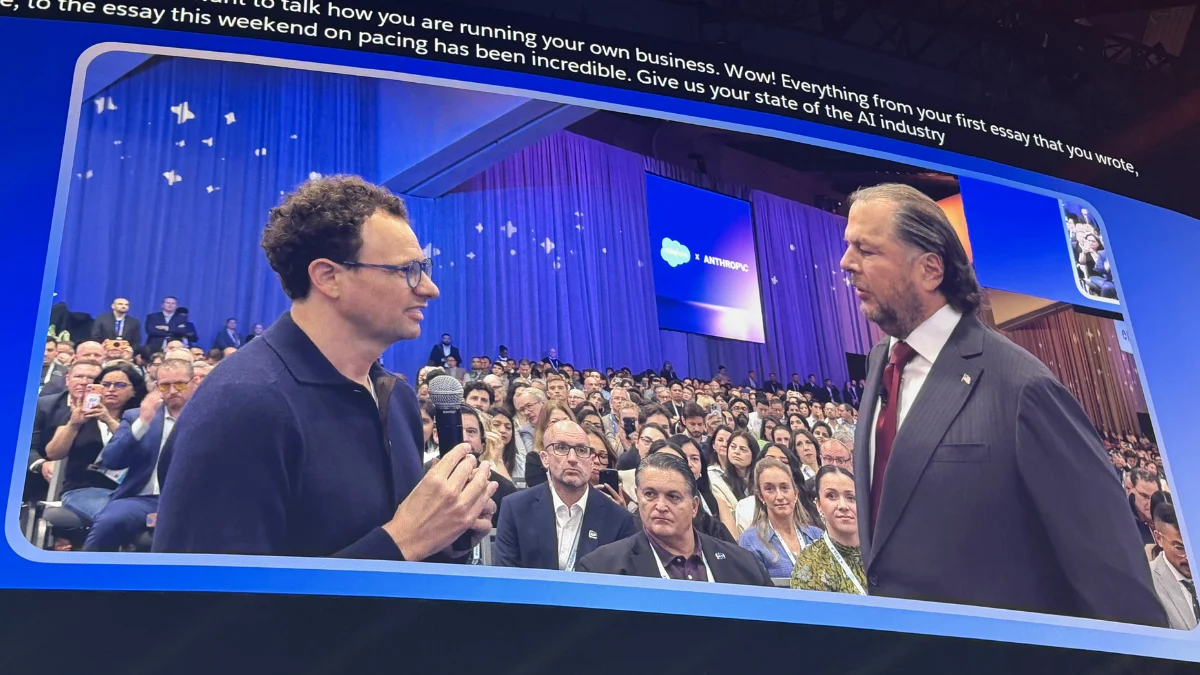

NEW YORK — The advertising industry stands at a critical juncture, caught between the gravity of century-old financial architectures and the breakneck speed of technological evolution. As artificial intelligence, automation, and advanced data analytics redefine what it means to build a brand, the foundational mechanisms by which agencies charge for their services are facing intense scrutiny.
The most recent and perhaps most pointed critique of this status quo came from Bob Lord, president of Horizon Media Holdings, during a high-profile appearance at Smartly’s Advance event in Lower Manhattan. Lord didn’t just question the efficacy of traditional agency pricing; he painted a picture of an industry shackled by its own legacy systems, artificially tethered to labor-based models that he predicts will be entirely extinct within five years.
For decades, the agency holding company model has relied on predictable, headcount-driven billing. However, as clients demand greater agility, measurable business outcomes, and modern marketing technology integration, industry leaders are increasingly asking whether the old ways of doing business are doing more harm than good.
Main Facts
The core controversy centers on the traditional reliance on Full-Time Equivalent (FTE) staffing models and principal-based media buying. According to industry critics, these legacy frameworks were designed for an era of mass media and linear workflows, where the primary unit of value was human hours spent producing campaigns.
During his remarks at the Smartly Advance event, Lord delivered a stark assessment of the modern agency landscape:
- The Call for Composable Architectures: Lord argued that modern agencies must build "composable architectures"—flexible, modular systems designed to adapt rapidly to market shifts and directly drive client business growth.
- The Root Problem: He identified industry-wide inertia as the primary barrier to progress, noting that holding companies are reluctant to abandon legacy models because they remain structurally dependent on them for revenue generation.
- The Technology Trap: Lord pointed out that major holding companies have spent the last half-decade pouring capital into proprietary technology stacks. To justify these massive investments, they are systematically forcing these tools—and the rigid operational frameworks required to run them—onto their clients.
- A Five-Year Sunset: In a bold prediction that reverberated across Madison Avenue, Lord forecasted that within five years, corporate clients will entirely abandon the FTE payment model, forcing agencies to pivot toward value-based or outcome-based compensation.
While Lord was careful to note during the panel discussion that he was "not picking on anyone," he emphasized that his critique was rooted in an inescapable "economic equation" that dictates the future viability of the agency ecosystem.
Chronology: The Evolution of Agency Pricing
To understand the weight of Lord’s critique, it is necessary to examine how the agency-client financial relationship has evolved over the past century.
The Commission Era (Early to Late 20th Century)
For decades, the standard agency compensation model was built on the 15% commission structure. Agencies earned a standard 15% markup on the media space they purchased for clients across television, radio, print, and outdoor billboards. This model aligned agency incentives with media spending volume: the more a client spent, the more the agency made.
The Unbundling and Fee-Based Transition (1990s–2000s)
As media fragmentation accelerated with the rise of cable television and early digital platforms, the monolithic agency model began to fracture. Media planning and buying separated from creative services, giving rise to dedicated media independents and holding company-owned media agencies. During this period, clients pushed back against percentage-based commissions, demanding greater cost transparency. This led to the widespread adoption of fee-based compensation, often tied to estimated staff hours.
The Rise of the FTE and Procurement Dominance (2010s)
As digital advertising scaled, holding companies consolidated their purchasing power through principal-based buying (often referred to as arbitrage or proprietary trading desks) and heavily institutionalized the FTE model. Procurement departments within major Fortune 500 brands took tighter control of agency contracts, demanding granular tracking of headcount, hourly rates, and scope-of-work documentation.
The Tech-Stack Overload and Modern Disillusionment (2020s–Present)
In recent years, holding companies have invested heavily in building or acquiring proprietary tech stacks, data clean rooms, and AI-driven workflow tools. However, rather than functioning as seamless accelerators, these tools have often been bundled into complex, opaque pricing agreements. Today, cracks in this system have widened into chasms, as clients realize that paying for human headcount makes little sense in an era where AI can automate vast portions of routine media planning and creative execution.
Supporting Data: The Economics of Modern Agency Operations
Lord’s critique is backed by shifting macroeconomic realities and digital transformation metrics across the global marketing sector.
1. The Disconnect Between Headcount and Output
Historically, agency revenue scaled linearly with headcount: more clients and more campaigns required hiring more staff. Today, generative AI and automated marketing platforms allow small teams to handle workloads that previously required dozens of employees. According to recent industry surveys, over 70% of marketers believe AI will fundamentally alter agency staffing needs over the next three years. Yet, under an FTE model, an agency that becomes more efficient through technology is mathematically penalized, earning less revenue because it requires fewer human hours to achieve the same or superior results.
2. Capital Expenditure vs. Client Utility
Holding companies have collectively poured billions of dollars into enterprise software, data infrastructure, and identity resolution tools. However, independent audits suggest that clients are increasingly frustrated by being locked into proprietary holding company ecosystems. Instead of enjoying bespoke solutions tailored to their unique business problems, brands report feeling upsold on internal agency tech products designed primarily to amortize the holding company’s balance-sheet investments.
3. The Growth of In-Housing
The friction caused by legacy pricing models has served as a primary catalyst for the in-housing movement. According to data from the Association of National Advertisers (ANA), a vast majority of major brands now maintain some form of in-house agency capability. Brands discovered that by bringing strategic media buying, creative production, and data analytics in-house, they could bypass the inflated overhead, markups, and rigid FTE structures demanded by traditional agency partners.
Official Responses and Industry Reactions
Lord’s comments have struck a nerve, sparking intense debate among agency executives, holding company leaders, and brand CMOs.
While major holding companies—such as WPP, Publicis Groupe, Omnicom, and Interpublic Group—have publicly championed their digital transformations and AI integration initiatives, industry insiders acknowledge the difficulty of pivoting away from legacy revenue streams.
"Bob is articulating an uncomfortable truth that many legacy leaders whisper behind closed doors," said a senior digital transformation consultant who spoke on condition of anonymity. "When your entire corporate valuation, quarterly earnings reports, and incentive structures are built on managing tens of thousands of FTEs globally, you cannot simply pivot away from that model overnight without panicking Wall Street."
Conversely, independent agencies and modern tech-first shops have rallied around Lord’s perspective. Many independent holding entities—including Horizon Media—have positioned themselves as agile alternatives precisely because they lack the massive overhead and legacy contractual baggage of their publicly traded competitors.
Brand marketers have also voiced strong support for a move toward outcome-based compensation. CMOs are increasingly under pressure from CEOs and CFOs to prove the direct return on investment (ROI) of every marketing dollar spent. Paying for "full-time equivalents" offers little comfort to a corporate board demanding measurable sales growth, customer lifetime value enhancement, and verifiable business impact.
Implications: The Future of Agency-Client Partnerships
As the five-year countdown suggested by Lord begins, the advertising industry must confront profound structural changes. The implications of this pricing evolution will reshape every facet of the agency-client relationship.
1. The Shift to Value- and Outcome-Based Pricing
To survive the death of the FTE model, agencies will need to adopt sophisticated value-based pricing structures. This means tying compensation directly to client business outcomes—such as revenue growth, market share acquisition, margin improvement, or customer acquisition cost (CAC) reduction. While riskier for agencies, this model aligns their incentives perfectly with those of the brands they serve, fostering true strategic partnership rather than transactional vendor relationships.
2. The Unbundling of Proprietary Tech Stacks
Clients will increasingly demand technological interoperability rather than proprietary lock-in. Agencies that succeed in the coming years will be those that embrace "composable architectures"—open ecosystems where clients can plug and play best-of-breed software, data providers, and AI tools without being forced to use an agency’s internal, amortized tech stack.
3. Redefining Agency Talent
As routine tasks are automated and headcount-based billing fades, the nature of agency talent will transform. Agencies will require fewer middle-management coordinators tracking hours and more high-level strategists, data scientists, and business consultants who can advise C-suite executives on complex commercial challenges. The value proposition of the agency employee will shift definitively from execution to innovation.
4. Consolidation and Differentiation
The next five years will likely see a widening divergence in the agency marketplace. Traditional players that fail to modernize their financial models risk losing their most lucrative accounts to agile independents and consultancy-backed competitors. Meanwhile, agencies that successfully pioneer outcome-based, tech-agnostic pricing will command higher margins and deeper, more resilient client loyalty.
Conclusion
Bob Lord’s critique at the Smartly Advance event was more than just a passing observation; it was a diagnosis of an industry at a crossroads. For decades, the advertising world has relied on financial machinery designed for a bygone era. As economic pressures mount, client expectations shift, and technological capabilities accelerate, the inertia holding the industry back is becoming unsustainable.
The message to Madison Avenue is clear: adapt or become obsolete. Whether the transition takes five years or happens even faster, the era of billing clients purely for human hours is drawing to a close. The future belongs to those agencies brave enough to dismantle the old systems, embrace true composable architectures, and tie their success directly to the growth of the clients they serve.