The landscape of digital commerce is undergoing a tectonic shift. As we move through the mid-2020s, the focus for merchants has pivoted from simple digitization to the integration of "agentic commerce"—a paradigm where autonomous AI systems don’t just facilitate transactions but actively navigate the customer journey, manage marketing funnels, and optimize supply chains.
This week’s roundup of service updates reveals a unified trend: the industry is racing to provide the plumbing for an AI-first economy. From Shopify’s massive spring overhaul to the rise of generative engine optimization (GEO), the following analysis breaks down the essential tools and strategic movements redefining the ecommerce sector.
Main Facts: The New Era of Autonomous Commerce
The central theme across recent product releases is the transition of AI from a "chat-based" curiosity to a "work-based" utility. Merchants are no longer looking for tools that write copy; they are looking for agents that execute business logic.

- Agentic Integration: Platforms like Shopify, Adyen, and Threekit are deploying "agentic" frameworks that allow systems to communicate across platforms, perform complex reasoning, and act on behalf of the merchant.
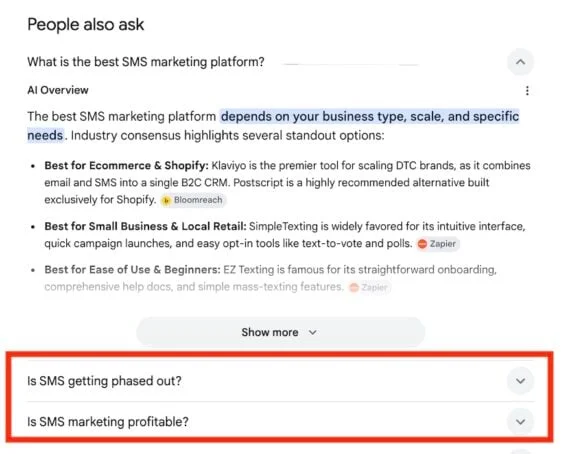
- Generative Engine Optimization (GEO): With the rise of AI-driven search—ChatGPT, Perplexity, and Microsoft Copilot—traditional SEO is being superseded by GEO. Brands are now investing in visibility audits to ensure they appear in AI-generated answers, not just traditional search results.
- Unified Financial Ecosystems: Fintech players are embedding intelligence directly into payments. Alchemy’s AgentCard and Adyen’s Agentic suite represent a move toward "headless" payments where AI agents hold the keys to secure, compliant, and authorized spending.
Chronology: A Week of Rapid Innovation
The sheer volume of releases this week suggests a coordinated push toward AI maturity.
- June 16: SumUp expands into the Canadian market, bringing physical card readers and payment links to a new geography.
- June 17: Shopify unveils its "Spring 2026 Editions," a massive feature drop including AI marketing autopilot and expanded agentic commerce capabilities. Simultaneously, Peec AI launches AI Shopping Analytics to track how AI assistants recommend products.
- June 18: Alchemy introduces AgentCard, enabling AI agents to transact using Visa-backed tokens.
- June 19: Wayflyer acquires analytics firm Conjura, signaling a consolidation of predictive data tools in the financing space.
- June 20: Adobe launches Brand Visibility, providing enterprise-level tools for brands to monitor their presence across major generative AI platforms.
Supporting Data and Technical Innovations
The technical backbone of these announcements rests on two major pillars: the Model Context Protocol (MCP) and Generative Engine Optimization (GEO).
The Rise of the Model Context Protocol (MCP)
Snapchat and Pinterest have both adopted MCP, an open standard that allows AI models to "talk" to private data stores or third-party tools securely. By using MCP, a merchant’s product catalog becomes an extension of the AI’s knowledge base, rather than a separate, siloed database. This is a critical development for B2B platforms like Commercetools, which can now ingest unstructured order requests and convert them into structured commerce objects without human intervention.

Quantifying Visibility in AI
Traditional analytics measured "clicks" and "impressions." Today, companies like Peec AI and Adoozle are introducing "visibility metrics." These track:
- Win Rate: How often a product is selected by an AI assistant in a competitive query.
- Referral Location: Where the AI cites the product.
- Comparison Attributes: Which product features the AI highlights when comparing a brand against competitors.
Official Responses and Strategic Vision
Industry leaders have been vocal about the intent behind these changes.
Shopify’s Vision:
In the Spring 2026 Editions, Shopify emphasized that the goal is not to replace the merchant but to provide an "autopilot." By integrating Sidekick into third-party apps, Shopify is effectively turning its admin dashboard into a central command center for an entire ecosystem of AI agents.

The Adyen Perspective:
Adyen’s introduction of Adyen Agentic as a "universal translator" highlights the friction currently present in the market. As one Adyen spokesperson noted, the biggest barrier to AI-driven commerce is the inability of disparate systems to "talk" to each other. Adyen’s API suite aims to solve this by providing a standardized layer for discovery, cart management, and payment across any conversational interface.
Implications: The Future of the Digital Storefront
The shift toward agentic commerce has profound implications for every stakeholder in the supply chain.
1. For the Merchant: The End of "Manual"
The days of manual order entry and daily manual campaign adjustments are numbered. With tools like Threekit’s Sales Agent and AdGPT’s Go Live, the operational burden is shifting toward "strategy oversight." Merchants will transition from being operators to being "AI conductors," setting the parameters and guardrails within which their agents operate.

2. For the Consumer: Hyper-Personalization
As Shop Pay extends to external sites and AI agents gain the ability to make purchases, the consumer experience will become increasingly frictionless. A user may ask an AI, "Find me a sustainable winter coat under $300," and the agent will evaluate product catalog data, check real-time inventory, negotiate the transaction via a secure token, and confirm shipping—all without the user ever visiting a traditional storefront.
3. For the Industry: Data Privacy and Security
The collaboration between Cloudflare and major browsers (Chrome, Firefox, Edge) to develop a privacy-first protocol is a direct response to the risks posed by this new era. As bots and AI agents become more active on the web, distinguishing between "helpful agents" and "malicious scrapers" is paramount. The use of private access control tokens ensures that while we want AI to crawl and understand our sites, we do not want that data to be used for unauthorized tracking or privacy erosion.
4. The B2B Transformation
B2B is historically the slowest sector to adopt new technology, yet the current wave of tools from Mira Commerce and Commercetools suggests a rapid acceleration. By automating the "quote-to-cash" cycle—a process that often takes days of email back-and-forth—these companies are unlocking significant capital efficiency for manufacturers and wholesalers.

Conclusion: Adapting to the Agentic Reality
The news from this week confirms that we have passed the "hype" phase of generative AI and entered the "deployment" phase. The winners in the coming years will not necessarily be those with the best products, but those with the best AI visibility and the most autonomous workflows.
For merchants, the message is clear: the infrastructure of the web is being rewritten. Whether it is through optimizing for AI search engines, integrating AI agents into payment flows, or leveraging predictive analytics to manage margin performance, the mandate is to embrace the "agentic shift." Those who fail to integrate these tools risk being invisible to the AI assistants that will increasingly guide, inform, and execute the consumer decisions of tomorrow.
Got an ecommerce product release? Email [email protected].