In the high-stakes world of digital marketing, the narrative has long been dominated by a singular obsession: traffic. Marketing teams pour millions of dollars into search engine advertising, social media placements, and complex affiliate networks, all with the goal of driving more eyeballs to their digital storefronts. However, as the digital landscape matures, a brutal reality is settling in: traffic is becoming prohibitively expensive.
For many organizations, the cost-per-click (CPC) on major advertising platforms has climbed to unsustainable levels. Yet, the most significant oversight in modern marketing isn’t the cost of the traffic itself—it is the catastrophic failure to convert the visitors who have already arrived. Conversion Rate Optimization (CRO) has moved from a "nice-to-have" experiment to the primary lever for sustainable, profitable growth. By refining the journey from the first click to the final conversion, teams can double their results without increasing their ad spend by a single cent.
The Mathematical Reality: Why CRO is Essential Now
The math behind conversion rate optimization is deceptively simple, yet profoundly transformative. If a landing page attracts 10,000 visitors and converts at a rate of 2%, the business acquires 200 leads or sales. If that same team, through rigorous testing and iterative design, improves that conversion rate to 4%, they suddenly possess 400 leads—all from the exact same volume of traffic and the exact same financial investment.
In an era where marketing budgets are under intense scrutiny, the ability to squeeze more value from existing assets is a competitive necessity. As Josh Gallant, founder of Backstage SEO, notes, "CRO is the secret weapon smart marketers use to extract maximum value from their existing traffic."
Boosting Return on Ad Spend (ROAS)
When your landing page converts at a higher percentage, your cost-per-acquisition (CPA) drops proportionally. This improvement ripples throughout the entire marketing funnel. By optimizing for performance rather than just volume, businesses stop "leaking" money on traffic that never matures into revenue. This creates a compounding effect: the savings generated from improved conversion rates can then be reinvested into higher-quality traffic sources, further accelerating growth.
The Efficiency Trap
Marketing departments often fall into the "volume trap," where they believe that scaling requires a proportional increase in budget. However, as traffic scales, acquisition costs often rise due to keyword saturation and audience exhaustion. CRO flips this dynamic. It allows companies to scale their output—their leads and revenue—without hitting the wall of diminishing returns that typically accompanies increased ad spend. It is the digital equivalent of a high-performance engine tune-up: you get more miles per gallon, ensuring your marketing machine runs faster and more efficiently.
Five High-Impact Strategies for Immediate Conversion Gains
For teams looking to drive results without the need for extensive developer support or bloated software stacks, five core pillars of CRO stand out as the most effective starting points.
1. The Mobile-First Imperative
In the contemporary web environment, the majority of traffic originates on mobile devices. Despite this, a startling number of landing pages are designed with a "desktop-first" mentality. This discrepancy is a primary driver of high bounce rates. Mobile users interact with content differently; they are constrained by smaller screens, varying connectivity speeds, and the physical limitations of touch-based navigation.
Optimizing for mobile means prioritizing large, easily clickable "tap targets," simplifying form fields to prevent user fatigue, and ensuring that the most critical information—the "above the fold" content—is immediately accessible without excessive scrolling. By aligning the user experience with the mobile reality, brands can see immediate improvements in their bottom-line performance.
2. Validating Through A/B Testing
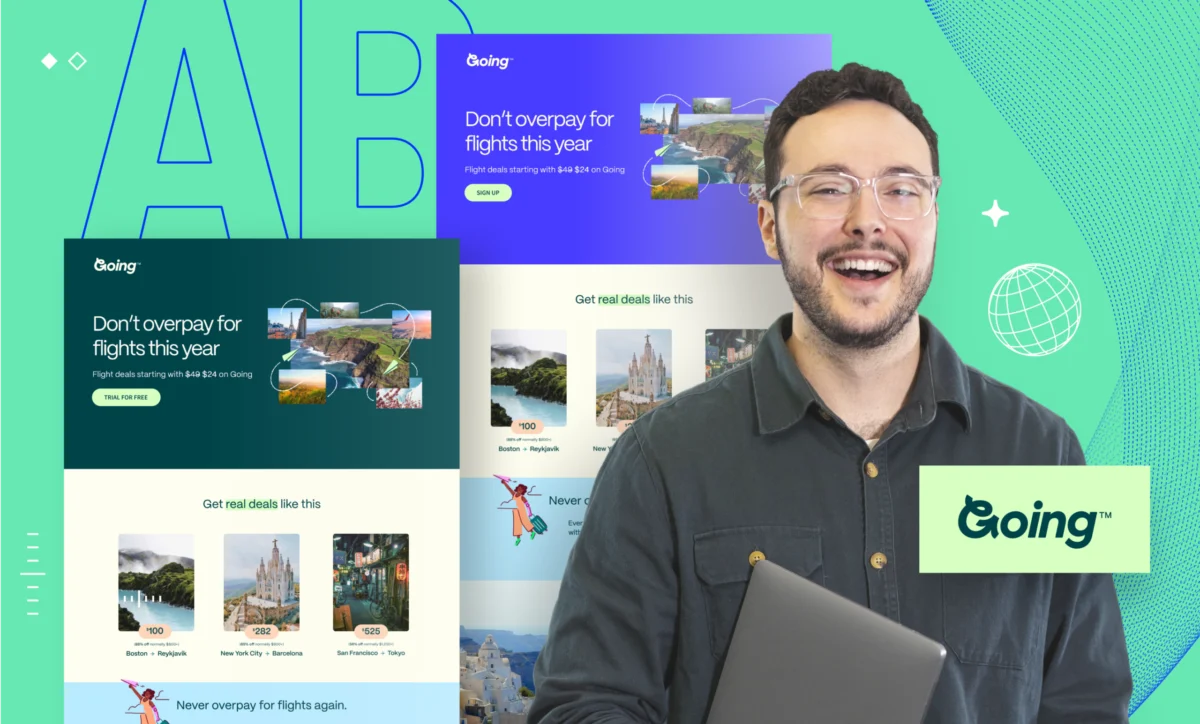
Guesswork is the enemy of growth. A/B testing provides the empirical data required to move from subjective opinion to objective truth. By isolating single variables—such as a headline, a call-to-action (CTA) button color, or a hero image—marketers can determine exactly what drives user behavior.
Modern tools, such as the suite provided by Unbounce, have democratized this process, allowing marketers to run sophisticated tests without a background in data science. The key is to start with a clear, testable hypothesis and run experiments until statistical significance is reached. Even "failed" tests are invaluable, as they prevent the deployment of ineffective strategies at scale.
3. Eliminating Conversion Friction
Friction is any element of the conversion process that causes a user to hesitate or abandon their journey. This includes overly complex forms, mandatory account creation, unexpected page loading times, or confusing navigation paths. Often, the most effective CRO strategy is not to add new features, but to strip away unnecessary barriers.
A "friction audit"—where team members attempt to complete the conversion process as if they were first-time customers—can reveal hidden pain points. By simplifying the path to completion, marketers remove the cognitive load that prevents motivated users from finalizing their purchases or sign-ups.
4. Crafting a Resonant Value Proposition
If a user cannot understand the value of an offering within three seconds, they will leave. A strong value proposition must do four things: address a specific pain point, clearly communicate a benefit, differentiate the offering from competitors, and be instantly legible.
The headline is the most critical element of this equation. By testing different messaging angles—such as benefit-focused, problem-focused, or outcome-focused—marketers can uncover the specific emotional or logical trigger that most effectively compels their unique audience to act.
5. Leveraging Social Proof
Human beings are inherently social creatures who look to others for guidance. Social proof acts as a psychological validator, easing the anxiety associated with making a purchase. However, the placement and quality of this proof are paramount.

Testimonials that address specific customer objections, usage statistics (e.g., "Joined by 10,000+ teams"), and trust badges should be placed strategically near high-friction areas, such as pricing tables or lead-capture forms. Authentic, specific testimonials will almost always outperform generic praise, as they provide potential customers with a concrete example of the value they can expect to receive.
The Cultural Shift: Continuous Experimentation
The most successful organizations do not view CRO as a one-time project; they view it as a permanent cultural mindset. Moving from a culture of "shipping features" to a culture of "continuous learning" is the defining characteristic of high-performing marketing teams.
Implementing a Testing Workflow
To institutionalize this mindset, teams should adopt a structured approach to experimentation:
- Create a Testing Backlog: Maintain a running list of ideas for improvement, ranked by potential impact and ease of implementation.
- Establish a Regular Cadence: Commit to running at least one test per week or month, depending on traffic volume.
- Document and Socialize Findings: Share the results of every test, especially the losers. Knowing what doesn’t work is just as valuable as knowing what does, as it prevents the repetition of costly errors.
- Celebrate Learning: Shift the focus from "winning tests" to "gaining insights." When the team is rewarded for their curiosity rather than just their successful predictions, they become more bold, experimental, and effective.
The Implications for Future Growth
As the digital marketing landscape becomes increasingly crowded and expensive, the divide between companies that treat CRO as a core competency and those that do not will only grow wider.
The implications are clear: the future belongs to the lean, data-informed, and highly experimental. By shifting focus from the top of the funnel (traffic acquisition) to the bottom of the funnel (conversion optimization), businesses can achieve a level of resilience that is impossible to gain through ad spend alone.
In conclusion, the most effective path to growth is found not in the pursuit of more traffic, but in the meticulous refinement of the experience provided to every visitor. By embracing the principles of mobile-first design, rigorous testing, friction reduction, value clarity, and social proof, teams can unlock a sustainable, compounding engine of growth that defies the rising costs of the digital age. The tools are available, the strategies are proven, and the opportunity is waiting—all that remains is the commitment to begin the cycle of continuous improvement.