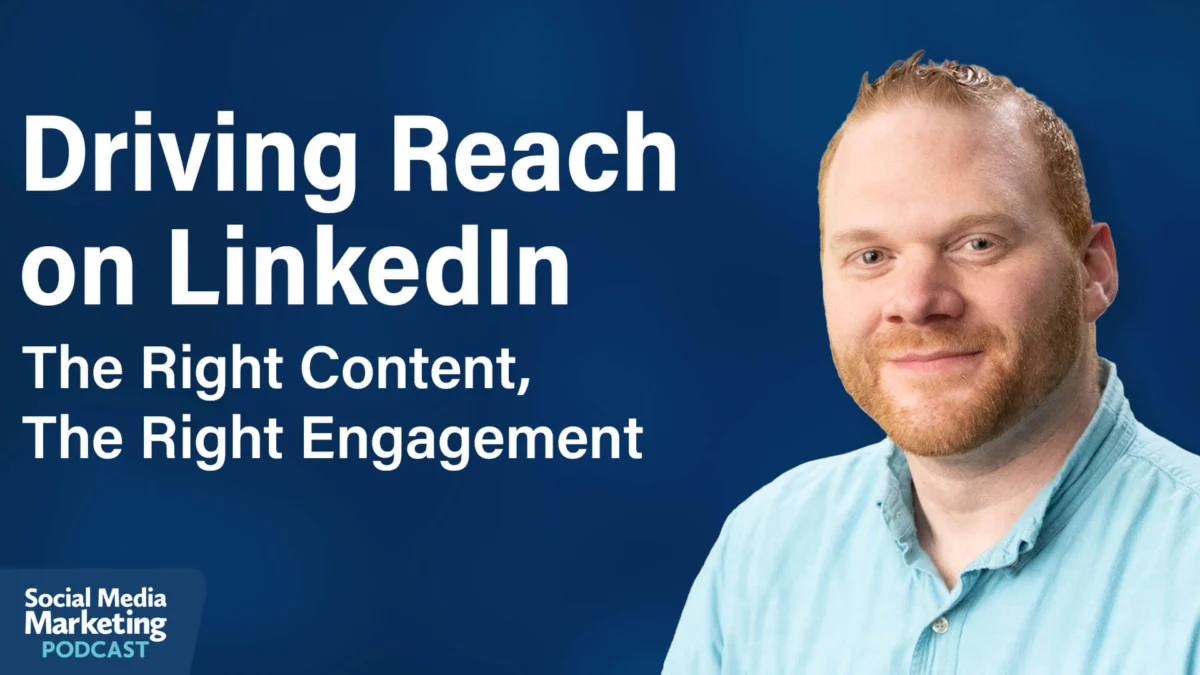
Is your LinkedIn reach plummeting? If your recent posts are falling flat, you aren’t alone. LinkedIn has quietly undergone the most significant technological transformation in its history. The platform has effectively decommissioned its legacy systems, replacing five fragmented distribution channels with a single, unified, AI-powered brain.
For marketers, creators, and business leaders, this isn’t just an update—it’s a fundamental shift in the rules of the game. To understand how to thrive in this new environment, we sat down with LinkedIn Ads expert AJ Wilcox to decode the signals that now dictate your professional visibility.
The Core Transformation: From Relationships to Relevance
The most profound change in LinkedIn’s new architecture is the shift from "social graph" to "interest graph."
Historically, the LinkedIn feed was governed by connection-based distribution: you saw content from people you followed or were connected to. While that remains a factor, the new AI-driven system prioritizes topical relevance. LinkedIn now maps a user’s "professional journey" over time, analyzing their behavior to build a comprehensive profile of their specific interests.
This mirrors the evolution of platforms like TikTok and YouTube. The algorithm no longer cares solely about who you know; it cares about what you are talking about. It understands semantics, not just keywords. A post discussing "customer retention" will now reach users interested in "reducing churn," even if those exact words are absent from the copy.
The Rise of the Specialist
This evolution offers a distinct advantage to specialists. By publishing a consistent stream of related content, you "train" the AI to associate your profile with a specific subject matter. This creates a compounding effect: the more you post on a niche topic, the more reliably the algorithm surfaces your content to your target audience.
Conversely, the "generalist" strategy—jumping between disparate topics like AI, pet photos, and marketing theory—is now a liability. The algorithm treats these as unrelated signals, preventing you from building the cumulative topical authority required for high-level reach.
Chronology of the Shift: Why Now?
For years, LinkedIn’s feed was built on a series of patched-together systems that prioritized engagement metrics like likes and shares. However, as the volume of content exploded, these systems struggled to filter noise from signal.

- Phase One (Legacy): The platform relied on manual signals. If someone liked your post, it was pushed to their network.
- Phase Two (The Hybrid Era): LinkedIn introduced topical tagging and basic AI, but still leaned heavily on the user’s immediate connections.
- Phase Three (The AI-Native Feed): Today, LinkedIn’s algorithm operates as a unified intelligence. It evaluates content value based on deep behavioral signals, prioritizing user intent and long-term interest over vanity metrics.
Supporting Data: The Power of Invisible Signals
A comprehensive analysis of over 600,000 LinkedIn posts from 63,000 accounts reveals a startling trend: The metrics we prioritize—likes, shares, and public comments—are becoming less relevant.
Instead, the algorithm is now optimized for "Invisible Engagement." These are the behaviors that leave no public trace but speak volumes to an AI:
- The "See More" Click: Expanding a truncated post.
- Carousel Swipes: Engaging with multi-page document posts.
- Video Watch Time: How long a user lingers on your content.
- Profile Clicks: Investigating the author after reading a post.
Data indicates that these invisible interactions now drive overall engagement by nearly 14%. When a user stops scrolling to swipe through a carousel or clicks to read the rest of your post, they are signaling to LinkedIn that your content is high-value. The algorithm rewards this by expanding your reach to a wider, relevant audience.
Practical Implications for Your Content Strategy
To align with this new reality, creators must move away from "engagement bait" and toward "value-driven architecture."
1. Master the "See More" Hook
Half of all impressions on a post occur within the first 48 hours. If your post doesn’t generate "invisible engagement" immediately, the algorithm buries it. Your opening line is no longer just a headline—it is the gatekeeper of your reach.
Avoid giving everything away in the first sentence. Instead, create a curiosity gap that necessitates the "See More" click. If users aren’t expanding your post, they aren’t reading your content, and the AI will conclude that your post is not worth distributing.
2. Leverage Carousel/Document Posts
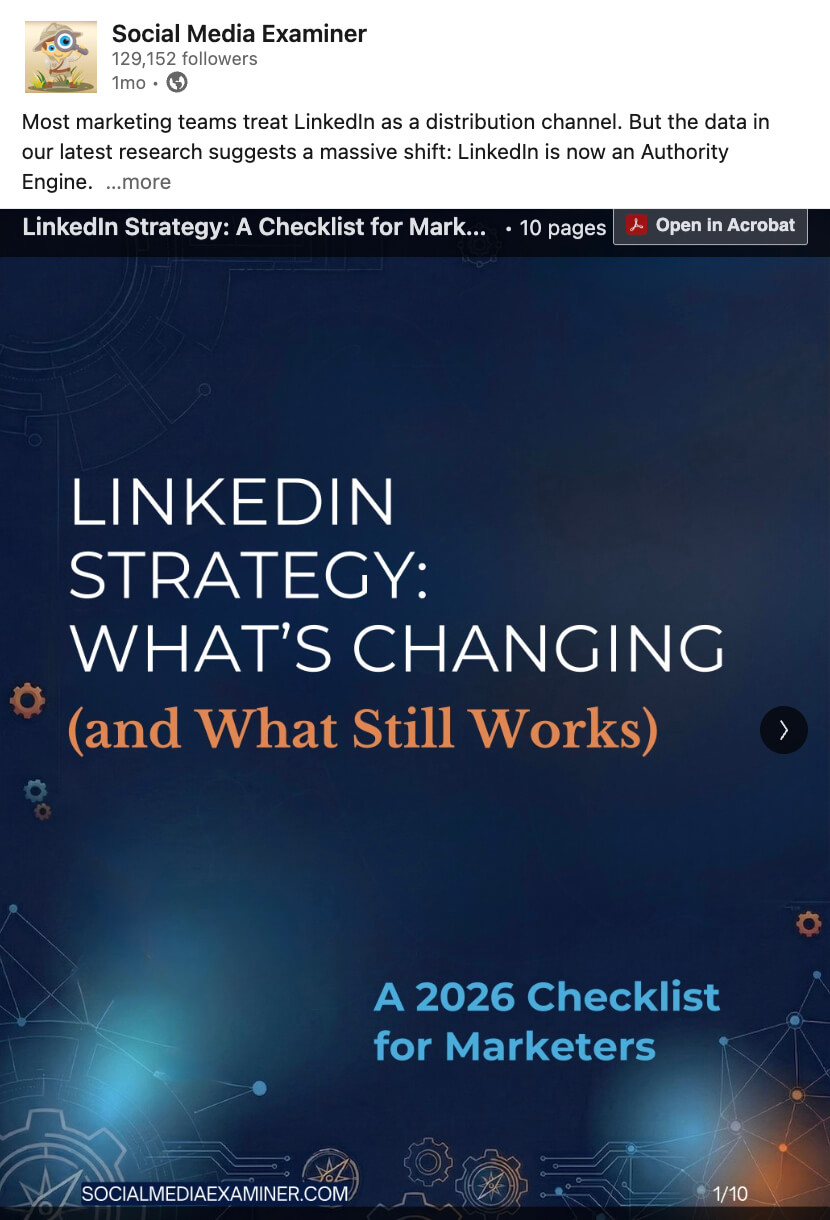
Carousels currently outperform single-image posts by a factor of eleven. This is largely because they force a high frequency of "invisible engagement" (swiping). When a user spends time engaging with a slide deck or a multi-page PDF, they are essentially telling the algorithm, "This is quality content."
3. Engineering Comment Density
While public comments are a visible signal, the quality and depth of those comments matter more than ever. LinkedIn’s AI now analyzes conversation threads to identify genuine dialogue.
- Avoid "Thanks!" Replies: A one-word acknowledgement is treated as a low-value signal.
- The Power of Follow-up: Engage in meaningful, back-and-forth dialogue. When you reply to a comment, ask a follow-up question. This keeps the thread active and signals to the algorithm that your post is a destination for professional discourse.
- Timing: Respond within the first hour of posting. Early engagement acts as a catalyst, signaling to the platform that the post is "hot" and should be surfaced to a broader segment of your audience.
Combating Content Fatigue
One of the most common pitfalls for creators is the fear of repetition. AJ Wilcox, who has presented the same core concepts on LinkedIn advertising for years, suggests a necessary reframe: Your audience is always changing.
The person reading your content today is likely seeing your perspective for the first time. You do not need to reinvent the wheel for every post. Instead, vary your approach.
- Use New Metaphors: Explain a complex concept through a different analogy.
- Change the Format: Convert a text-heavy post into a carousel, or a long-form article into a short, punchy video script.
- AI as a Creative Partner: Use LLMs (like ChatGPT or Claude) to brainstorm new angles on your core topics.
The goal is to maintain topical consistency while ensuring the execution feels fresh. AI models, including LinkedIn’s own, are increasingly adept at identifying "original thinking" versus "repurposed noise." If you consistently cover a topic from fresh perspectives, you signal authority. If you simply recycle the same content, you signal irrelevance.
Official Perspective and Future Outlook
LinkedIn’s shift toward an AI-driven, intent-based feed is a strategic response to the oversaturation of social media. By prioritizing "professional journeys" over simple social connections, the platform is attempting to increase the utility of the feed for the average user.
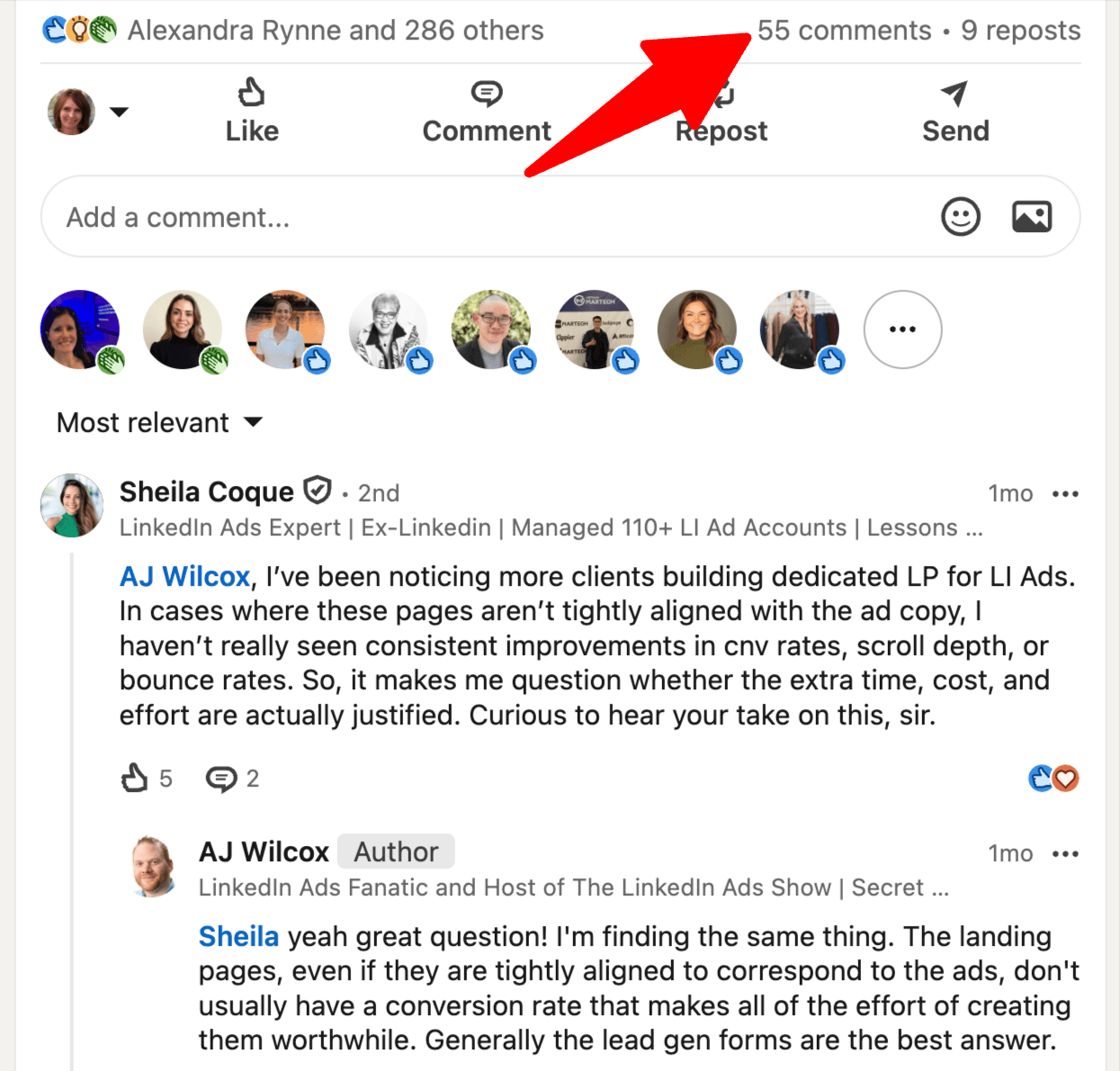
As AJ Wilcox emphasizes, the most powerful tool in your arsenal is your own audience. Reach out to those who comment or DM you. Their questions are the most reliable source of future content topics. When you answer a follower’s specific question, you aren’t just building a relationship—you are creating a new, highly relevant piece of content that is guaranteed to resonate with a segment of your audience struggling with that same issue.
The Bottom Line
The "new" LinkedIn algorithm isn’t a secret code to be cracked; it is a system designed to highlight value. If you focus on being a specialist, engineering invisible signals, and fostering deep, meaningful conversations, you won’t just survive the algorithm changes—you will thrive in them.
The era of "posting to post" is over. The era of intentional, expert-led content is here. Are you ready to adapt?