In the modern digital landscape, the pressure on marketing departments to prove their worth has never been higher. Yet, for all the sophistication of our AI-driven tools and advanced analytics platforms, many global enterprises remain shackled to archaic, value-deficient metrics. At the heart of this dysfunction lies a startling trend: the elevation of "Cost Per Session" (CPS) to a primary Key Performance Indicator (KPI).
For seasoned veterans in the analytics space, this shift is not just baffling—it is a signal of a profound disconnect between marketing activity and true business health. As global companies navigate the transition into an AI-centric search environment, the continued reliance on such superficial metrics is not merely poor practice; it is a direct threat to long-term corporate sustainability.
The Mirage of Activity: Why "Cost Per Session" Fails
A few years ago, during a high-level strategic consulting engagement with a multinational corporation operating across 75 countries, the team presented a staggering revelation: their primary marketing success metric was "Cost Per Session."
To those with decades of experience, this was a red flag of the highest order. Marketing is, by definition, an engine for business growth. "Cost Per Session" focuses exclusively on the efficiency of shoveling traffic, regardless of whether that traffic has any intent to purchase or engage. It treats the user as a commodity to be purchased at the lowest possible price, ignoring the fundamental goal of marketing: to drive profitable outcomes.
Metrics like "Impressions" and "Views"—and by extension, "Sessions"—are what many experts now classify as "things" rather than "metrics." They are value-deficient. When a marketing team optimizes for the lowest Cost Per Session, they are effectively incentivizing the acquisition of low-quality, "one-night-stand" traffic. This is a strategy built for failure, especially in an era where platform algorithms are designed to exploit such simplicity to maximize their own ad revenue at the expense of the advertiser.
A Hierarchy of Measurement: From Activity to Accountability
To protect the Chief Marketing Officer (CMO) from the scrutiny of the Chief Financial Officer (CFO), organizations must move beyond vanity metrics. The journey to a more robust marketing strategy requires a transition through three distinct tiers of measurement:
1. The Activity Tier (The "Vanity" Phase)
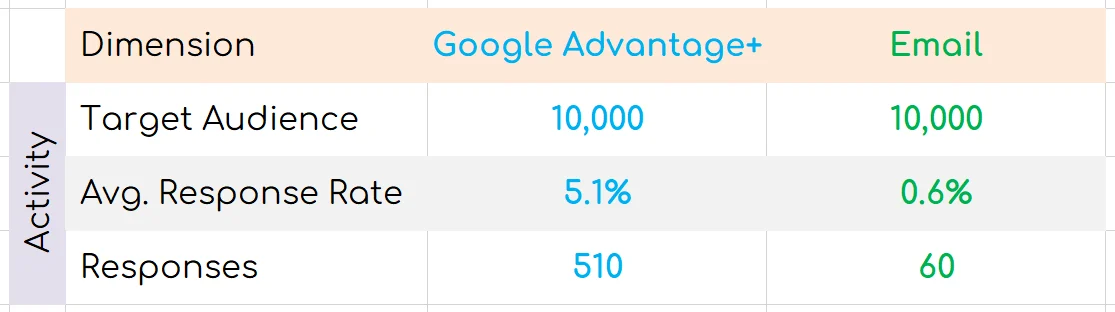
Most standard corporate dashboards dwell here. They report on clicks, sessions, and impressions. While tools like Google’s "Advantage+" can certainly drive high volumes of traffic, celebrating these figures in isolation is a mistake. It is the classic trap of mistaking motion for progress.
2. The Outcomes Tier (The "Value" Phase)
True marketers look at what happens after the click. By tracking Revenue and Conversion Rate, the focus shifts to actual business results. Even in B2B or long-cycle B2C sectors where an immediate purchase might not occur, businesses must track micro-conversions. By applying an average lead-to-close rate and an average outcome value, organizations can create a reliable proxy for success that is significantly more accurate than raw traffic data.
3. The Accountability Tier (The "Profit" Phase)
This is where the CFO truly sits up and takes notice. Accountability is about subtracting the costs—specifically Campaign Costs and the Cost of Goods Sold (COGS)—from the revenue generated. This level of rigor separates successful growth strategies from those that merely burn capital to drive top-line revenue.
Chronology of a Failed Strategy: The Case for POI
To illustrate the necessity of this shift, consider a comparative analysis between two common marketing channels: Google Advantage+ and Email Marketing.
Initially, a report might show Google Advantage+ as the "winner" because it generates 173 orders compared to Email’s 14. However, when we apply the "Accountability View," the narrative flips entirely.
- Return on Ad Spend (ROAS): While often used, ROAS is inherently flawed because it ignores the cost of the goods sold. It artificially inflates marketing impact. Even under this metric, we see Email outperforming Google at a 9.6:1 ratio versus 2.4:1.
- Return on Investment (ROI): By subtracting the campaign cost from the revenue, we start to see the cracks in the Google strategy.
- Profit on Ad Spend (POAS): This brings us closer to reality, showing that for every dollar spent, the profit margins are drastically different.
- Profit on Investment (POI): This is the ultimate, non-negotiable metric. In the case study, for every dollar spent on Google Advantage+, the company was actually losing money, effectively subsidizing Google’s advertising sales team. Meanwhile, the email channel was returning $5.70 in profit for every dollar spent.
The lesson is clear: Revenue volume is meaningless if the cost of acquiring that revenue exceeds the profit margin.
Strategic Implications in the Age of AI
The shift toward AI-powered search—where users expect contextual, relevant answers rather than a list of blue links—has profound implications for how we value traffic.
Google’s own guidance for the AI era emphasizes that clicks from AI-driven search results are fundamentally different. They are higher quality and lead to deeper engagement. If a brand continues to optimize for "Cost Per Session," they are actively working against the nature of the new search experience. They are ignoring the "full value of the visit" in favor of a metric that rewards low-effort, high-bounce traffic.
The "Suck Less" Strategy
If your organization is currently trapped by a culture that demands "Cost Per Session" as a KPI, you must pivot. At the very least, transition to measuring "Cost Per Non-Bounced Session."
If a user lands on your site and immediately leaves (the "I came, I puked, I left" scenario), that visit is worthless. By filtering out these "bounces," you force the team to acknowledge the true, often inflated, cost of their traffic. This naturally leads to uncomfortable—but necessary—conversations about content quality, landing page relevance, and audience targeting.
The Path Forward: A Five-Step Recovery Plan
For companies currently hemorrhaging profit through inefficient ad spend, the recovery requires bold, decisive action:
- Immediate Cessation: Cut the spend on underperforming platforms immediately. Let the temporary dip in traffic occur; it is a necessary corrective measure to stop the "giant sucking sound" on company profit.
- The Invitation to Perform: Challenge your internal teams and external agencies to deliver green POI. Make it clear that future budget allocations are tied strictly to profitability, not traffic volume.
- Intent-Based Strategy: Rebuild your tactics around the actual intent of the audience. Use AI to understand what users are searching for and ensure your creative and offers are aligned with that intent.
- The AI-Power Shift: Move beyond simple automation. Use AI features to refine your audience matching and creative resonance, ensuring that every dollar spent is optimized for conversion, not just a click.
- Re-entry based on POI: Only restore the budget once you can demonstrate a sustainable, high-green POI.
Conclusion: The CMO-CFO Alignment
The ultimate goal of any sophisticated marketing organization is to be so aligned with the CFO that the marketing budget is viewed not as a cost center, but as a high-yield investment.
Achieving this requires more than just technical skill; it requires the courage to dismantle the status quo. It demands a shift from measuring the activity of marketing to the accountability of the business outcomes. This is not easy. It requires difficult conversations, rigorous data analysis, and a willingness to be unpopular in the short term.
However, for those willing to do the hard work, the reward is an "AI-disruption-proof" career. In an era of infinite noise, the ability to discern and deliver true business value is the ultimate competitive advantage. Stop measuring the "session." Start measuring the profit. Carpe diem.