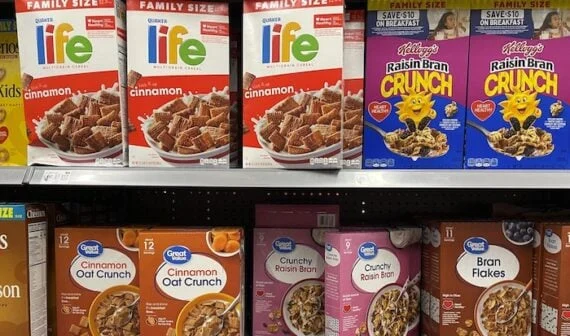
For generations, the fundamental objective of consumer packaged goods (CPG) companies has remained deceptively simple: create demand, foster brand loyalty, and secure the most advantageous "shelf space" possible. Whether that shelf was a wooden crate at a 19th-century craft fair, a prime eye-level display in a mid-century grocery store, or a top-ranking search result in the early 2000s, the mission has always been to influence the consumer’s final purchase decision.
As we move deeper into 2026, that battleground is undergoing its most radical transformation yet. Artificial intelligence is no longer a futuristic concept—it is the next iteration of the marketplace. For brands, the question is no longer just how to reach the consumer, but how to ensure their products are included in the AI-generated recommendations that increasingly act as the gatekeepers of modern commerce.
The Paradigm Shift: From Search Engines to AI Agents
To understand the current landscape, one must view it as the latest chapter in a long history of channel evolution. Historically, the "shelf" was a physical reality. Success was dictated by packaging design, proximity to competitors, and the strength of the relationship between a brand and the retail category manager.
The internet disrupted this model by creating the "digital shelf." Suddenly, brands weren’t just competing for physical real estate; they were competing for algorithm preference on marketplaces like Amazon and visibility on search engines like Google. However, the rise of Generative AI and Large Language Models (LLMs) has added an entirely new, more complex layer to this ecosystem.
In the era of AI-powered shopping, consumers are shifting from "searching" to "conversing." Instead of typing a keyword into a browser and scrolling through a list of blue links, shoppers are increasingly turning to AI assistants to compare products, summarize thousands of consumer reviews, and receive personalized recommendations. This shift fundamentally alters the power dynamic: when a user asks an AI, "What is the best coffee maker for a small kitchen?" the machine—not the consumer—is effectively making the final selection.
Supporting Data: The Rapid Adoption of AI Shopping
The adoption of AI-driven shopping tools is accelerating at a pace that has caught many legacy marketers off guard. Recent data underscores a market in transition:
- CapitalOne Research released a comprehensive fact sheet earlier this month suggesting that nearly 60% of consumers have already utilized AI-powered tools to facilitate their shopping journeys. While some industry analysts view this figure as an optimistic projection of total integration, it signals a clear behavioral trend.
- NielsenIQ provided a more conservative, yet equally compelling, snapshot in early May, reporting that 42% of American consumers have leveraged at least one AI-based tool to assist in a purchase decision within the last 30 days alone.
These figures represent more than just a passing novelty. They indicate that for a massive segment of the population, the AI conversation has become the primary source of truth for product discovery and evaluation. For CPG companies, the implication is stark: if you are not "visible" to the AI, you are effectively invisible to the consumer.
The Expert Perspective: Educating the Machine
Anthony Ferry, CEO of Wayvia, a leading commerce technology firm, argues that while the core objective of branding hasn’t changed, the tactical execution has become infinitely more technical.
"The role of brands remains unchanged: to advertise and promote their companies and products to people and retailers," Ferry told Practical Ecommerce. "However, the modern marketer’s job description now includes the critical task of ‘educating’ LLMs to recommend their brand’s products over those of competitors."
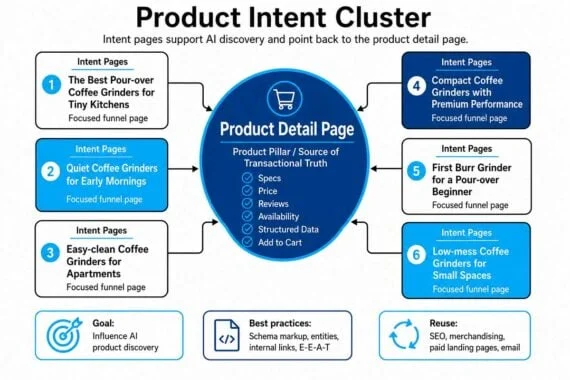
This is a departure from traditional Search Engine Optimization (SEO). In the past, brands optimized content for keyword density and backlink profiles. Today, brands must consider how to influence the "reasoning" of an AI. This involves ensuring that the data provided to AI models—through product descriptions, official documentation, and consumer sentiment management—is accurate, high-quality, and persuasive enough to be prioritized by the algorithm.
Chronology of the "Shelf" Evolution
The evolution of the shelf can be categorized into four distinct eras:
- The Physical Era (1800s–1990s): Marketing was dominated by print media, radio, and television. Success was measured by retail distribution, shelf placement, and "share of voice" in traditional media.
- The Early Digital Era (1995–2010): The dawn of e-commerce saw the birth of the digital shelf. Brands focused on website traffic, email marketing, and the early days of keyword-based search engine marketing.
- The Marketplace & Social Era (2010–2024): Algorithms on social media platforms and massive online marketplaces (Amazon, Walmart.com) became the new deciders. Brands invested heavily in influencer marketing, paid social, and algorithmic optimization.
- The Agentic/AI Era (2025–Present): The current stage. AI agents act as intermediaries between the brand and the shopper. Marketing is no longer just about human-to-human communication, but about human-to-machine and machine-to-machine optimization.
The Economic Implications: Fragmented Budgets and New Channels
Perhaps the most significant challenge for modern brands is the sheer fragmentation of the media landscape. In the mid-20th century, a brand could dominate a market by simply buying airtime on the three major television networks. Today, the "ad budget pie" has been sliced into hundreds of pieces.
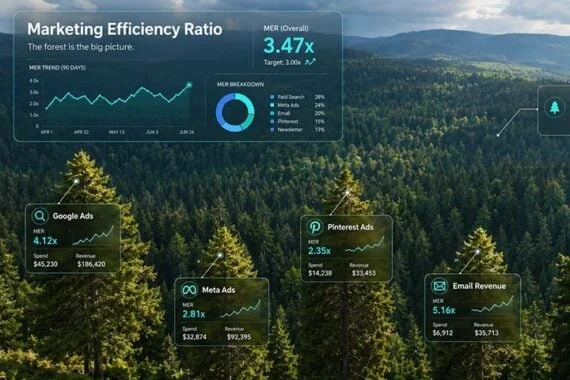
Ferry notes that as the internet matured, brands struggled to allocate budgets across search, display, and social. Now, with the addition of generative AI, the challenge has reached a breaking point. "Now there are 30 channels," Ferry stated. "Each new channel requires a strategic decision: do we invest, or do we sit this out?"
This fragmentation forces large CPG companies to be more selective and data-driven than ever before. Marketing spend is no longer a monolith; it is a complex portfolio of investments. Brands are now forced to adopt the digital equivalent of "featured displays" and "retailer promotions." They are essentially trying to stack the digital shelf in their favor, leveraging AI-specific levers to ensure that when an AI assistant makes a recommendation, their product is the one that gets mentioned first.
Strategic Challenges: How Brands Can Adapt
To thrive in the age of AI, brands must move beyond traditional marketing silos. The following strategies are becoming essential for survival:
1. Data Stewardship as Marketing
Because AI models rely on vast amounts of data to make recommendations, a brand’s digital footprint is now its most valuable marketing asset. Companies must ensure that their product data is clean, comprehensive, and optimized for AI ingestion. This means providing clear, concise, and structured information that LLMs can easily parse and verify.
2. Influencing the "Recommendation Loop"
AI systems often prioritize products with high social proof. If an AI sees that a product is frequently mentioned in positive reviews or discussed in high-authority tech forums, it is more likely to recommend it. Brands must now manage their reputation across every corner of the internet, as AI "reads" the collective sentiment of the web to build its knowledge base.
3. Investment in AI-Native Partnerships
As AI shopping platforms (like those integrated into browsers or social apps) evolve, brands will need to develop direct partnerships with these technology providers. Similar to how brands once negotiated for "end-cap" space in grocery stores, we are likely to see the emergence of "AI-placement" agreements, where brands pay for visibility within AI-generated result sets.
Conclusion: The New Battle for Attention
The transition to an AI-driven marketplace is not merely a change in technology; it is a change in the nature of human consumption. While the tools of the trade have shifted from paper coupons to generative models, the underlying desire for brands to capture the consumer’s attention remains constant.
As we look toward the remainder of 2026 and beyond, the brands that win will be those that view AI not as a threat, but as the latest iteration of the retail shelf. Success will depend on the ability to navigate a fragmented digital landscape, invest in the right AI channels, and master the art of being recommended by a machine. In this new frontier, the shelf is no longer a place you stand in front of—it is a conversation you must lead.