In the high-stakes arena of modern enterprise marketing, the boundary between technological efficiency and human connection has never been more porous. As the industry descends upon Cannes Lions 2026, one theme dominates the conversation: the role of Artificial Intelligence not as a replacement for the creative spark, but as a catalyst for a new "Golden Era" of innovation.
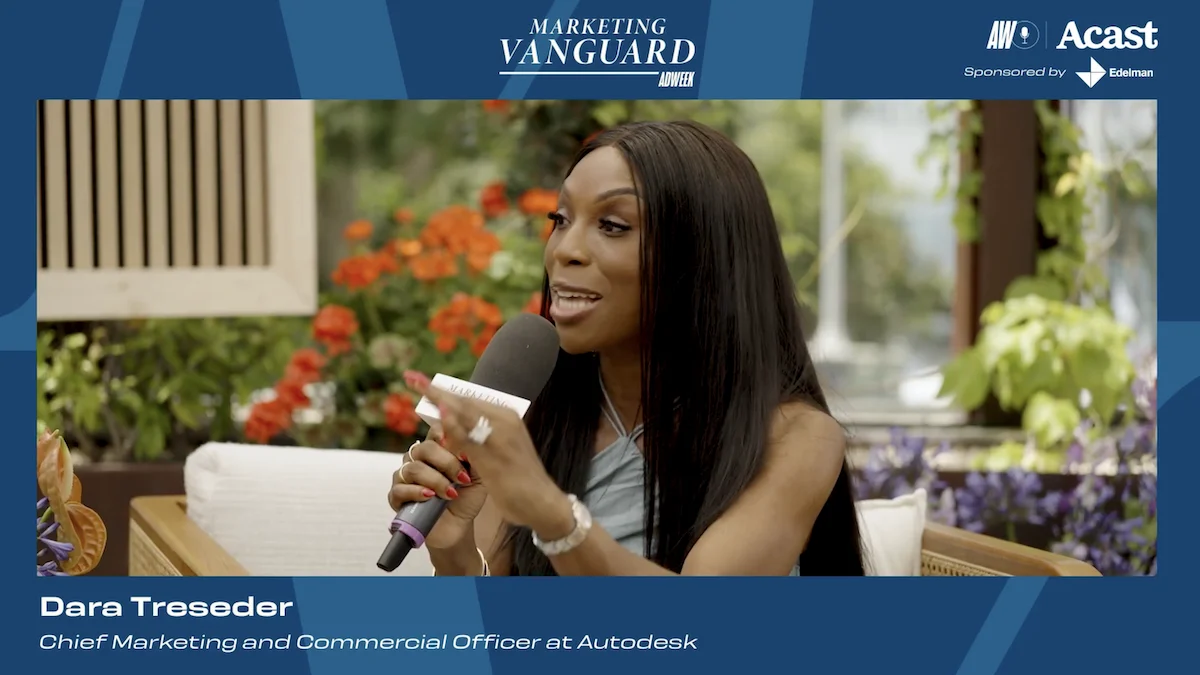
In a compelling installment of the Marketing Vanguard vidcast, host Jenny Rooney sat down with Dara Treseder, the Chief Marketing & Commercial Officer at Autodesk. Recorded live on the ground in Cannes, their conversation cut through the superficial hype surrounding AI to address the existential questions facing CMOs today: How do you scale with technology while maintaining an authentic human voice? And when is the most strategic move to simply put the tools down?
The Philosophical Shift: Moving Beyond Transactional B2B
For decades, the B2B sector has been tethered to a rigid, fact-heavy playbook. The assumption was that business buyers were purely rational actors, swayed only by technical specifications, ROI calculations, and feature lists. Treseder is leading a charge to dismantle this outdated paradigm.
"B2B marketing is not merely transactional; it is deeply emotional," Treseder argues. Her reasoning is rooted in the high stakes of modern enterprise decision-making. When a company selects a software platform—especially one as fundamental as Autodesk’s design and manufacturing tools—the decision carries immense weight. A poor choice doesn’t just mean a minor inconvenience; it can result in project delays, failed product launches, mass layoffs, or even a systemic loss of competitive advantage.
Consequently, buyers are not just looking for a vendor; they are looking for a partner to alleviate the anxiety of high-stakes responsibility. By shifting the narrative from "what the product does" to "how the product impacts the human reality of the business," Treseder is teaching marketers that facts are the baseline, but feelings are the closer. Trust, in this context, is the ultimate currency.
The Strategy of Restraint: The Art of Knowing When NOT to Use AI
Perhaps the most counterintuitive insight shared during the Cannes session was Treseder’s warning regarding the "AI-everything" mandate. As organizations rush to automate their marketing stacks, Treseder cautions against the proliferation of "AI slop"—the indistinguishable, homogenized content that floods social media feeds and customer inboxes.
"Knowing what not to do with AI is just as important as knowing what to do with it," Treseder emphasizes. She posits that in a world where AI-generated content is becoming the default, the authentic, unadulterated human voice is becoming a rare, premium asset.
For the modern CMO, the pressure to demonstrate "AI transformation" can lead to a dangerous erosion of brand equity. If a brand uses AI to automate its customer interactions to the point of friction or impersonality, it risks breaking the trust it took years to build. Treseder’s philosophy is clear: use AI to raise the floor of productivity and data synthesis, but keep the human at the center of the creative and emotional steering wheel.
Investing in Resilience: The $350 Million AI Credentialing Initiative
The conversation pivoted from marketing theory to corporate responsibility as Treseder detailed Autodesk’s massive $350 million commitment to AI workforce development. This isn’t just a CSR initiative; it is a core business strategy designed to ensure the industry—and the people who power it—remains viable in an era of rapid technological disruption.
By focusing on AI training, access, and credentialing for both current and next-generation workers, Autodesk is positioning itself as a leader in industrial literacy. This move has profound implications for the CMO’s role. In today’s landscape, a brand’s reputation is inextricably linked to how it treats its ecosystem. By preparing workers for the future, Autodesk is not only strengthening its own talent pipeline but also building a profound level of loyalty among its user base.
This initiative underscores a growing trend: enterprise marketing leaders are no longer just selling products; they are selling the resilience and capability of their customers. When you empower your users to master the tools of the future, you secure your place as their indispensable partner for the next decade.
The "Walk Track, Talk Track" Philosophy: Earning the Right to Amplify
Perhaps the most powerful takeaway from the session was Treseder’s approach to brand storytelling: "Earn your place before amplifying your story."
This philosophy was clearly on display in Autodesk’s high-profile partnerships with the LA 2028 Olympics, the NFL, and Team USA. Many brands would have rushed to announce such partnerships the moment the contracts were signed. Autodesk, however, took a different approach. They had already been quietly powering the design of stadiums, manufacturing the equipment, and facilitating the complex engineering behind these global spectacles for years.
The marketing campaign was not a claim of future capability; it was an acknowledgment of existing, proven reality. By "walking the track" before "talking the track," Autodesk eliminated the credibility gap that plagues so many modern marketing campaigns. For CMOs, this serves as a potent reminder: marketing is not a substitute for excellence. It is the amplification of it.
The Implications for the Future of Brand Management
As the Cannes Lions festival continues, the implications of Treseder’s insights are rippling through the marketing community. The "Golden Era" of creativity that she describes is not one defined by software versions, but by the elevated role of the human strategist.
Key Takeaways for CMOs:
- Emotional Literacy in B2B: Recognize that B2B decisions are life-altering for the stakeholders involved. Shift your brand narrative from utility to impact.
- The Premium of Human Curation: In an age of AI-generated content, use automation for efficiency, but protect your brand’s "human soul" to maintain a competitive edge.
- Workforce Development as Brand Equity: Move beyond surface-level messaging. Investing in the skills and success of your customers and employees is the most effective way to build long-term brand resonance.
- Proof Before Promotion: If you want to own a narrative, ensure you have the operational reality to back it up. The credibility gap is the fastest way to lose consumer trust.
Conclusion: Leading with Intent
Dara Treseder’s leadership at Autodesk represents a blueprint for the modern enterprise CMO. By balancing the cold, hard efficiency of AI with the warmth and complexity of human storytelling, she is navigating the "Golden Era" with both caution and ambition.
As the industry looks toward 2027 and beyond, the marketers who win will not be those who simply deploy the most sophisticated algorithms. They will be those who—like Treseder—know when to leverage the machine, when to rely on the human, and, above all, how to tell a story that is grounded in the undeniable reality of their own impact.
The future of brands, as discussed at Brandweek and Cannes, is not a technological inevitability. It is a choice. For those listening to the Marketing Vanguard, the message is clear: lead with trust, invest in the workforce, and never let the tools of the trade overshadow the purpose of the work.
This report is part of a special series recorded live during Cannes Lions 2026, presented in partnership with Edelman. For more insights on the future of marketing, join the industry’s top leaders at Brandweek 2026.