For nearly two decades, the WordPress community has functioned as the heartbeat of the open-source web. From local pub meetups to sprawling, multi-day WordCamps, the ecosystem thrived on a unique brand of "in-person" camaraderie. However, as the world transitioned out of the COVID-19 pandemic, a striking trend emerged: many of these once-vibrant local chapters have struggled to regain their pre-2020 momentum.
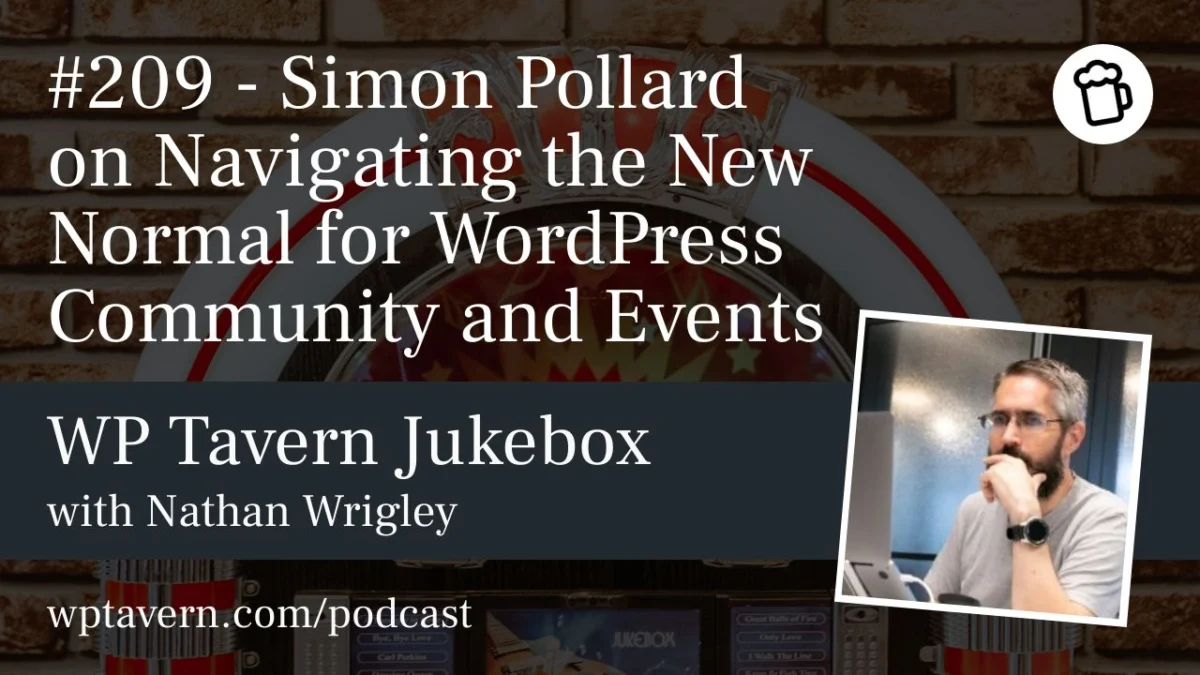
In a recent episode of the WP Tavern Jukebox podcast, host Nathan Wrigley sat down with veteran web developer and community organizer Simon Pollard to dissect the state of WordPress gatherings. Their conversation reveals a community at a crossroads, grappling with fragmented digital landscapes, changing social habits, and the existential question of whether the "in-person" model of community building is still viable in an era dominated by AI and screen-fatigue.
A Historical Snapshot: The Rise of the Meetup Culture
To understand the current stagnation, one must look at the meteoric rise of the WordPress Meetup movement. For years, these events served as the primary networking and knowledge-sharing hubs for developers, designers, and project managers.
Pollard, who helped cultivate the Bristol WordPress Meetup from a casual group of six people into a thriving, officially-backed organization, recalls the "golden era" of 2018–2019. At its peak, the Bristol chapter consistently drew 30 to 40 attendees monthly. The structure was simple: provide food, foster a welcoming atmosphere, and facilitate genuine human connection.
"We had an actual bank account, we had sponsors, and we were in profit," Pollard notes. "It was just a nice thing. The atmosphere was friendly, and you’d go along for the people as much as you would for the talk itself."
This model—a mix of technical insights and social bonding—was the glue that held the global WordPress project together. It allowed for the cross-pollination of ideas, mentorship of junior developers, and the establishment of trust between industry peers.
The COVID-19 Disruption and the "New Normal"
The onset of the pandemic in 2020 brought this momentum to a grinding halt. As lockdowns were implemented, the in-person events that defined the community evaporated overnight. While many assumed that the return to normalcy would see a rapid resurgence of these gatherings, the reality has been far more complex.
The Erosion of Habits
Pollard identifies a two-fold challenge in the post-pandemic landscape: personal life shifts and the loss of the "outside-is-good" habit. For many, including Pollard, the pandemic coincided with significant life events, such as parenthood, which naturally reduced the capacity for evening social commitments.
Furthermore, a broader psychological shift occurred. After two years of being told that the outside world posed a risk, the threshold for leaving the house for a professional event became significantly higher. "I’ve been very reflective over the last few weeks," Pollard admits. "I didn’t have the capacity to run the Meetup that I used to be involved with. I had put things on pause."
The Fragmentation of Digital Town Squares
Perhaps the most significant barrier to reviving these communities is the collapse of the "digital town square." Before 2020, platforms like Twitter (now X) served as the central nervous system for the WordPress community. It was the place to announce events, share knowledge, and build the excitement necessary to fill a room.
Today, that landscape is fractured. As users have migrated to various platforms or retreated from social media entirely, the ability to reach a unified audience has diminished. "There’s no one place you can go to," Wrigley observes. "Everything’s shattered over multiple accounts. There’s no replacement for that town square."
The Impersonal Influence of AI
A recurring theme in the discourse regarding the decline of community is the rise of artificial intelligence. In the past, if a developer faced a challenge, they would turn to forums like Stack Overflow or attend a Meetup to troubleshoot with a peer. These interactions were inherently social; they built reputations and friendships.
Today, AI agents provide instant, attribution-less answers. While efficient, this technology has effectively "de-socialized" the process of learning. "You ask AI and AI gives you the answer," Pollard notes. "But it doesn’t tell you who it consumed it from. You don’t have to reach out to a person anymore… and you aren’t exposed to the community."
If the primary utility of a Meetup—the exchange of technical knowledge—can now be satisfied by a prompt, organizers are left with a fundamental question: What is the new value proposition for in-person gatherings?
Implications: Can the Spirit of Community Be Rebuilt?
The potential decline of local chapters has serious implications for the long-term success of the WordPress project. If the community is the "glue" that binds the open-source project together, its dilution could lead to a less cohesive, less innovative ecosystem.
Rethinking the Event Format
To survive, Pollard and Wrigley suggest that WordPress events must evolve. The "sit, watch a talk, and go home" model may no longer be compelling enough to compete with modern home-based entertainment and the convenience of digital tools.
Suggested strategies for reinvention include:
- Integrating Arts and Entertainment: Incorporating live music, cinema, or creative showcases into the event schedule. Given the high correlation between developers and musicians, this could tap into the latent talents of the community itself.
- Broadening the Scope: Moving away from purely technical, niche-heavy WordPress content to broader topics related to the web, creativity, and soft skills. This inclusivity can attract a wider audience beyond the "hardcore" developer demographic.
- Focusing on the "Hallway Track": Emphasizing the social, networking, and human connection elements that AI cannot replicate. Creating environments where people feel truly welcomed—through active facilitation and name-tagging—remains the gold standard for success.
The Need for "Maven" Connectors
The survival of the WordPress community may depend on a new generation of "mavens"—the hyper-connectors who can bridge the gap between digital interaction and physical space. These are the individuals who understand that while code can be written in isolation, a project of WordPress’s scale requires the empathy and trust fostered only by face-to-face interaction.
Conclusion: A Call to Action
The current state of WordPress Meetups is undoubtedly one of flux. While numbers may be smaller than they were in 2019, the core community—the people who value the warmth and collaboration inherent in this industry—remains.
For organizers like Pollard, the path forward involves experimentation and a willingness to accept that the "old way" of doing things may not return. Instead, the focus must shift to creating environments that are inherently rewarding, where the value lies not just in the software, but in the human relationships formed around it.
"It hasn’t died out," Pollard concludes. "It’s just a little bit smaller than it was. I’d hope it can [rebuild] because I think it helps. The project itself wouldn’t exist without a community because it’s built by a community."
As the WordPress ecosystem moves toward its third decade, the challenge is clear: we must stop trying to resurrect the past and start building a new, more engaging future for the next generation of contributors. Whether through hybrid formats, cross-disciplinary events, or simply finding new ways to talk to one another, the imperative remains—the community must gather, or risk fading into the digital background.