In a digital landscape dominated by monolithic, featureless glass rectangles, a new contender has emerged to challenge the status quo of mobile computing. Clicks Technology, the startup that initially captured industry attention with its niche snap-on keyboard accessory for the iPhone, is now poised to disrupt the market with its own standalone device: the Clicks Communicator. Today, the company released an extensive new video showcasing its pre-production hardware, signaling a bold return to the tactile, productivity-focused ergonomics that once defined the BlackBerry era.
Priced at $499 and slated for a fourth-quarter release this year, the Communicator is more than a nostalgia play. It is a calculated pivot toward a user base that feels alienated by the addictive, screen-heavy nature of modern flagship smartphones. By prioritizing physical input, intentional notification management, and hardware-level privacy, Clicks Technology is betting that the future of mobile efficiency lies in the past.
The Genesis of the Communicator: A Chronology of Innovation
The journey of the Clicks Communicator began long before its current iteration. To understand its significance, one must look at the progression of Clicks Technology’s design philosophy.
The CES Debut
The device was first unveiled to the public at the Consumer Electronics Show (CES) in Las Vegas this past January. The debut was met with a mixture of curiosity and fervor. Attendees, particularly those who cut their teeth on the legendary QWERTY keyboards of the early 2000s, were immediately drawn to the device’s prototype. It served as a proof-of-concept for a segment of the population that spends the majority of their workday tethered to email, Slack, and long-form messaging.
The Prototype Phase
Following the January unveiling, the engineering team at Clicks spent months refining the tactile feedback of the keyboard. Early feedback from industry observers, including TechCrunch reporters who handled the prototype, noted that while the weight and grip were balanced, the keys required minor tuning. The company has since focused on adjusting the actuation pressure to accommodate "power typers"—individuals who prioritize speed and accuracy over the flat, haptic-less surfaces of modern touchscreens.
The Road to Q4
With the release of today’s video, Clicks has moved into the final stages of hardware validation. The company is currently demonstrating both the pre-production hardware and the custom internal software. This transparency is intended to build trust with a consumer base that has been burned by "vaporware" in the smartphone industry for years. The current roadmap indicates that manufacturing will scale through the third quarter, with the first units reaching consumers by the end of the year.
Hardware Specifications: An Engineer’s Wishlist
The Clicks Communicator distinguishes itself from the sea of "BlackBerry dupes" through a commitment to utility and user-serviceable design. Below are the core technical pillars that define the device:
- The Tactile Interface: At the heart of the device is a physical, touch-sensitive keyboard. Unlike a traditional touchscreen, this provides mechanical feedback, reducing error rates for long-form typing.
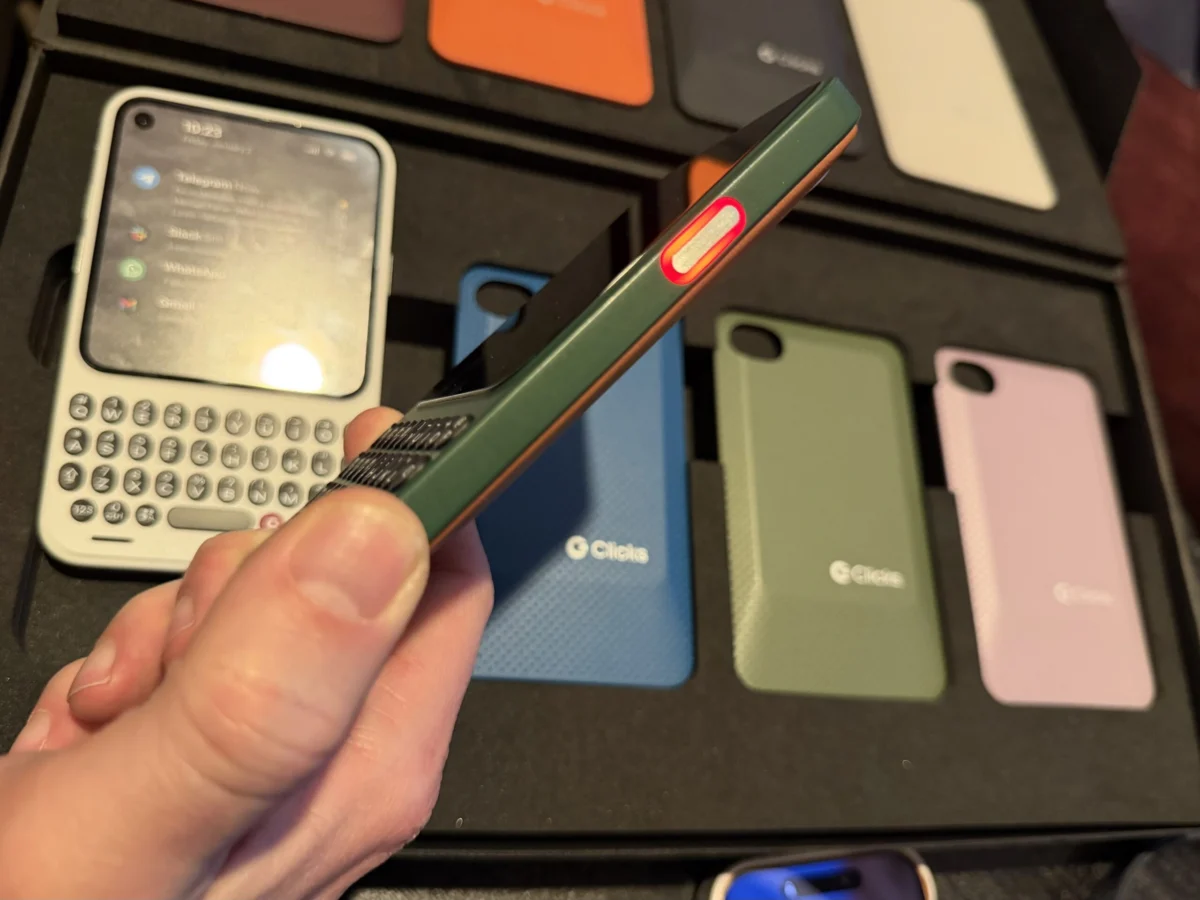
- The Signal Light: Perhaps the most innovative feature is the customizable side-mounted LED. Users can program specific colors and light patterns to correspond to different contacts, apps, or priority levels. This allows for "glanceable" information, enabling users to stay informed without needing to unlock their device.
- Expandable Connectivity: Recognizing the needs of power users, the device includes a physical SIM tray alongside eSIM support, a 3.5 mm headphone jack for high-fidelity audio, and a microSD slot capable of handling up to 2TB of storage.
- Hardware Privacy Toggles: In an age of constant surveillance, the inclusion of a dedicated, physical switch for Airplane Mode provides an immediate, hardware-level guarantee of connectivity status, removing the ambiguity of software-based menus.
- Modular Design: The device features replaceable back covers, allowing users to customize the aesthetic and feel of their device—a nod to the modular phone concepts that gained popularity in the early 2010s.
Implications: The "Digital Minimalism" Movement
The rise of the Clicks Communicator is not an isolated incident; it is a direct response to the "Digital Minimalism" movement. As modern smartphones become increasingly centered around algorithmic social feeds and gamified engagement, a growing demographic is seeking to reclaim their attention.
Breaking the Addiction Cycle
The Communicator is intentionally designed to be boring—or, as the designers might argue, "focused." By partnering with the Niagara Launcher, the device provides a clean, text-heavy interface for Android applications. It avoids the vibrant, distracting UI elements found in stock versions of iOS or Android, which are often designed to maximize screen time.
The Role of the Signal Light in Focus
The Signal Light is more than just a stylistic choice; it is a tool for mental health. By allowing users to ignore their phone unless a specific, high-priority "Signal" color flashes, Clicks is empowering users to curate their digital environment. This feature effectively creates a barrier between the user and the infinite scroll, allowing for deep work and genuine offline time.
Expert Analysis and Official Stances
While the device is still in the pre-production phase, the market reception has been overwhelmingly positive among a specific cohort of professionals.
Why the Keyboard Matters
"The physical keyboard isn’t just about nostalgia," says one industry analyst. "It’s about the cognitive load. When you type on glass, you have to constantly check the screen for autocorrect errors. When you type on a physical keyboard, you develop muscle memory. You can write an email while looking at your surroundings, not just the display. That is a massive productivity advantage."
The Clicks Philosophy
In official statements, Clicks Technology emphasizes that they are not trying to compete with the sheer processing power or camera quality of a $1,200 flagship smartphone. Instead, they are positioning the Communicator as a "productivity companion." By focusing on the fundamentals of communication—typing, notification management, and battery longevity—they are targeting the enterprise and creative sectors where utility is the ultimate metric.
Looking Ahead: The Future of the Communicator
The upcoming months will be critical for Clicks Technology. The company has promised a series of deep-dive videos that will explore the specific software features of the device, including the "Prompt Key" (a macro-based shortcut system) and the "Message Hub" (an integrated interface for managing communications across disparate platforms).
As the fourth quarter approaches, the industry will be watching closely to see if the Clicks Communicator can successfully bridge the gap between retro hardware and modern software. If the company can deliver on its promises of build quality and software stability, they may well prove that there is a sustainable, profitable future for devices that prioritize the user’s time over the platform’s engagement metrics.
For now, the Communicator stands as a beacon for those who are tired of the "black mirror" experience. It is a reminder that technology should be a tool—one that is tactile, reliable, and, above all, respectful of the user’s autonomy.
Summary of Key Features
| Feature | Functionality |
|---|---|
| Physical Keyboard | Tactile feedback for high-speed typing |
| Signal Light | Customizable LED notifications for selective engagement |
| Storage | microSD support up to 2TB |
| Audio | Integrated 3.5mm headphone jack |
| Privacy | Physical toggle switch for Airplane Mode |
| Software | Niagara Launcher integration for simplified UI |
Disclaimer: Some of the links in this article are affiliate links. Purchasing through these links may result in a small commission for the publisher, which helps support our independent journalism. This relationship does not influence our editorial coverage or the nature of this reporting.