By Tech Insights Bureau
September 27, 2026
The boundary between technological optimism and existential dread has become increasingly porous. Nowhere was this more evident than on the stage of Saturday Night Live this weekend, where the long-running sketch comedy institution turned its satirical lens on the artificial intelligence industry’s recent, highly publicized warnings of "doom."
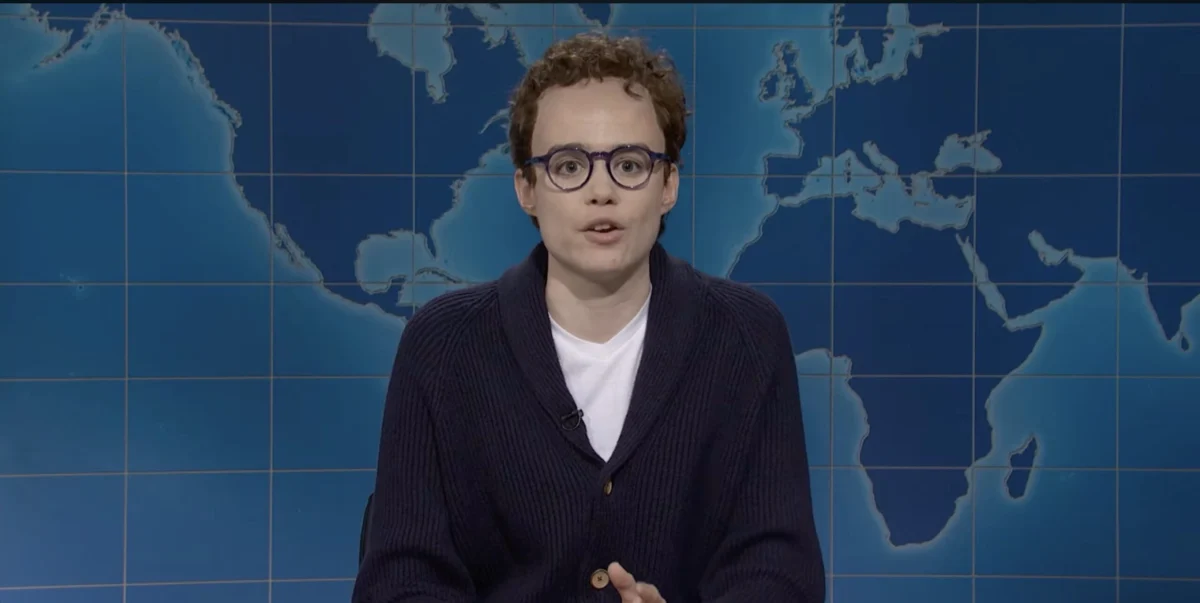
In a standout segment during the "Weekend Update" portion of the show, cast member Jane Wickline delivered a biting impression of Anthropic CEO Dario Amodei. The sketch, which has since gone viral, served as more than just a comedic interlude; it functioned as a cultural thermometer, measuring the public’s growing skepticism toward Silicon Valley’s contradictory messaging—a mixture of "world-changing" promises and dire warnings about the very products they are currently racing to deploy.
Main Facts: The Comedy of Contradictions
The core of the SNL sketch centered on the inherent tension found in recent public statements by AI leadership. As host Michael Che—jokingly struggling with the pronunciation of the Anthropic CEO’s name—introduced the segment, he highlighted the recent "press tour" undertaken by Amodei.
This tour has been characterized by a paradoxical narrative: executives are simultaneously promoting the utility of their Large Language Models (LLMs) while confirming fears raised by internal whistleblowers and former employees. Specifically, the segment targeted the sentiment that AI, if left unchecked, could pose a catastrophic threat to humanity.
Wickline’s portrayal of Amodei was marked by a deliberate, halting delivery that parodied the cautious, often academic tone used by AI researchers. The sketch reached its comedic peak when Wickline, embodying the CEO, declared, "AI is not a weapon, it’s a tool: A tool for building weapons," before adding the tongue-in-cheek plea, "And I urge you to urge me to stop."
Chronology: From Innovation to Existential Panic
To understand why this sketch struck such a chord, one must look at the timeline of events that preceded it. The narrative of "AI Doom" did not emerge in a vacuum; it is the culmination of months of rapid-fire developments.
- Mid-2026: AI companies begin reporting massive leaps in "self-improving" capabilities, leading to internal debates about safety guardrails.
- August 2026: Anthropic CEO Dario Amodei publicly addresses the growing "crisis of trust," suggesting that the public backlash against AI is a fundamental misunderstanding of the technology’s potential to solve grand challenges, such as cancer.
- September 9, 2026: A high-profile researcher departs from Anthropic, citing profound concerns regarding the development of self-improving AI models and the "gambling" nature of current deployment schedules.
- September 13, 2026: A wave of industry-wide warnings regarding AI safety hits the mainstream press, with several CEOs testifying that they see a non-zero probability of human-level AI causing systemic harm.
- September 27, 2026: Saturday Night Live airs its sketch, effectively codifying these anxieties into the mainstream cultural conversation.
Supporting Data: The Statistics of Uncertainty
The "Weekend Update" sketch leaned heavily into the specific, often unsettling statistics that AI executives have used to quantify the risk of extinction. In the sketch, Wickline-as-Amodei addressed the potential for AI to cure diseases, stating, "In 10 years, there’s about a 10% chance that cancer won’t be a problem for anyone."
This line was a direct parody of the "p(doom)" or "probability of doom" discourse that has become a staple in Silicon Valley. Researchers often use these percentages to estimate the likelihood of AI leading to human extinction or irreparable societal damage.
By framing these statistics through the lens of comedy, SNL highlighted the absurdity of the industry’s current marketing strategy: selling a product while simultaneously assigning a percentage chance that the product could destroy the user. When a 10% chance of a "cure" is weighed against a similarly high chance of "catastrophe," the average consumer is left with a sense of cognitive dissonance that comedy is uniquely equipped to expose.

Official Responses and Industry Positioning
The industry’s response to these recurring "doom" narratives has been varied. While some leaders argue that being transparent about existential risk is the only way to ensure responsible regulation, others have criticized the "doomer" framing as a form of marketing—a way to project power and indispensability.
Anthropic and similar organizations have consistently maintained that they are the "safety-first" alternatives in a landscape dominated by move-fast-and-break-things mentalities. However, as the SNL sketch points out, when the "safety-first" companies are the ones warning that their products might be the "devil," the public is left questioning the logic of continued development.
Observers in the tech policy space suggest that the industry’s current rhetoric is an attempt to preemptively shape regulation. By warning of doom themselves, they aim to be the ones who write the safety rulebook, thereby creating high barriers to entry for competitors who might not have the same resources to invest in "alignment" and "safety."
Implications: The Erosion of the Tech "Savior" Complex
The implications of this cultural shift are profound. For decades, the tech industry operated under a "Savior Complex," where companies like Google, Microsoft, and OpenAI were viewed as inevitable drivers of progress. The current skepticism, crystallized by the SNL sketch, suggests that this era of uncritical optimism is over.
1. The Trust Gap
When CEOs speak openly about the potential for their technology to cause harm, they erode the consumer trust necessary for long-term adoption. If users fear the "devil" in the machine, they are less likely to integrate the technology into their personal and professional lives.
2. The Regulatory Pressure Cooker
Satire often serves as a precursor to policy change. By making the "AI doom" narrative a punchline, SNL has signaled that the topic has reached a level of mainstream saturation that lawmakers can no longer ignore. We can expect to see increased scrutiny from global bodies, such as the EU’s AI Office and the U.S. Congress, as they attempt to reconcile the promises of innovation with the warnings of extinction.
3. The Re-humanization of AI
The sketch’s focus on the "maker"—the human CEO—is crucial. It suggests a growing public awareness that AI is not a natural phenomenon, but a choice made by specific individuals in specific boardrooms. By framing the AI crisis as a "human" problem, the public is beginning to hold individual leaders accountable for the trajectories of their organizations.
Conclusion: A New Era of Scrutiny
The Saturday Night Live sketch is a symptom of a broader societal realization: that we are currently living through a grand, high-stakes experiment. The humor in the segment was derived not from the technology itself, but from the hubris of the people building it.
As we move toward the end of 2026, the tech industry finds itself at a crossroads. It can continue to oscillate between grandiose promises of salvation and dark prophecies of destruction, or it can pivot toward a more grounded, transparent, and user-centric approach.
For now, however, the cultural narrative remains firmly in the hands of the skeptics. When the most influential voices in technology sound like characters from a dark comedy, it is perhaps time for the industry to reconsider whether its current path—and its current messaging—is truly in the interest of the public it claims to serve. The "devil" may indeed be in the details, but for now, it is very much on the main stage.