
In the hyper-competitive landscape of digital marketing, there is an uncomfortable truth that many entrepreneurs prefer to ignore: what worked yesterday is already losing its potency. As consumer attention spans contract and inboxes become increasingly saturated with promotional noise, the "gut feeling" approach to marketing has become a liability. Today, the difference between a stagnant brand and a market leader often comes down to one fundamental practice: rigorous, data-backed A/B testing.
A/B testing—the process of comparing two versions of a digital asset to see which performs better—is no longer a "nice-to-have" experiment for large corporations with massive data teams. It has become a non-negotiable survival tool for startups, e-commerce brands, and SaaS companies alike. By shifting from subjective guesswork to objective experimentation, businesses can unlock significant revenue growth without spending an additional dollar on customer acquisition.
The Evolution of Email Optimization: A Chronology of Change
To understand why testing is essential, one must look at how the digital communication landscape has shifted over the last decade.
The Early Era (2010–2015): Marketing was dominated by the "batch and blast" philosophy. Success was measured by list size, and the primary goal was sheer volume. Testing was rudimentary, often limited to basic subject line variants, and many marketers believed that frequency was the only lever worth pulling.
The Personalization Pivot (2016–2020): As inbox filters became more sophisticated, "batch and blast" began to fail. Marketers realized that irrelevance was the primary cause of high unsubscribe rates. This era saw the rise of basic segmentation, where data began to dictate which audiences received which messages.
The Automation & Testing Renaissance (2021–Present): We have entered an era where machine learning and automation dominate. Omnisend’s latest industry analysis reveals that average open rates climbed from 22.9% in 2022 to 25.1% in 2023. This is not a coincidence; it is the direct result of brands adopting granular, automated, and constant A/B testing protocols. Today, the most successful brands treat every single email as a data point, feeding a cycle of continuous improvement that compound into massive revenue gains.
Supporting Data: The Power of Incremental Wins
The mathematical argument for A/B testing is compelling. Many founders mistakenly believe they need a "viral hit" or a massive breakthrough to scale their revenue. However, the most sustainable growth comes from the compounding effect of minor optimizations.
According to data from Omnisend, the shift toward optimized, triggered flows—such as welcome series and abandoned cart reminders—has been transformative. These automated sequences show 52% higher open rates and 332% higher click rates compared to standard promotional campaigns. Perhaps most impressively, they boast a 2,361% better conversion rate.
When you isolate individual variables, the numbers become even more striking. A mere 5% improvement in open rates, combined with a 10% lift in click-through rates, can result in a 30% increase in total revenue from the same list size. For a mid-sized e-commerce brand, this translates to thousands of dollars in pure profit—money that would otherwise have been left on the table.
What You Should Be Testing: The High-Leverage Framework
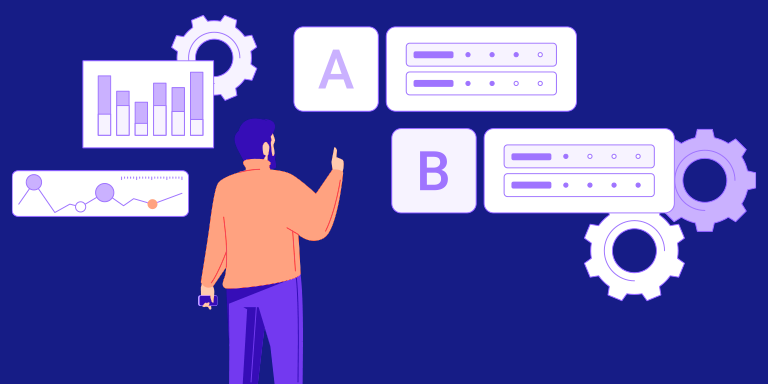
A/B testing is not merely about choosing the "better" button color; it is a systematic approach to understanding human psychology. To move the needle, founders should focus on these five high-leverage areas:
1. Subject Lines
The subject line is the gatekeeper of your content. With 43% of users deciding to open an email based solely on this line, it remains the most critical variable.
- Test: Benefit-driven vs. curiosity-driven phrasing.
- Test: Length—does a short, punchy subject outperform a descriptive one?
- Test: Personalization—does using a name or location-based data point change behavior?
2. Call-to-Action (CTA)
Once the email is open, the CTA is the bridge to conversion.
- Test: Action-oriented copy (e.g., "Get My Discount") vs. passive copy (e.g., "Learn More").
- Test: Placement—should the primary CTA appear above or below the fold?
3. Send Timing and Frequency
Even the most compelling offer will fail if it arrives at 3:00 AM or during a busy Tuesday morning meeting.
- Test: Time of day—does your audience engage better during their morning commute or their evening wind-down?
- Test: Cadence—how often can you email your list before engagement drops?
4. Sender Identity and Preheader Text
The "From" name is the first thing a user sees. Is your email coming from a faceless brand or a specific person at the company?
- Test: Company Name vs. Founder Name.
- Test: Preheader text—the snippet that appears next to the subject line—to provide additional context or an urgent hook.
5. Audience Segmentation
Blanket emails are the enemy of conversion.
- Test: High-intent segments (e.g., repeat purchasers) vs. window shoppers.
- Test: Behavioral triggers (e.g., users who viewed a product but didn’t buy) vs. demographic segments.
The Strategic Implication: Building a Culture of Experimentation
The implication of these findings is clear: Marketing is a process, not a project. Successful brands do not stop testing once they find a "winning" subject line. They understand that audience preferences are fluid, influenced by economic conditions, seasonality, and shifting trends.
When a brand treats testing as a continuous workflow, it builds "marketing intelligence." This library of historical performance—knowing what tone, imagery, and offers resonate with specific segments—becomes a proprietary asset. It allows companies to move faster and spend smarter than their competitors.
How to Execute Without Getting Lost in Data
The biggest barrier to entry for many founders is the fear of complexity. However, a robust testing framework does not require a data science degree. Follow this five-step cycle to keep your experimentation efficient:
- Formulate a Hypothesis: Move beyond "let’s try this." Instead, use the format: "I believe [Variable X] will result in [Metric Y] because [Reasoning Z]."
- Isolate One Variable: If you change the subject line, the CTA, and the image all at once, you will never know which change caused the shift in performance.
- Define Your Metric: Ensure your success metric aligns with your test. If you are testing a subject line, track open rates. If you are testing an offer, track conversion rates.
- Ensure Statistical Significance: Aim for at least 1,000 recipients per version. If your list is smaller, use a 20/20/60 split (20% A, 20% B, and 60% for the winner).
- Document and Iterate: Keep a ledger of every test. The failures are just as valuable as the wins, as they define the boundaries of your audience’s preferences.
Final Word: Turning Data into Revenue
The path to scaling a business is rarely about finding a "silver bullet." It is about the relentless pursuit of small, high-impact improvements that accumulate over time. By adopting a mindset of constant, intentional experimentation, you turn your marketing list from a passive asset into a high-performance engine for growth.
Tools like Omnisend are designed precisely for this environment. By integrating automation, deep segmentation, and intuitive A/B testing features into a single platform, it allows teams to execute sophisticated growth strategies without the burden of complex, multi-tool workflows.
In a world where noise is the default, the brands that win are the ones that listen to their data. Start your next test today, and let the results guide your path to sustainable, long-term success.