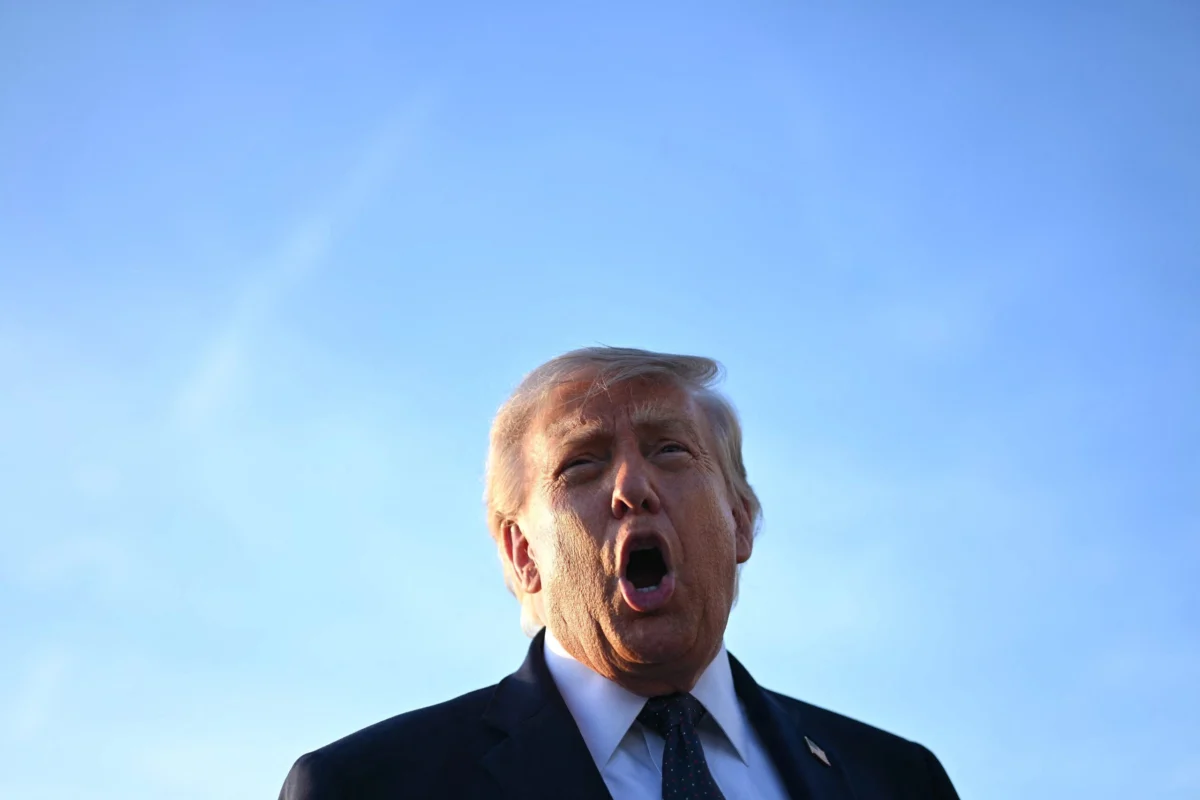
In a series of combative posts on his Truth Social platform this weekend, President Donald Trump has forcefully pushed back against the growing movement to regulate artificial intelligence, framing the current safety debate as the latest in a long string of “hoaxes” orchestrated by his political opponents. The President’s rhetoric marks a significant escalation in the federal government’s involvement in the tech sector, as he signaled his intent to establish an “AI Force” and appoint an “AI Czar” to oversee the industry’s development.
The Evolution of the AI Safety Debate
The global conversation surrounding AI safety has intensified throughout 2026. What began as a niche academic concern regarding “existential risk” has blossomed into a mainstream political issue. Earlier this month, a prominent researcher resigned from Anthropic, a leading AI firm, citing internal alarm that the company’s current trajectory could result in catastrophic outcomes by the end of the decade.
This warning prompted a defensive response from the industry’s elite. Anthropic CEO Dario Amodei subsequently released a roadmap to “pace the frontier” of AI development—a move that garnered public endorsements from OpenAI’s Sam Altman and SpaceX/Tesla CEO Elon Musk. However, these safety-oriented narratives have faced pushback from critics who argue that the obsession with hypothetical “doomsday” scenarios serves as a convenient smokescreen to distract the public from the immediate, tangible harms of AI, such as labor displacement, copyright infringement, and algorithmic bias.
Chronology: A Weekend of Digital Defiance
The President’s recent statements arrived in two distinct waves on Saturday, signaling a departure from his previous, more nuanced comments made during a golf tournament the prior weekend.
Saturday Morning: Branding and Nomenclature
The rhetoric began on Saturday morning when Trump turned his attention to the branding of the technology itself. Expressing dissatisfaction with the term “Artificial Intelligence,” which he labeled “ineloquent,” the President launched a poll on Truth Social. He invited his followers to vote on a rebranding effort, offering three alternatives: “Superior Intelligence,” “Extreme Intelligence,” or “Supreme Intelligence.” While the poll remains active, the gesture underscored the President’s desire to frame AI as a symbol of American dominance rather than a source of societal risk.
Saturday Afternoon: The “Hoax” Narrative
A few hours later, the tone shifted from branding to political confrontation. In a follow-up post, the President explicitly categorized the push for AI regulation as a “Democratic hoax.” He drew parallels between the current scrutiny of AI and previous political flashpoints, including the Russia investigations, the Ukraine inquiries, both of his impeachments, and debates regarding gender in sports.
Trump’s narrative posits that the scrutiny of AI is a secondary front in a broader war. He claimed that opponents of progress first targeted data centers—the physical infrastructure fueling the AI boom—under the guise of environmental or local concern. According to the President, when those attacks “failed” to stop the construction of these facilities, critics pivoted their efforts to target the software and the intelligence itself.
The “AI Force” and the Quest for a New Czar
Perhaps the most significant policy revelation from the weekend was the President’s intent to reorganize federal oversight of the technology. Borrowing a page from his first term’s establishment of the Space Force, Trump announced that he will create an “AI Force.”
While details regarding the mandate, funding, and legal authority of this new entity remain opaque, the President’s announcement serves as a declaration of intent to federalize the monitoring of the industry. Furthermore, he committed to appointing an “AI Czar,” stipulating that only “High I.Q. individuals” need apply. This search for a new lead official comes at a time of leadership transition, as venture capitalist David Sacks, who previously held the mantle of the President’s AI and crypto czar, has moved on to co-chair the President’s Council of Advisors on Science and Technology.
Supporting Data and Industry Sentiment
Despite the President’s insistence that the push for regulation is politically motivated, the landscape of AI criticism is far more complex than a binary partisan divide.
The Data Center Conflict
The President’s claim that data centers are now widely appreciated by local communities ignores the growing regulatory friction in the United States. In July 2026, New York became the first state to implement a moratorium on the construction of new large-scale data centers, citing concerns over energy consumption and environmental impact. This is not a purely partisan initiative; in many regions, both Republican and Democratic local leaders have pushed back against the industry due to the immense strain these facilities place on local power grids and water supplies.
Industry Alignment with the Administration
The tech industry’s leadership appears to be aligning itself with the President’s stance against regulation. During the All-In Summit, Nvidia CEO Jensen Huang was invited on stage by the event’s co-host, David Sacks. Huang explicitly agreed with the President’s assessment of the AI “hoax,” telling the audience, “We’re not going to let an AI slowdown happen.” This sentiment reflects a growing sentiment within Silicon Valley that the current safety debate is a form of “regulatory capture” that would favor incumbents while stifling the growth of smaller, more agile competitors.
Implications: The Road Ahead
The President’s characterization of AI safety concerns as a political hoax has profound implications for the future of federal technology policy. By framing the debate as a partisan struggle, the administration is effectively signaling that it will prioritize rapid development over the cautionary, “guardrail-heavy” approach advocated by some industry researchers.
1. The Politicization of Technical Safety
By labeling safety research as a “Democratic hoax,” the President risks creating a climate where technical, safety-critical assessments are filtered through a partisan lens. This could make it significantly harder for the federal government to implement objective, science-based safety standards, as any proposed regulation will likely be met with accusations of political sabotage.
2. The Future of the “AI Force”
The proposed “AI Force” is likely to become a central pillar of the administration’s tech policy. If the President’s rhetoric is any indication, this force will likely focus on competitive dominance—ensuring that the U.S. remains ahead of global rivals like China—rather than focusing on the mitigation of existential risks. The search for an “AI Czar” will be the first major test of this new administrative direction.
3. Impact on Industry Innovation
For the tech industry, the President’s stance offers a green light to continue aggressive development cycles. With the White House signaling that it will “cherish, help, and watch over” the industry, companies may feel emboldened to bypass voluntary safety pacts or slow-down agreements. However, this creates a volatile environment for investors and employees who remain genuinely concerned about the risks of deploying advanced models.
Conclusion
President Trump’s recent comments represent a decisive pivot in the American approach to artificial intelligence. By rejecting the “existential risk” narrative and reframing the debate as a battle between political ideologies, he has set the stage for a period of rapid, government-supported growth. As the administration moves forward with its plans for an “AI Force” and a new “AI Czar,” the technology community must prepare for a future where national prestige and competitive speed—rather than safety-first caution—define the federal agenda. Whether this strategy will lead to a new era of American prosperity or exacerbate the risks associated with unchecked innovation remains the most significant, and most contentious, question of the decade.