You spend hours meticulously crafting the perfect email. The subject line feels sharp, the copy is polished to perfection, and you are confident this message will drive serious engagement. You hit "send," envisioning a spike in traffic and a surge in sales.
Then, it lands in inboxes—and silence.
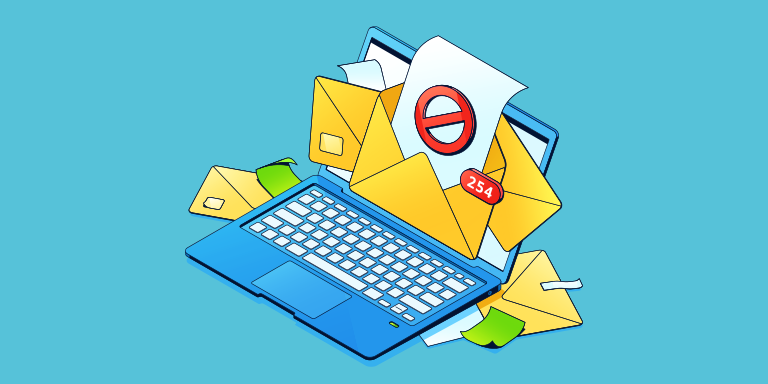
No spike in traffic. No conversions. No meaningful engagement. Just another email your audience scrolls past, destined for the "promotions" tab or the trash folder. If this scenario feels painfully familiar, you are not alone. Even the most seasoned founders and marketers struggle to bridge the gap between an "open" and a "click." While it is easy to blame "email fatigue" or shrinking consumer attention spans, the reality is that low click-through rates (CTR) are rarely a mystery. They are usually the byproduct of a few, highly fixable tactical errors.
The Anatomy of the Click: Understanding the Core Problem
Before you can resolve low performance, you must understand the psychology of the inbox. An email is a high-stakes encounter; your reader is likely multi-tasking, stressed, and bombarded by hundreds of other messages.
The Subject Line Barrier
The subject line is the gatekeeper of your content. In a crowded inbox, you have less than a second to earn a click. If your subject line is vague, predictable, or overly "salesy," your email is dead on arrival. Strong subject lines tap into specific human desires—curiosity, vanity, fear of missing out, or a promise of utility. Weak ones simply blend into the noise.
The Mindset Mismatch
Most marketing emails fail because they talk at the reader rather than to them. A message that ignores the reader’s current emotional state or their position in the buyer’s journey will always fall flat. Clicks are driven by relevance. If your email lacks empathy or context, the disconnect kills engagement long before the reader reaches your call-to-action (CTA).
The "Mass-Produced" Trap
We live in an era of hyper-personalization. When subscribers receive a blanket, one-size-fits-all message, they immediately recognize it as a broadcast rather than a conversation. If your content doesn’t reflect the reader’s past behavior, interests, or specific needs, they will tune you out.
Chronology of an Email Failure: Why Readers Stop Engaging
To reverse the trend, we must look at the lifecycle of a failed email interaction:
- The Inbox Triage (0-2 seconds): The subscriber scans their inbox. Your subject line fails to trigger an emotional response. The email is ignored.
- The Initial Scan (3-7 seconds): If they open the email, they perform a "visual scan." If they see a wall of text, lack of clear hierarchy, or no obvious value proposition, they lose interest.
- The Friction Point (8-15 seconds): The reader looks for a way forward. If your CTA is buried, vague, or confusing, they face "decision paralysis."
- The Abandonment (Post-15 seconds): The reader exits the email. The opportunity for conversion is lost.
Supporting Data: The Impact of Strategic Optimization
Marketing research consistently shows that minor adjustments can yield exponential results in email performance. According to industry benchmarks, personalized emails deliver six times higher transaction rates, yet many brands still rely on static templates.
Furthermore, studies on readability indicate that emails with shorter paragraphs (1–3 sentences) and bulleted lists see a 20% to 30% increase in CTR. The data is clear: when you reduce the cognitive load on the reader, you increase the likelihood that they will take action.
Official Best Practices: Turning Passive Readers into Active Customers
If you want to turn your email list into a high-performing asset, you must shift your focus from "sending" to "connecting."
1. The Art of the Subject Line
Great subject lines earn attention by sparking curiosity or promising immediate value. Avoid clichés like "Hello!" or "Check out our sale." Instead, try:
- The Benefit-Driven Subject: "How to save 5 hours this week."
- The Curiosity Hook: "The one tool you’re missing."
- The Personalization Approach: "A question for you, [Name]."
2. Radical Segmentation
Stop treating your list as a monolith. Segmentation allows you to categorize your audience based on behavior, skill level, or purchase history. Sending a "beginner’s guide" to a veteran customer is a waste of a touchpoint. By aligning your message with the user’s journey, you ensure that every email feels like a direct response to their needs.
3. Personalization Beyond the First Name
Using a token like "Hi, [Name]" is the bare minimum. Modern personalization relies on context. Use behavioral data to inform your copy:
- Cart Abandonment: "Still thinking about that [Item]?"
- Re-engagement: "We haven’t seen you in a while—here is an update on [Interest]."
- Post-Purchase: "How are you enjoying your new [Product]?"
4. Psychological Triggers for the CTA
A strong CTA is not just a button; it is a psychological prompt. To drive action, your CTA should be:
- Benefit-Focused: Instead of "Learn More," use "Get My Free Guide."
- Urgency-Backed: "Claim your 24-hour discount."
- Visually Distinct: Use high-contrast colors and plenty of whitespace to ensure the button is impossible to miss, particularly on mobile devices.
5. Formatting for the Skimmer
Assume every reader is a skimmer. Break up your text with headers, use bullet points for key benefits, and keep your paragraphs short. Your most important information should be "above the fold"—visible without the need to scroll.
Implications for Future Strategy
The implications for brands are clear: email marketing is no longer about volume; it is about precision. Brands that continue to send generic, cluttered, and impersonal blasts will see their deliverability rates drop as ESPs (Email Service Providers) prioritize engagement-based filtering.
Conversely, brands that adopt a data-driven, customer-centric approach will see higher lifetime value (LTV) and stronger community loyalty. Every email you send is a reflection of your brand’s relationship with your customer. Treating every email as an opportunity to provide value, rather than just extract a sale, is the long-term secret to sustained growth.
Implementation: Tools for the Modern Marketer
You don’t need a massive team to implement these changes. Leveraging modern automation platforms can bridge the gap between strategy and execution. Tools like Omnisend are designed specifically for this purpose. By utilizing behavior-based automations, dynamic personalization, and integrated social proof, you can create sophisticated campaigns that feel human-made.
The goal is to pair smart psychology with effortless execution. By testing your subject lines, A/B testing your CTAs, and measuring your results against your own benchmarks, you create a feedback loop that continually improves your performance.
Final Takeaway
The emails that earn the most clicks are not the loudest, the flashiest, or the ones sent with the most frequency. They are the ones that respect the reader’s time, acknowledge their current state, and provide a clear, compelling path to a solution.
If you are struggling with your CTR, take a step back. Stop focusing on the "pitch" and start focusing on the "value." By tightening your copy, segmenting your audience, and optimizing for the skimmer, you will find that your audience isn’t just opening your emails—they are waiting for them.
Ready to start building campaigns that convert? For those looking to streamline their efforts, you can explore platforms like Omnisend. As a special offer for our readers, use code FOUNDR50 to receive 50% off your first three months and begin turning your email list into a revenue-generating engine.