The modern marketing agency operates in a state of perpetual "AI fatigue." With new software launches occurring daily, the pressure to integrate artificial intelligence into creative workflows has shifted from a competitive advantage to an existential necessity. Yet, for most agency leaders, the bottleneck isn’t a lack of interest—it is a lack of time. How can an agency scale, innovate, and maintain high-quality output while simultaneously vetting a volatile and rapidly evolving marketplace of AI tools?
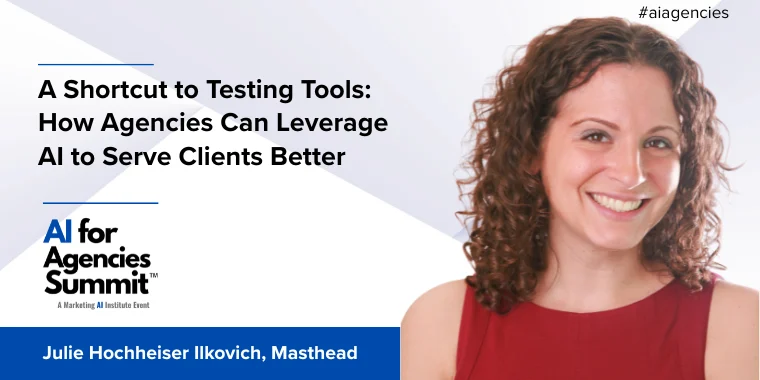
Julie Hochheiser Ilkovich, Managing Partner at Masthead, decided to stop guessing. Over the course of 25 weeks, she and her team embarked on a rigorous, systematic experiment: testing 25 different AI tools across real-world agency workflows to distinguish genuine productivity boosters from digital "snake oil."
This deep dive into the practical application of AI will take center stage at the upcoming AI for Agencies Summit, presented by Screendragon, on February 12, 2026.
The State of the Industry: The Burden of Choice
To understand the significance of Hochheiser Ilkovich’s project, one must look at the current agency landscape. Agencies are currently under immense pressure to deliver "more with less." Clients demand faster turnaround times, lower costs, and more sophisticated data-driven insights. While AI promises to fulfill these mandates, the sheer volume of choices is paralyzing.
For the average agency principal, the traditional approach to new technology is fragmented. A creative director might test an image generator, a copywriter might experiment with a chatbot, and the account management team might pilot a project management plugin. Without a unified, objective assessment, these fragmented efforts often lead to wasted subscription fees, security risks, and broken workflows.
"Most agencies are currently operating through trial and error," says Cathy McPhillips, CMO at Marketing AI Institute. "They are picking up tools based on social media hype rather than business logic. What Julie and her team at Masthead have done is provide a roadmap for intentional, evidence-based adoption."
Chronology of an Experiment: 25 Weeks, 25 Tools
The Masthead initiative was not a casual side project; it was a disciplined audit. Starting in the latter half of 2025, the team established a framework for evaluation. The goal was not merely to see if a tool "worked," but to determine if it could withstand the rigors of an agency environment.
The Phases of Evaluation:
- Phase 1: Identification (Weeks 1–4): The team curated a list of tools covering diverse functions: generative writing, SEO optimization, image creation, workflow automation, and data analytics.
- Phase 2: Integration (Weeks 5–15): Each tool was stress-tested against active client projects. The team measured key performance indicators (KPIs) such as time-to-output, quality of output, and the "human-in-the-loop" time required for editing.
- Phase 3: Cost-Benefit Analysis (Weeks 16–20): This phase focused on the ROI. Does the tool replace a paid seat? Does it reduce the time a senior staffer spends on repetitive tasks? Is the subscription model sustainable for a boutique agency?
- Phase 4: Synthesis (Weeks 21–25): Final findings were documented. The team categorized tools into three tiers: "Mission Critical," "Nice-to-Have," and "Avoid."
This chronology demonstrates a shift from "AI curiosity" to "AI operationalization." By documenting the failures as clearly as the successes, Masthead provided an honest, unflinching look at what happens when cutting-edge technology hits the friction of real-world client requirements.
Supporting Data: What Does AI Actually Deliver?
While the full report will be unveiled at the summit, preliminary findings suggest that the most effective tools aren’t always the most "hyped."
Data gathered during the 25-week trial indicates that:
- Efficiency Gains: The most successful tools reduced the initial draft-to-edit time by 40% in long-form content production.
- The "Quality Gap": Contrary to the belief that AI can replace human experts, the data showed that the quality of output remained stagnant unless the human prompter possessed deep subject-matter expertise.
- Workflow Friction: Over 30% of the tools tested failed to integrate seamlessly with existing CRM or project management software, rendering them more of a hindrance than a help in a fast-paced environment.
These metrics provide a sobering reality check for agency owners who believe that simply "turning on" AI will solve their margin issues. Instead, the data suggests that success requires a strategic layer of human oversight and specific training on tool-stack integration.
Official Perspectives: Navigating the Adoption Curve
Julie Hochheiser Ilkovich is uniquely positioned to interpret these results. As an award-winning content marketing specialist and a veteran of high-stakes media environments—including Warner Bros., Hearst, and AOL—she understands the delicate balance between creative integrity and operational speed.
"Agencies don’t need more tools; they need better workflows," Hochheiser Ilkovich noted in a recent briefing. "The goal of our experiment wasn’t just to build a list of software to buy. It was to build a framework for how to think about AI adoption. If an agency leader knows how to vet one tool effectively, they can vet them all."
Her background as a co-founder of the Women in Content & Marketing Association (WICMA) and the AI Marketing Innovation Council (AIMIC) highlights her commitment to community education. By sharing these findings, she is effectively crowdsourcing the wisdom of a 25-week intensive, allowing other agencies to skip the "experimental" phase and jump directly to the "implementation" phase.
Implications: The Future of the Agency Model
The implications of this 25-week study are profound. We are witnessing the end of the "generalist agency" model where every firm tries to do everything for everyone. As AI automates the commoditized aspects of agency work, the firms that survive will be those that have curated a "technological stack" that allows them to focus on high-level strategy and creative vision.
Key Takeaways for Agency Leaders:
- Stop Chasing Trends: Every tool is "the next big thing" on launch day. Wait for the data to emerge before shifting your infrastructure.
- Prioritize Interoperability: A tool is only as good as its ability to talk to your other platforms. If it exists in a silo, it creates a bottleneck.
- Invest in Human Literacy: The biggest ROI comes from training staff to prompt effectively and review output critically. The tool is the instrument; the employee is the musician.
- Operationalize Ethics: As agencies integrate AI, the responsibility for data privacy, copyright, and brand voice falls on the firm. Ensure your tool stack includes enterprise-grade security.
Join the Conversation: AI for Agencies Summit
For those looking to move beyond the headlines and into the practical, measurable reality of AI, the AI for Agencies Summit offers a vital resource.
Scheduled for February 12, 2026, the summit is designed specifically for agency leaders who are tired of the noise. Julie Hochheiser Ilkovich will deliver her keynote presentation, "25 Tools, 25 Weeks: How Agencies Can Solve Marketing Challenges with AI," where she will present the full findings, the "wins," the "misses," and the actionable roadmap every agency needs to thrive in this new era.
This free, virtual event is more than a series of presentations; it is a community-driven effort to define the standards of the modern agency. By attending, practitioners will leave with a clear, tested understanding of where to place their bets and how to build a resilient, AI-powered firm that delivers excellence, not just output.
Register for the AI for Agencies Summit today and turn your AI anxiety into an operational advantage.
About Julie Hochheiser Ilkovich: Julie is a Managing Partner at Masthead and a leader in the marketing and communications space. With a career spanning major media conglomerates and a passion for industry advancement through WICMA and AIMIC, she remains at the forefront of the AI conversation.
About the AI for Agencies Summit: An annual virtual gathering for agency owners and practitioners, the summit explores the intersection of creative strategy, technological innovation, and sustainable agency growth.