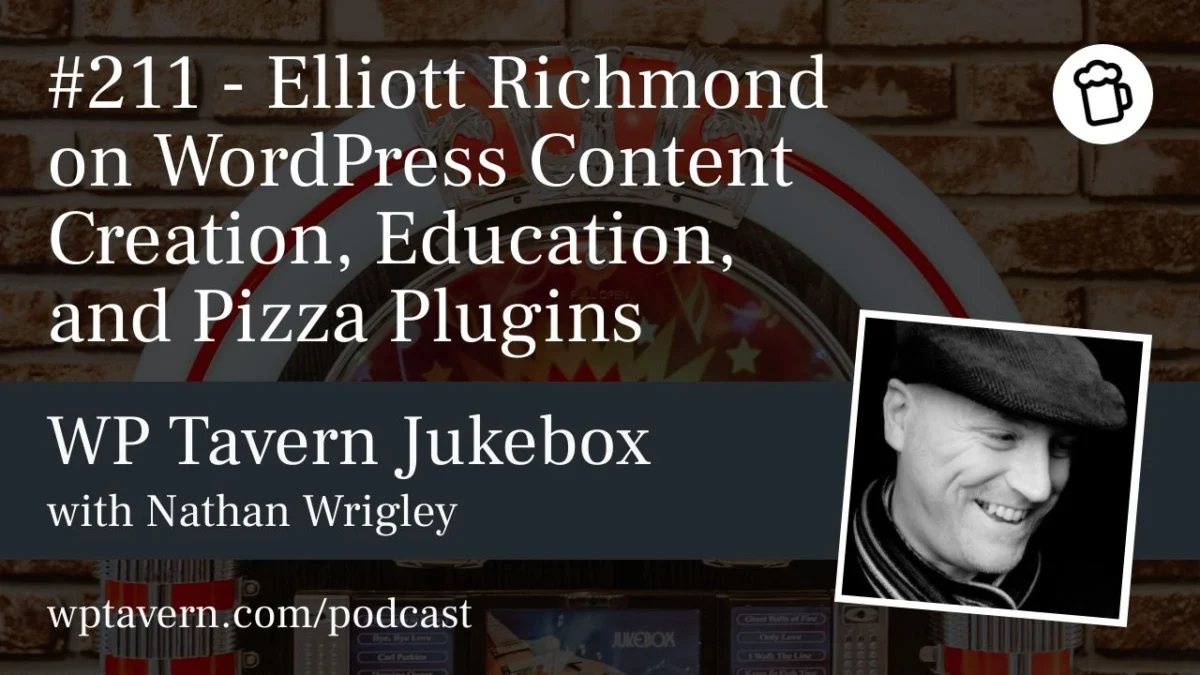
In the sprawling, interconnected ecosystem of WordPress, few stories illustrate the platform’s sheer versatility as effectively as that of Elliott Richmond. A veteran developer with over two decades of experience, Richmond has spent the better part of his career navigating the evolution of the web, from the early days of the b2 blogging software to the modern, block-based era of WordPress 7.
Yet, Richmond’s journey is not merely defined by lines of code. It is a narrative of serendipity, entrepreneurship, and a deep-seated commitment to education. Recently, Richmond has stepped into a prominent new role, partnering with Automattic to produce content for the WordPress.com ecosystem. This collaboration marks a significant shift in how the company engages with the community, signaling a broader strategy to leverage independent, expert voices to guide users through an increasingly complex technological landscape.
The Foundations of a Two-Decade Career
Richmond’s relationship with WordPress is nearly as old as the software itself. Long before the platform became the powerhouse that currently drives over 40% of the internet, Richmond was already building websites for bands and small businesses. A self-taught developer, he cut his teeth on various Content Management Systems (CMS) like Joomla and Drupal before finding his home in the nascent WordPress community.
"I’ve been developing with WordPress for over 20 years," Richmond notes. "I was building stuff in the early nineties, but I realized there was a massive market for the web. When I went freelance, I was able to self-teach myself everything I was interested in."
His contribution to the community has been consistent. In 2013, he garnered attention for launching a WordPress advent calendar, a project that required him to coordinate with 30 other developers to aggregate code snippets. It was a time when the platform was transitioning from a simple blogging tool to a flexible framework for portfolios and databases. This early spirit of collaboration remains a cornerstone of his work today.
The Pizza Pivot: WordPress as Business Infrastructure
Perhaps the most unconventional chapter of Richmond’s career began during the height of the COVID-19 lockdowns. Facing the closure of local delivery services, Richmond and his wife, Rachel, identified an opportunity within their village. They began a pizza delivery operation that was, from its inception, entirely powered by the WordPress stack.
What began as a temporary, weekend-only experiment quickly evolved into a thriving enterprise. Today, the business employs five staff members and has expanded into a licensing model. The "secret sauce" behind this growth is the WordPress ecosystem itself. Richmond utilized WooCommerce, Jetpack, and a suite of custom-built plugins to manage complex operational requirements—including time-based slot systems and geolocation-restricted delivery radiuses.
"It’s all because of WordPress that has allowed me to do this," Richmond explains. "I’ve developed a plugin that works with WooCommerce and stitches everything together. It handles the ordering system, the slots, and the distance constraints. People have been in touch from as far as Norway, asking if they can use it for their local bakeries."
This "dogfooding" approach—where the developer builds the tools they need to solve their own real-world problems—has resulted in a new commercial product: a pizza-delivery plugin that Richmond is now refining for a broader release. It serves as a testament to the fact that WordPress is no longer just for "websites"; it is a robust business-logic engine capable of supporting complex, physical-world operations.
The New Frontier: Automattic and Influencer Marketing
In a move that underscores the evolving relationship between Automattic and the creator economy, Richmond has been tapped to produce educational content for the WordPress.com audience throughout 2026. This partnership, facilitated by industry figures like Michelle Frechette and Stacey Carlson, reflects a strategic pivot in how Automattic communicates its product roadmap.
Richmond is part of a growing cohort of influencers—alongside creators like Jamie Marsland—who are being empowered to share their workflows and insights with a global audience. The arrangement is notably "hands-off," with Automattic providing early access to features and strategic guidance, but leaving the creative execution and editorial voice to Richmond.
Chronology of a Partnership
- Early 2026: Initial outreach via community leaders establishes the connection between Richmond and Automattic’s leadership.
- March 2026: Formalization of the content agreement, focusing on WordPress.com features and the evolving nature of the Block Editor.
- Mid-2026: Launch of the content series, blending technical tutorials with high-level insights into the WordPress ecosystem.
- Ongoing: Continuous feedback loops via YouTube comments and community interactions to refine upcoming content.
Educational Content in an Era of Flux
As WordPress enters a period of rapid change—marked by the introduction of new AI-integrated features and the impending release of major core updates—the role of the educator has never been more critical. Richmond’s approach to content creation is intentionally focused on simplification. He describes his process as "loosely scripted," relying on flashcard-style prompts and a heavy dose of visual storytelling.
"There is definitely an opportunity for content creators to fill a gap in terms of new things that are coming," Richmond says. "I like to take difficult concepts, especially regarding templating and patterns, and simplify them. With the advent of AI, there’s a lot of stuff that even confuses me, so I’m looking forward to getting my teeth into that."
His production setup is a masterclass in efficiency. Eschewing high-budget studio gear, he utilizes an iPhone, DIY lighting constructed from household items (including a cat food box), and DaVinci Resolve for post-production. By focusing on the content rather than the production value, he maintains a level of authenticity that resonates with his audience.
Implications for the WordPress Community
The decision by Automattic to invest in independent creators like Richmond has significant implications for the future of the platform:
- Democratization of Knowledge: By empowering creators to explain technical concepts, the barrier to entry for new users is lowered. Complex topics like Xdebug, block patterns, and AI integration become accessible to the average site owner.
- The Rise of Video Search: As traditional search engines increasingly prioritize video results, having high-quality, official-adjacent content on platforms like YouTube is essential for user retention and onboarding.
- Community-Driven Feedback Loops: Richmond highlights that YouTube comments function as a vital, high-volume feedback loop. This direct line to users allows for faster iteration on features and documentation—a level of engagement that traditional support forums often struggle to replicate.
- Trust-Based Collaboration: The model of hiring experienced community members and giving them "the reins" rather than micromanaging them suggests a new maturity in corporate-community relations. It is an acknowledgment that the most effective advocates are those who are already deeply embedded in the ecosystem.
A Future Defined by Curiosity
As Richmond looks toward the remainder of 2026, his goal remains clear: to continue learning and sharing that knowledge. Whether he is explaining the intricacies of WordPress.com, fine-tuning his pizza-ordering plugin, or experimenting with new editing techniques, his work is driven by a fundamental curiosity.
"I’m the sort of person that thinks it’s good to learn something new every day," Richmond reflects. "If I can impart that on somebody, that’s a bonus."
For the WordPress community, Richmond’s journey offers a roadmap for success: stay curious, solve your own problems with the tools you have, and never underestimate the power of clear, authentic communication. As the platform continues to evolve, it is these human-centric stories—from pizza ovens to production studios—that will continue to define the true power of WordPress.