In the rapidly evolving landscape of search engine technology, Google is shifting the paradigm from algorithmic dominance to user-led curation. With the recent formal rollout of its "Preferred Sources" feature for AI Overviews and AI Mode, the tech giant is handing a measure of control back to the end user. While many industry observers are framing this as a revolutionary update, it is, in reality, the formalization of a long-standing philosophy Google has applied to its "Top Stories" section.
This development represents a significant pivot for digital publishers, content creators, and SEO professionals. By allowing users to designate specific websites as "preferred," Google is explicitly acknowledging that in an era of AI-generated answers, the provenance and trustworthiness of the source material are more critical than ever.
The Evolution of Search: From Algorithms to Intent
To understand the significance of "Preferred Sources," one must look at the broader trajectory of Google Search. For two decades, the search engine functioned primarily as a black box: an algorithm crawled the web, analyzed thousands of signals, and presented what it deemed most relevant. While personalization existed, it was largely implicit—based on search history and location.
The introduction of "Preferred Sources" marks a move toward explicit personalization. Google’s recent announcement underscores this intent: "When you come to Search, you’re looking for information you can trust from the sources, websites, and creators you value most." By embedding this preference directly into the AI Overview experience, Google is attempting to mitigate the "hallucination" concerns inherent in Large Language Models (LLMs) by anchoring AI-generated responses in the content that the user has already vetted and followed.
Chronology of the Feature
While the buzz surrounding "Preferred Sources" is recent, the framework has been gestating within Google’s infrastructure for some time.

- The "Top Stories" Precedent: Historically, Google allowed users to influence their news feed through the "Top Stories" carousel. This feature acted as the prototype for the current system, establishing the UI/UX pattern of allowing users to signal preference for specific news outlets.
- The Rise of AI Overviews (SGE): As Google transitioned from traditional 10-blue-links results to Search Generative Experience (SGE), the need for source transparency became a critical pain point. Users grew skeptical of AI summaries that lacked clear citations.
- The Beta and Experimental Phase: Before the current public-facing rollout, Google tested various iterations of source-tracking, focusing on how user input could refine the accuracy of LLM outputs.
- The Formal Launch: In mid-2026, Google officially integrated "Preferred Sources" into the core AI Mode and AI Overview interfaces, providing developers and publishers with documentation on how to leverage these links to foster deeper audience relationships.
How "Preferred Sources" Functions
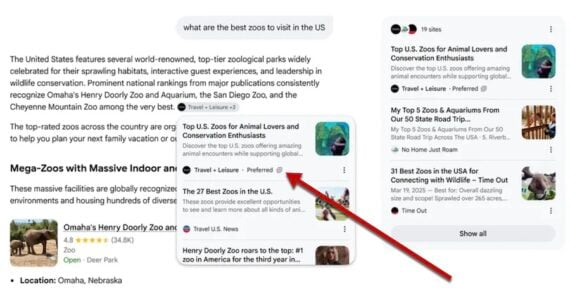
At its core, the feature is a simple user-preference signal. When a user designates a site as a "preferred source," Google attaches a visual label to that site’s content within AI Overviews.
The Technical Implementation
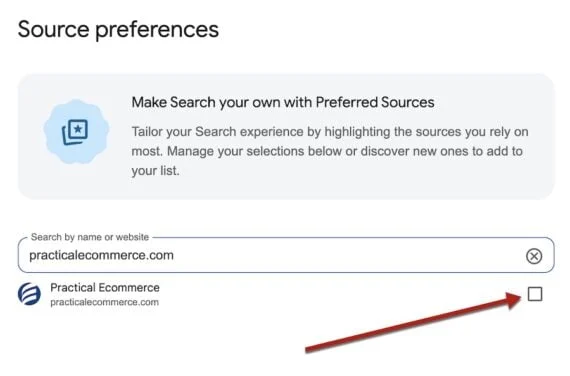
From a technical standpoint, the feature is accessible via a specific URL structure. Publishers can direct their audience to:
https://google.com/preferences/source?q=[domain.com]
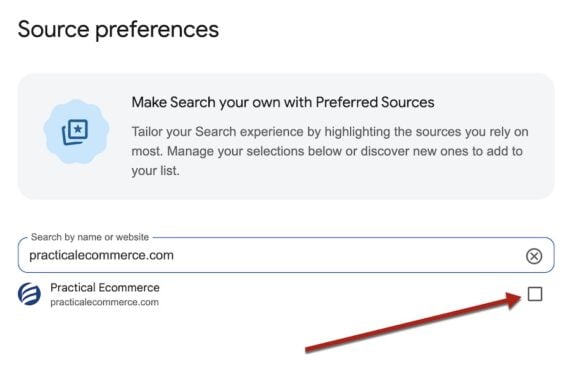
It is important to note that Google currently limits this to primary domains and subdomains. Subdirectories (such as example.com/blog) are not supported. Once a user clicks this link, they are prompted to check a box to confirm the selection.
This process is intentionally low-friction, yet it requires a conscious "opt-in" from the user. For publishers, the challenge lies in the "unintuitive" nature of the confirmation: users must navigate to the settings page and actively check the box. Consequently, successful adoption requires clear communication. Publishers should not simply post the link; they must provide instructions: "Click here, then check the box next to our domain to make us a preferred source in your Google AI results."
The Implications for SEO and Content Strategy
The shift toward "Preferred Sources" creates a new KPI for content marketers: Source Authority.
1. The Death of the "One-Hit Wonder"
In the past, an SEO strategy might have focused exclusively on ranking for high-volume keywords. Under the new model, repeat traffic becomes exponentially more valuable. If a user sets a site as a preferred source, that site is likely to appear more frequently in that user’s AI-generated answers, regardless of whether it would have ranked in the top three positions via traditional SEO. This incentivizes publishers to create "sticky," high-quality content that warrants a user’s loyalty.
2. Enhanced Trust Signals
AI Overviews are often criticized for being cold or detached. When a user sees a "Preferred" label next to a source they recognize and trust, the perceived credibility of the AI’s answer increases. This is a massive boon for brands that have spent years building a reputation for accuracy.
3. The "FIFA World Cup" Effect
Consider a query like "FIFA World Cup." An AI overview might provide a general summary. However, if a user has marked a specific sports news outlet as a preferred source, the AI may prioritize links or data points from that specific site within the summary. This effectively allows publishers to "inject" their brand into the AI-generated narrative of their users.
Official Responses and Industry Skepticism
Google’s documentation on "Preferred Sources" remains relatively lean. The company emphasizes that this is a tool for user utility rather than a new "ranking factor" in the traditional sense. However, industry experts argue that anything that influences user click-through rates (CTR) and interaction within the Google ecosystem is, by definition, a ranking signal.
Critics point out that this feature could lead to "filter bubbles." If users only see information from their "preferred" sources, they may be less exposed to diverse viewpoints or emerging news outlets that have not yet built a dedicated following. Google has yet to release a detailed white paper on how this affects the diversity of information in AI Overviews, leaving many to wonder if this is the start of a more fragmented search experience.
Strategic Recommendations for Publishers
For organizations looking to capitalize on this update, the following strategies are essential:
- Integrate the Call-to-Action (CTA): Place the "Preferred Source" link in high-intent areas, such as the bottom of newsletters, the footer of your website, or in the onboarding flow for new subscribers.
- Educate the Audience: Do not assume your users know how to use this feature. Create a brief tutorial or a dedicated "How to Follow Us" page that explains the benefits of marking your site as preferred.
- Focus on Brand Identity: As personalization grows, brand equity becomes the ultimate differentiator. Ensure that your content has a distinct voice and consistent value proposition so that users feel compelled to "prefer" you over competitors.
- Monitor Analytics: While Google does not provide a direct dashboard for "Preferred Source" counts, monitor changes in referral traffic originating from AI Overviews. A spike in traffic from Google’s generative search paths may indicate successful adoption of your preferred status.
Future Outlook: The Battle for the User’s Attention
The move toward "Preferred Sources" is a clear signal that Google is bracing for a future where the "search bar" is less of a directory and more of a personal concierge. As AI becomes the primary interface for information, the sites that can command the user’s loyalty will be the ones that thrive.
We are entering an era where the relationship between the publisher and the reader is no longer mediated solely by an anonymous algorithm. It is becoming a direct, consensual relationship. For publishers, the mandate is clear: build trust, provide consistent value, and ensure your audience knows that they have the power to prioritize your voice in the noisy landscape of the AI-driven web.
This is not merely an SEO tweak; it is a fundamental shift in how digital media consumption is architected. By empowering users to curate their own information feed, Google is essentially decentralizing the authority of its search results—a move that could, in the long run, strengthen the web’s ecosystem by rewarding the most trusted, rather than the most optimized, creators.