In the modern digital economy, the inbox is the final frontier of consumer attention. For brands, the pressure to cut through the noise often leads to creative—and sometimes aggressive—marketing tactics. However, for travel and lifestyle brand Béis, a December 2025 promotional campaign has spiraled into a significant legal headache, highlighting a growing tension between high-conversion marketing and stringent consumer protection laws.
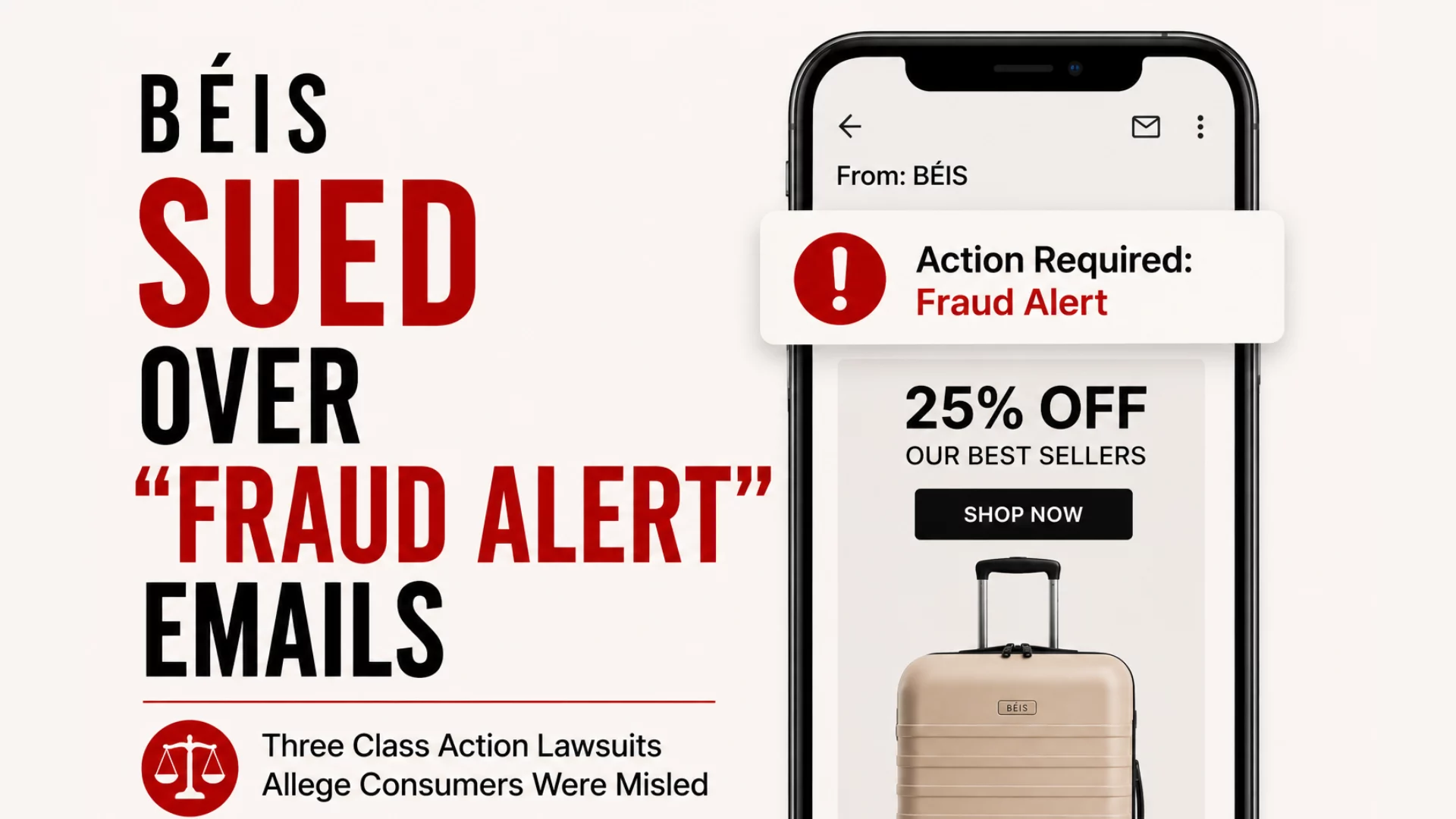
Béis is currently facing three proposed class-action lawsuits in Washington state, all stemming from a singular email campaign. The brand allegedly sent promotional messages with subject lines designed to mimic urgent security alerts, leading recipients to believe their accounts had been compromised. Instead of a password reset or a fraud notification, customers were greeted with a marketing pitch for a sale. To add insult to injury, the body copy reportedly contained a winking acknowledgment of the deception, featuring the phrase, “the fraud is us… sale now extended.”
This move, intended as a clever bit of brand voice, has now become the centerpiece of a legal argument that the misdirection was not merely an accident, but a calculated strategy to exploit consumer fear to drive revenue.
The Chronology of a Legal Storm
The legal troubles for Béis are situated at the intersection of evolving state jurisprudence and a recent, albeit retroactive, legislative overhaul. To understand the gravity of the situation, one must look at the timeline of events that turned Washington into the nation’s toughest jurisdiction for email marketers.
- April 2025: The Washington Supreme Court issues a landmark ruling in Brown v. Old Navy. The court determined that any false or misleading information in a commercial email subject line constitutes a violation of the state’s Commercial Electronic Mail Act (CEMA). Crucially, the court ruled that clarifying language buried in the body of the email does not "cure" a misleading subject line.
- December 2025: Béis launches the controversial email campaign that serves as the basis for the current lawsuits.
- January 2026: A federal ruling in Ma v. Nike reinforces the state’s position, holding that the federal CAN-SPAM Act does not preempt Washington’s CEMA, effectively stripping retailers of a primary defense.
- March 23, 2026: Governor Bob Ferguson signs HB 2274, the first significant reform to CEMA in decades, aimed at tempering the wave of litigation.
- June 11, 2026: HB 2274 officially takes effect, establishing new standards for liability, though it arrives too late to shield Béis from the pending litigation.
The three lawsuits—Huong v. Béis (King County), Noble v. Béis (Pierce County), and Mott v. Béis (Spokane County)—were filed prior to the implementation of the new law. Consequently, the company remains exposed to the older, more stringent regulatory framework.
The Mechanics of the Lawsuit: CEMA and the CPA
The complaints filed against Béis rely on a powerful one-two punch in Washington law: the Commercial Electronic Mail Act (CEMA) and the Consumer Protection Act (CPA).
CEMA was originally drafted in the late 1990s to combat the nascent problem of spam. However, the Brown v. Old Navy decision effectively weaponized the statute. Because a violation of CEMA is considered a per se violation of the Consumer Protection Act, plaintiffs are not just suing for minor statutory damages; they are positioning themselves to claim treble damages (triple the actual damages) allowed under the CPA.
The plaintiffs’ argument is conceptually straightforward: consumers process information based on the perceived authority and urgency of the sender. When a user sees a "Security Alert," their amygdala is triggered, prompting an immediate check of their account. By hijacking this transactional language for a commercial sale, Béis is accused of engaging in deceptive trade practices. One of the complaints goes further, citing "false urgency"—the use of countdown timers and artificial deadlines that purportedly remained active long after the sale was meant to expire.
The "Old Navy" Precedent and the Floodgates
Before 2025, CEMA was largely a dormant statute. In the first two decades of its existence, there were roughly eight recorded lawsuits brought under the act. Following the Brown v. Old Navy decision, that number skyrocketed to over 100 in a single year.
Retail giants including Nike and Crocs have been swept up in this litigation wave. The core of the issue is the definition of "misleading." The court made it clear that while "puffery"—such as subjective hype or general brand enthusiasm—is protected, factual claims regarding pricing, the duration of a sale, or the nature of the email itself are strictly held to a standard of truthfulness.
Béis stands out in this crowd. While many of the recent cases against retailers have focused on "phantom sales" (where the duration or depth of a discount was misrepresented), the Béis cases focus on the nature of the communication. By masquerading a sale as a security notice, Béis allegedly engaged in a more deceptive, and perhaps more dangerous, form of consumer interaction.
Why Reform Doesn’t Reach Béis
The passage of HB 2274 was a direct response to the lobbying efforts of businesses concerned about the "litigation surface" created by the Brown ruling. The new law introduced a "knowledge requirement," meaning plaintiffs must prove the sender knowingly sent a misleading email, rather than just showing that the email was, in fact, misleading.
However, legal experts emphasize that the reform is not retroactive. Because the Béis campaign occurred in December 2025 and the lawsuits were filed before the June 2026 cutoff, the company is being judged by the "strict liability" standard of the old law. Under the previous regime, the penalty was $500 per email, regardless of the sender’s intent.
For a brand with a large email list, the math is staggering. If an email is sent to 50,000 Washington residents, the potential exposure reaches $25 million—even before the CPA’s treble damages are applied. The legislative reform serves as a cautionary tale for the industry, but for Béis, it is essentially a closed door.
Implications for the Modern Email Marketer
The Béis litigation serves as a high-stakes masterclass in the risks of "growth hacking" and aggressive subject-line optimization. The digital marketing playbook has long emphasized high open rates as the ultimate metric of success, but the Washington legal landscape has fundamentally altered the risk-reward calculus.
1. The Subject Line as a Legal Document
Marketers must now treat the subject line as a formal disclosure. If a subject line promises a security update, the body of the email must contain a security update. Any deviation—no matter how clever the copywriter thinks they are—is now a potential liability.
2. The Erosion of Trust
Beyond the courtroom, the Béis case highlights the danger of burning brand equity. Consumers rely on security alerts for their financial and personal safety. When a brand exploits that trust, they are not just annoying a subscriber; they are creating a negative association that is difficult to reverse.
3. The End of "Fake" Urgency
The use of countdown clocks and "last chance" warnings that are not based on reality is increasingly coming under regulatory scrutiny. While the HB 2274 knowledge requirement provides some shelter for future marketers, the trend in consumer protection is clearly moving toward greater transparency and stricter enforcement.
Looking Ahead: The Future of CEMA Litigation
As the three Béis cases wind their way through the Washington court system, they will serve as a bellwether for the future of digital marketing litigation. If the courts rule in favor of the plaintiffs, it will solidify the precedent that "mimicry" in subject lines is a compensable offense under CEMA.
Furthermore, the legal community expects the Washington legislature to revisit the statute during the 2027 session. While the current law offers a slightly narrower path for litigation, the combination of high potential damages and a tech-savvy plaintiff bar suggests that the "subject line wars" are far from over.
For Béis and other consumer-facing brands, the message is clear: the era of the "clever" email subject line is over. In its place is a new reality where transparency is not just a brand value, but a legal imperative. As these cases proceed, the industry will be watching closely to see whether the "fraud is us" marketing strategy leads to a landmark settlement or a cautionary verdict that changes the face of email marketing in the United States.