In the digital landscape of the 2020s, the "scroll" is the ultimate barrier to entry. Every day, millions of creators and brands compete for a fleeting two-second window of audience attention. Most struggle, wondering why their meticulously edited clips fail to gain traction, while others seem to possess an innate ability to capture, hold, and convert viewers.
According to content strategist Hilary Billings, the solution is not buried in the latest algorithm update or a specific trending audio track. Instead, it lies in the "Science of Attention"—a framework rooted in human psychology that transcends platform-specific trends. In an era dominated by AI and rapid-fire content, this deeply human skill set is the definitive edge for long-term marketing success.
Main Facts: The 90/10 Rule of Engagement
Most social media discourse is obsessively focused on the "how": Which hashtag should I use? What is the ideal posting frequency? Is the algorithm prioritizing long-form or short-form today?
Billings, who co-created this framework with Michael Stelzner, posits that these algorithmic concerns represent only the final 10% of a video’s performance. The remaining 90% is governed by fundamental psychological triggers. Understanding these triggers allows creators to engineer engagement that survives platform shifts and policy changes.
The core of this philosophy is simple: Short-form video is not about grabbing attention; it is about engineering sustained engagement. By shifting focus from "hacking" the feed to understanding the viewer’s biological response, creators can build a sustainable brand that doesn’t rely on the whims of tech giants.
Chronology: From Data Tracking to Psychological Framework
The genesis of this framework was not a theoretical exercise; it was the result of massive empirical observation. Billings and her team conducted a granular analysis of thousands of viral videos. They tracked every variable—camera angles, pacing, lighting, hand gestures, editing styles, and the inclusion of trending audio—to identify what actually caused a video to "pop."
The Finding: Why Trends Fail
The data revealed a surprising lack of correlation between "best practices" (like using trending audio or specific posting cadences) and sustained viral success. What they found instead was a consistent application of three psychological pillars: Connection, Reputation, and Emotion.
- Phase One (Early Development): Analysis of thousands of data points to debunk common content myths.
- Phase Two (Framework Synthesis): The development of the "Authenticity Formula" (Values × Voice).
- Phase Three (Application): Testing this model across industries ranging from real estate and finance to experiential art.
Supporting Data: The Psychological Pillars of Attention
1. Connection: The Two-Fold Foundation
Connection is the prerequisite for all other engagement. It operates on two levels: the audience’s connection to the content and the creator’s authentic connection to the topic.

Modern viewers are highly adept at "vibe-checking" content in under two seconds. They subconsciously scan for facial cues, body language, and energy. If a creator is inauthentic or disconnected from the material, the viewer senses it immediately. Research suggests that when a creator lacks genuine alignment with their content, the likelihood of that video being shared drops by 25% to 40%.
2. Reputation: The Authenticity Formula
"Just be yourself" is notoriously poor advice for professionals. To operationalize authenticity, Billings introduced the Authenticity Formula: Values × Voice.
- Values: According to data from the Brand Builders Group, over 70% of consumers are willing to pay a premium for products when the founder shares their personal values. These values—such as community, sustainability, or disruption—should not be stated explicitly. Instead, they are demonstrated through the choices made in the content.
- Voice: Voice represents the brand’s personality—is it the "no-nonsense provocateur" or the "approachable expert"? When values and voice are combined, they create a specific frequency that resonates with a target audience, creating a community of "true believers" rather than a scattered, uninterested following.
3. Emotion: The Engine of Virality
Logic is slow; emotion is instantaneous. The amygdala, the brain’s emotional processing center, operates 80,000 times faster than the prefrontal cortex. By the time a viewer logically evaluates your video, they have already made an emotional judgment.
Billings summarizes this with the adage: "When people get emotional, they get promotional." When content evokes a strong feeling, it triggers neurochemical responses that reinforce social bonding, which is the primary driver for sharing behavior.

Official Case Study: Lighthouse Immersive
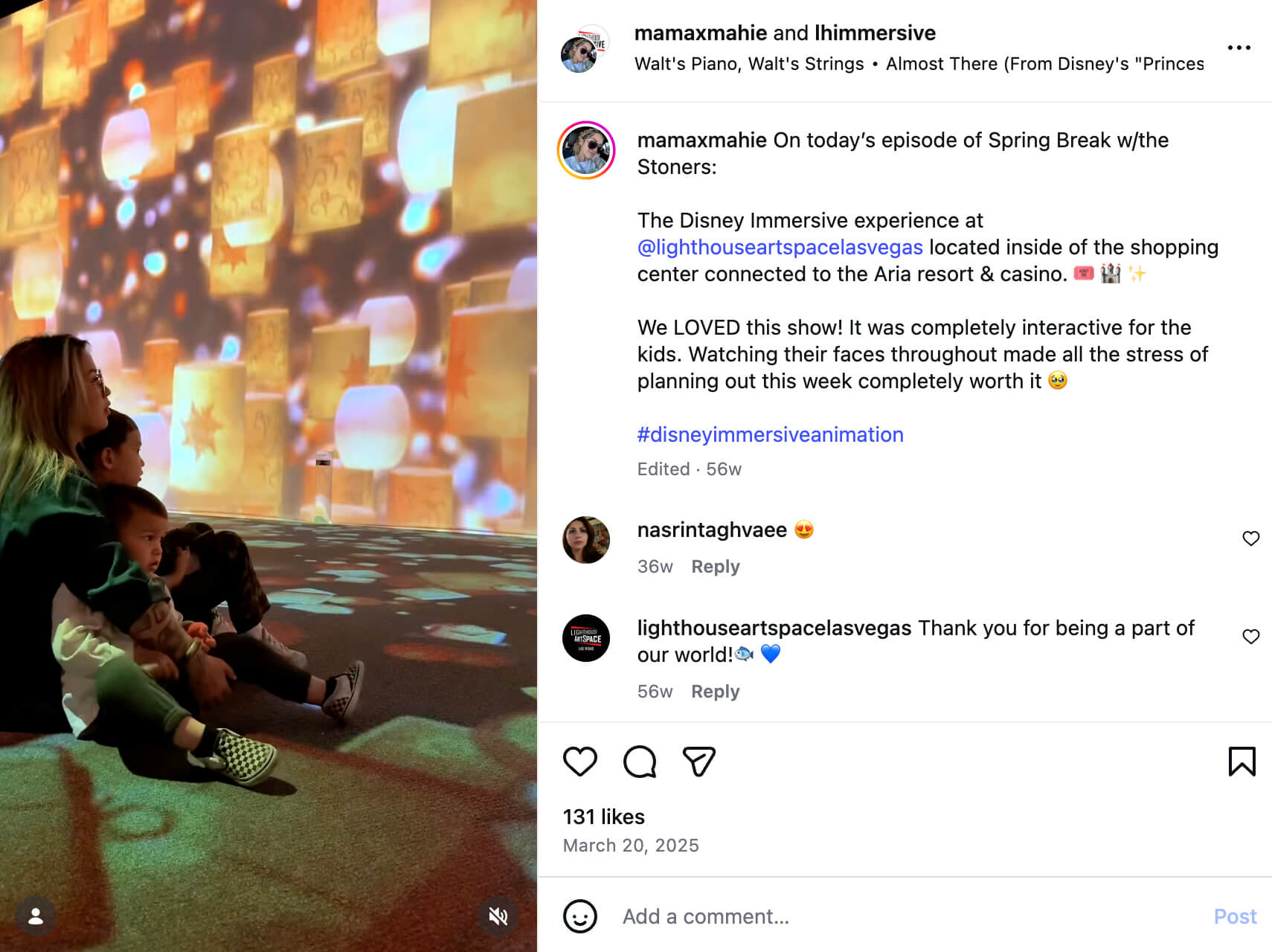
A clear demonstration of this science in action is the case of Lighthouse Immersive. Despite having high-quality, visually stunning content, their initial social media efforts felt flat. They were focused on the art, but the audience was not moved.
By pivoting their content strategy, they stopped focusing on the exhibit and started focusing on the human experience occurring within the exhibit—the proposals, the family reunions, and the shared wonder. By documenting the emotions of the attendees rather than the mechanics of the art, they effectively "engineered" a reason for their viewers to share the content, ultimately driving a significant increase in physical foot traffic.
Implications for Modern Marketers
The shift toward the "Science of Attention" has profound implications for how we view the future of content marketing:
The AI-Human Dichotomy
While AI can generate scripts, generate imagery, and analyze data, it struggles to replicate the "human frequency" that builds trust. As AI-generated content becomes more prevalent, the value of authentic, value-driven human storytelling will likely increase. Creators who double down on their unique voice and values will distinguish themselves from the sea of AI-generated sameness.
The Death of Scarcity Mindset
Many professionals—lawyers, financial advisors, and consultants—fear that showing their true personality or values will alienate potential clients. The evidence suggests the opposite. By leaning into a specific voice and value set, you filter out those who are not a fit and accelerate the "buy-in" process for those who are. You aren’t losing customers; you are finding the right ones faster.
Practical Application: The Pre-Production Checklist
Before filming, creators should ask three foundational questions to align their content with these scientific principles:
- What is the core value I am demonstrating? (Pick one per video).
- What is the specific emotion I intend to trigger?
- How can the audience see their own experience in this story?
By answering these questions, you transition from "content creation" to "engagement engineering."
Conclusion: The Path Forward
The algorithm is a moving target, but the human brain remains remarkably consistent. By leveraging the science of attention, marketers can build content that is inherently shareable, deeply trusted, and resistant to the volatility of platform changes.
In a world where attention is the scarcest currency, the ability to stop the scroll is not a trick or a hack—it is a sophisticated understanding of human connection. For those willing to invest in this psychological framework, the reward is not just more views, but a sustainable, high-converting, and authentic brand presence that stands the test of time.
Hilary Billings is a renowned content strategist and founder of Attentioneers, an agency dedicated to helping brands convert reach into revenue. Her work on the Viral Authority Framework continues to set a new standard for creators and business leaders navigating the complex, ever-evolving landscape of social media.