In a move that signals a seismic shift in the hierarchy of the artificial intelligence landscape, John Jumper—a central figure in the development of the revolutionary protein-folding AI, AlphaFold, and a 2024 Nobel laureate in chemistry—has announced his departure from Google DeepMind. After a prolific tenure spanning nearly nine years, Jumper is transitioning to Anthropic, one of Google’s primary competitors in the generative AI space.
This high-profile exit, confirmed on Friday, June 20, 2026, is the latest in a series of talent realignments that are currently reshaping the artificial intelligence industry as leading firms jockey for position ahead of major public offerings and market consolidation.
The Core Facts: A Departure of Significance
John Jumper’s decision to leave Google DeepMind is arguably one of the most significant personnel shifts in the history of the AI sector. Having joined DeepMind during its early, formative years, Jumper rose to international prominence for his leadership in the AlphaFold project. His work effectively solved a 50-year-old challenge in biology, providing the scientific community with the ability to predict the 3D structures of nearly all known proteins.
In a candid announcement shared via his social media channels on X, Jumper expressed profound gratitude for his time at DeepMind. He specifically acknowledged the mentorship and leadership of CEO Demis Hassabis, noting that Hassabis “took a real chance” by appointing him to lead the AlphaFold initiative a mere six months after he completed his PhD.
“GDM is a special place, and I’ll still be excited to hear about what amazing things they discover next,” Jumper wrote, striking a conciliatory tone even as he prepares to join a rival organization.
A Chronology of Excellence and Transition
To understand the weight of this departure, one must look at the timeline of Jumper’s career at Google DeepMind and the milestones that defined his tenure.
- 2017: Jumper joins Google DeepMind, joining a team that was then still largely focused on research-heavy reinforcement learning projects.
- 2020: AlphaFold 2 demonstrates unprecedented performance in the Critical Assessment of Protein Structure Prediction (CASP) competition, effectively solving a problem that had stumped researchers for decades.
- 2021: DeepMind releases the AlphaFold database, a massive open-source repository of protein structures that fundamentally alters the trajectory of drug discovery and biological research.
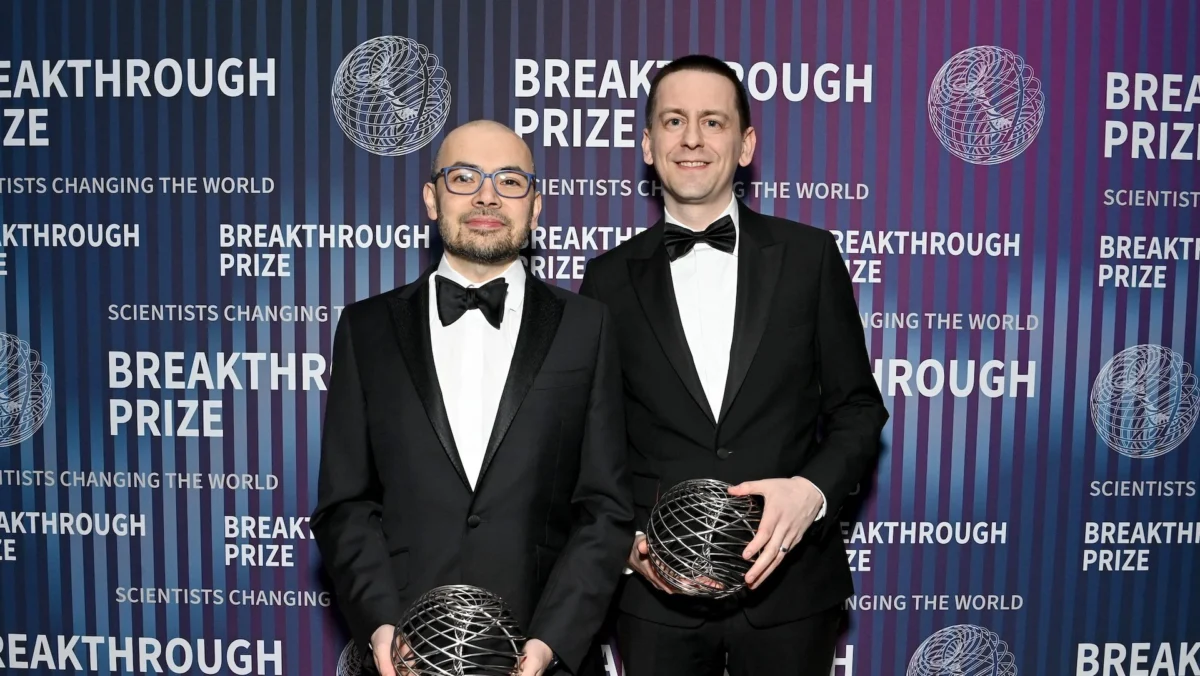
- October 2024: The Nobel Committee recognizes the magnitude of these contributions, awarding the Nobel Prize in Chemistry to both Demis Hassabis and John Jumper for their computational protein structure prediction work.
- June 2026: Amid a broader talent migration, Jumper confirms his move to Anthropic, marking the end of his nine-year tenure at Google.
This trajectory reflects the evolution of Google DeepMind from a research-focused lab to an engine of commercialized AI products, a shift that has increasingly come under scrutiny as the company attempts to integrate its research breakthroughs into consumer-facing tools.
Supporting Data: The Talent "Brain Drain"
Jumper’s departure does not exist in a vacuum. It is part of a larger, systemic movement of high-level researchers and engineers across the "Big Tech" landscape.
The industry is currently witnessing a period of intense competition for human capital. As Bloomberg and other industry observers have noted, Jumper had been heavily involved in Google’s efforts to develop sophisticated coding assistants. Despite the technical prowess of these models, Google has faced consistent challenges in converting these research successes into profitable enterprise-grade business products.
Furthermore, the timing of Jumper’s move coincides with a major exodus from Google DeepMind. Earlier this week, Noam Shazeer—a veteran AI researcher and co-founder of Character.AI—announced his own departure from the company. Unlike Jumper, Shazeer is heading to OpenAI. These simultaneous departures suggest a cooling of the internal culture at Google, or perhaps an aggressive headhunting strategy from competitors who are preparing for major IPOs and scaling operations.

Official Responses and Internal Climate
While official corporate communications remain standard and diplomatic, the undercurrent of the situation is clear. Google DeepMind, once the undisputed haven for the world’s elite AI researchers, is struggling to maintain its hegemony over top-tier talent.
Representatives for Google DeepMind have maintained that the company’s pipeline remains robust and that their culture of collaborative science continues to draw top talent from academia and industry. However, sources familiar with the matter suggest that the friction between academic-style research and the pressures of commercial product deployment has created a "bottleneck" that frustrates many of the field’s leading thinkers.
At Anthropic, the arrival of a scientist of Jumper’s caliber is a massive coup. Anthropic, which has positioned itself as a "safety-first" developer of large language models, has been aggressively scaling its research team. By bringing in a Nobel laureate, the company is signaling its intent to move beyond general-purpose chatbots and into specialized, high-impact scientific AI applications.
The Broader Implications for AI
The migration of figures like John Jumper from research labs to commercial entities has profound implications for the future of AI.
1. The Shift to Commercialized Science
For years, the "big breakthroughs" in AI were confined to academic journals and research labs. Now, the goal is the industrialization of these breakthroughs. Jumper’s move implies that the next phase of the AI revolution will be defined by the successful integration of models like AlphaFold into the broader technological stack of enterprise companies.
2. The Talent Arms Race
With the rapid development of AI systems, the demand for researchers who can bridge the gap between abstract mathematical theory and real-world application has never been higher. When a Nobel laureate moves, it isn’t just about a change of office; it’s about a change of focus for the entire industry. The "Big Three"—Google, OpenAI, and Anthropic—are currently in a race to see who can build the most reliable and capable systems, and the movement of staff is a direct reflection of which companies are perceived to have the best long-term vision.
3. The Challenge of Corporate Integration
Google’s struggle to sell its coding tools, despite having the best engineers in the world, highlights a growing concern in the tech sector: The "Innovation Gap." Having the most intelligent models does not guarantee market dominance. As Jumper and others transition, they are moving from a company that has, at times, been criticized for being too cautious or internally disorganized, to companies that are laser-focused on rapid deployment and market share.
4. Scientific Openness vs. Proprietary AI
A critical question remains: How will Jumper’s work be affected by the corporate culture at Anthropic? His work at DeepMind was noted for its scientific rigor and, eventually, its impact on the open-science community. Whether these high-level researchers can continue to contribute to the global body of scientific knowledge while working within the highly proprietary walls of well-funded AI startups remains to be seen.
Conclusion: A New Chapter
John Jumper’s move to Anthropic is more than just a job change; it is a barometer for the state of the artificial intelligence industry in mid-2026. As the initial "wow" factor of generative AI gives way to the grueling work of practical, profitable implementation, the individuals who built the foundation of the current era are deciding where they can best apply their expertise.
For Google DeepMind, the loss of Jumper is a significant blow, one that will require a reorganization of its scientific priorities. For Anthropic, it is a statement of intent. And for the rest of the world, it is a reminder that in the high-stakes world of AI, talent is the most valuable—and mobile—asset of all. As these figures cross the lines between corporate giants, they take with them the knowledge, the philosophy, and the potential to change the future of science yet again.