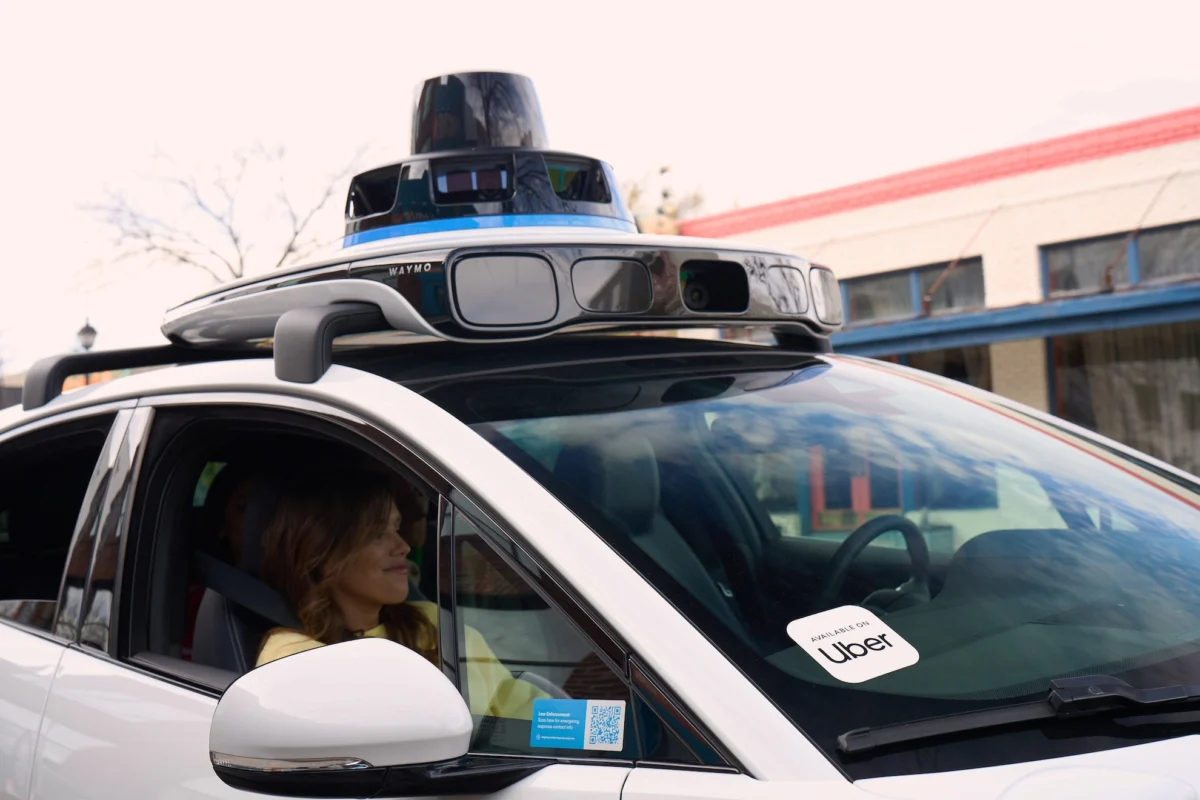
The landscape of autonomous transportation shifted quietly but significantly this week as Uber and Waymo officially confirmed the conclusion of their three-year robotaxi pilot program in Phoenix, Arizona. Once viewed as an improbable alliance between two former legal adversaries, the partnership served as a crucial testing ground for the integration of autonomous ride-hailing into mass-market platforms.
While Waymo vehicles have vanished from the Uber app for Phoenix residents, both companies insist that the termination of this specific pilot is not a sign of failure, but rather a maturation of their respective strategies. As the autonomous vehicle (AV) industry moves from the experimental phase to commercial scaling, the "Phoenix model" has been superseded by more targeted, high-growth initiatives elsewhere.
The Chronology of an Improbable Partnership
To understand the significance of this split, one must look back to the industry climate of 2023. At the time, the relationship between Alphabet-owned Waymo and ride-hailing giant Uber was defined by the baggage of a high-profile, acrimonious legal battle over trade secrets that had been settled only a few years prior.
When the two companies announced their intention to partner in Phoenix, it sent shockwaves through the tech sector. It was an admission that even the most powerful players in transportation needed to combine forces to solve the "last mile" and logistics challenges inherent in autonomous fleet management.
- 2023 – The Launch: Uber and Waymo debut a limited pilot in Phoenix. The program was intentionally small, utilizing just over a dozen vehicles to test the viability of integrating Waymo’s self-driving software into Uber’s massive user interface.
- 2024 – The Scaling Phase: As Waymo’s operational capabilities expanded, the pilot remained a "contained" experiment. Meanwhile, Uber began diversifying its portfolio, signing deals with multiple AV developers to create an "AV-agnostic" platform.
- May 2025 – The Silent Sunset: The partnership in Phoenix quietly concluded. Waymo began the process of re-absorbing the vehicles used for the Uber pilot back into its proprietary fleet.
- Mid-2025 – The Present: Users in Phoenix noted the absence of Waymo options on the Uber app, prompting official confirmation from both parties.
Supporting Data: A Landscape in Flux
The departure from Phoenix does not signal a withdrawal from the ride-hailing market for either company. Rather, it highlights a shift in geographical focus. While Phoenix served as the "sandbox," cities like Austin and Atlanta have become the current hubs for the Uber-Waymo collaboration.
Market Metrics and Operational Growth
The growth of the autonomous sector over the last three years has been exponential. When the pilot began, Waymo was operating in a handful of markets with a modest fleet. Today, the data tells a different story:
- Fleet Expansion: Waymo now manages a fleet of approximately 4,000 vehicles, a dramatic increase from its starting position in 2023.
- Trip Volume: Waymo currently facilitates over 500,000 trips every single week, spanning 11 major U.S. metro areas.
- Strategic Diversification: Unlike the early days where Waymo relied heavily on the Uber pilot to test market demand, the company has diversified its service offerings. It now maintains public transit integrations with Via and logistical partnerships with DoorDash, allowing it to maintain a robust footprint in Phoenix without the need for the Uber interface.
For Uber, the data suggests that the "limited deployment" in Phoenix was a success in terms of knowledge transfer. The company utilized the data gathered in Arizona to streamline its operational protocols for larger-scale launches in other markets, where hundreds of Waymo vehicles remain active on the Uber app.
Official Responses: Framing the Transition
Both companies have gone to great lengths to frame the end of the Phoenix partnership as a natural evolution of a productive "pilot" rather than a breakdown in corporate relations.
"This was a productive pilot that paved the way for future expansions and partnerships across the globe," a Waymo spokesperson stated. "After hundreds of thousands of trips with Uber, we have integrated these vehicles back into our Phoenix fleet, where they will continue to serve riders through Waymo. We’re grateful to all of the Uber customers who took fully autonomous trips with us."
Uber’s response echoed this sentiment, emphasizing the "learning" aspect of the venture. "Phoenix was our first pilot market with Waymo and was an intentionally limited deployment. We learned a lot from that collaboration, which helped us to quickly scale Austin and Atlanta, where hundreds of Waymo AVs are available exclusively on Uber."
Uber also confirmed that it is currently preparing to launch a "separate autonomous vehicle partnership" in Phoenix. While they declined to name the incoming partner, industry analysts suggest that this signals Uber’s intent to maintain a multi-provider ecosystem, moving away from exclusive or singular partnerships in any given city.
Implications for the Future of Robotaxis
The termination of the Phoenix pilot brings several critical implications to light regarding the future of autonomous transportation.
1. The End of "Exclusivity"
The primary takeaway is that the "walled garden" approach is losing ground. Both Uber and Waymo are moving toward a more fluid, competitive landscape. Uber is positioning itself as the "Operating System" for all autonomous fleets, regardless of the hardware manufacturer. By keeping its app open to multiple AV providers, Uber ensures it remains the dominant gateway for consumers, rather than being beholden to a single software stack.
2. A Looming Global Showdown
The relationship is not without friction. As the companies expand, their interests are beginning to overlap in ways that suggest direct competition is on the horizon. Most notably, in London, both companies are racing to capture market share. With Wayve and other players entering the fray, the London market is shaping up to be the first major "robotaxi showdown" where the former partners may find themselves on opposite sides of the curb.
3. The Rise of Specialized Fleets
Waymo’s transition to its newest, purpose-built robotaxi—the Zeekr-made "Ojai" van—signals a shift toward profitability. These vehicles are designed specifically for the rigors of commercial, driverless operation. By integrating these units into its own fleet and its own app, Waymo is asserting control over the customer experience, brand identity, and the data generated by every ride.
4. Regulatory and Public Acceptance
The Phoenix pilot proved that the public is ready for autonomous transit, but it also showed that the infrastructure needs to be more than just a software integration. It requires deep coordination between municipal transit authorities, delivery services, and fleet operators. By integrating with Via and DoorDash, Waymo is proving that it can build a self-sustaining ecosystem that functions independently of third-party ride-hailing giants.
Conclusion: A New Phase of Maturation
The end of the Phoenix pilot is less a "divorce" and more a "graduation." In 2023, the autonomous industry was defined by uncertainty. Today, it is defined by scale and competition.
For the residents of Phoenix, the change will be subtle: they will simply need to open the Waymo app rather than the Uber app to summon a robotaxi. For the companies, it marks the end of a developmental phase and the beginning of a mature, global commercial battle. As Uber prepares to introduce a new partner to the Phoenix market and Waymo accelerates the deployment of its "Ojai" fleet, the message to the industry is clear: the era of small-scale experimentation is over. The era of the autonomous utility has arrived.