The digital landscape is undergoing a profound transformation as cybercriminals refine their methods to bypass modern security stacks. According to the latest email threat landscape report from Microsoft Threat Intelligence, the first quarter of 2026 was marked by an unprecedented volume of malicious activity, with approximately 8.3 billion phishing threats intercepted between January and March. This staggering figure highlights a broader shift in the cyber-threat ecosystem: attackers are abandoning traditional, easily detectable malware attachments in favor of sophisticated, link-based, and identity-focused campaigns that exploit the trust inherent in modern cloud infrastructure.
As organizations grapple with these findings, the core message from security researchers is clear: the era of relying solely on perimeter defenses is over. In an age where legitimate tools are weaponized, the battleground has shifted toward the very heart of corporate communication.
The Shift Toward Link-Based Credential Phishing
The Q1 2026 report reveals that 78% of all observed phishing attacks relied on malicious links rather than the traditional file-based malware attachments that defined the previous decade. This tactical pivot is a direct response to the heightened sensitivity of endpoint detection and response (EDR) systems, which have become increasingly adept at scanning and quarantining suspicious files.
By utilizing URLs, attackers can host their malicious payloads on trusted, reputable cloud services. This "living-off-the-land" approach allows phishers to bypass reputation-based filters, as the infrastructure hosting the phishing site often carries a high trust score from major security providers. These campaigns are no longer clumsy, error-laden emails; they are polished, high-fidelity replicas of corporate login portals designed to harvest credentials with clinical efficiency.
The Rise of "Quishing" and CAPTCHA Evasion
Among the most alarming trends identified by Microsoft is the meteoric 146% increase in QR-code phishing, commonly referred to as "quishing." During the first quarter, these incidents ballooned from 7.6 million to 18.7 million.
The Mechanics of Quishing
QR-code phishing is particularly insidious because it effectively removes the threat from the digital environment of the workstation. By embedding QR codes within PDF attachments, image files, or even disguised as urgent internal memos, attackers force the user to complete the "handshake" on their personal mobile device. Because the mobile device operates outside the corporate network’s primary security sensors, the malicious link is never analyzed by the organization’s email gateway.
CAPTCHA-Gated Defenses
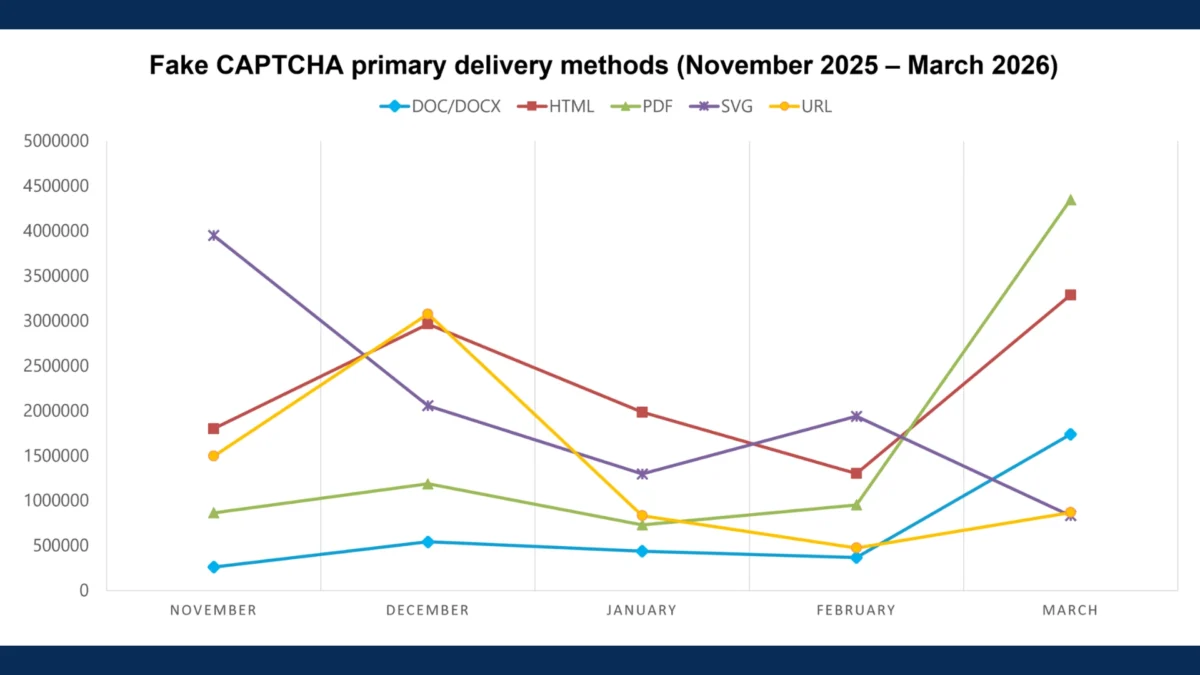
Parallel to the growth of quishing is the rise of CAPTCHA-gated phishing pages. In these scenarios, the malicious URL does not lead directly to a credential harvesting site. Instead, the victim is presented with a legitimate-looking CAPTCHA challenge. This serves two primary purposes:
- Automated Analysis Evasion: Most automated security crawlers and sandbox environments are not programmed to solve complex CAPTCHA puzzles. By placing this barrier in front of the phishing page, attackers effectively hide their malicious intent from the automated scanners that are designed to flag them.
- Psychological Legitimacy: The inclusion of a CAPTCHA adds a layer of professional legitimacy to the phishing site, tricking the victim into believing they have arrived at a secure, well-guarded corporate resource.
Persistent Dangers: Business Email Compromise (BEC)
Despite the technological advancements in phishing, Business Email Compromise (BEC) remains a stalwart of the cyber-criminal toolkit. Microsoft reported roughly 10.7 million BEC-related attacks in Q1 2026. Unlike mass-market phishing, which relies on volume, BEC attacks are surgical.
These campaigns utilize social engineering to manipulate employees into initiating unauthorized wire transfers or divulging sensitive intellectual property. The sophistication of these attacks has reached a new level, with threat actors frequently hijacking legitimate email accounts to send messages from trusted, internal domains. When an email originates from a known colleague, the traditional defensive barriers—such as SPF, DKIM, and DMARC—are often bypassed, as the message is technically "authenticated" by the provider’s own infrastructure.
Chronology of Disruption: The Tycoon2FA Case
A notable victory in the fight against these threats occurred during the quarter when Microsoft and its partners successfully disrupted the infrastructure of "Tycoon2FA." This phishing-as-a-service platform was a major facilitator of Adversary-in-the-Middle (AiTM) attacks.
- Pre-Q1: Tycoon2FA gains traction as a top-tier tool for bypassing Multi-Factor Authentication (MFA). By intercepting authentication tokens in real-time, the platform allowed attackers to gain full access to user accounts without needing the user’s actual password or physical MFA device.
- January 2026: Microsoft intensifies its monitoring of the platform, identifying key command-and-control nodes.
- February 2026: Collaborative efforts between global law enforcement and security vendors lead to the dismantling of the core server infrastructure associated with Tycoon2FA.
- March 2026: The immediate impact is a 15% reduction in phishing activity related to this specific framework.
However, the report carries a sobering caveat: the dismantling of Tycoon2FA has created a vacuum, and similar "phishing-as-a-service" platforms are already emerging to take its place. The cycle of disruption and evolution remains the defining characteristic of the modern cybersecurity landscape.
Implications for Enterprise Security
The findings from Q1 2026 send a clear signal to CISOs and IT administrators: the definition of "safe" email is shifting. Authenticated email is no longer a guarantee of security. As attackers continue to exploit legitimate cloud services and automate their infrastructure, organizations must adopt a "Zero Trust" approach to email communication.
Strategic Recommendations
- Focus on Behavioral Analysis: Because attackers use legitimate infrastructure, signature-based detection is increasingly ineffective. Security teams must shift their focus to behavioral patterns—such as abnormal login times, unusual geo-location access, and anomalies in user interaction with links.
- Enhanced Mobile Security: Given the rise of quishing, organizations must extend their security perimeters to mobile devices. Mobile Endpoint Management (MEM) solutions that scan for malicious links on mobile browsers are no longer optional.
- Advanced Authentication: With AiTM attacks becoming more common, moving beyond standard MFA toward FIDO2-compliant, phishing-resistant hardware keys is the most effective way to neutralize credential theft.
- Employee Awareness 2.0: Training must evolve. Employees must be taught to treat all QR codes and external links with skepticism, regardless of the perceived "trustworthiness" of the source.
The Future of Email Delivery
As mailbox providers and enterprise gateways tighten sender authentication requirements throughout 2026, the industry is entering a new phase of accountability. The challenge for security vendors is to balance the need for high-velocity email delivery with the need for rigorous security screening.
The 8.3 billion threats detected by Microsoft are not just numbers; they represent 8.3 billion attempts to breach the integrity of global digital identity. The data indicates that while the tools of the trade are evolving—from simple malicious attachments to complex, CAPTCHA-gated, QR-code-enabled campaigns—the underlying motive remains the same: the exploitation of human trust.
As we move deeper into 2026, the distinction between a message that is "delivered" and a message that is "safe" will become the primary focus for every organization. Protecting the inbox now requires a comprehensive strategy that combines deep-packet inspection, AI-driven behavioral analysis, and a fundamental shift in how organizations manage their digital identities. The battle is far from won, but with the insights provided by threat intelligence reports, defenders are better equipped to anticipate the next wave of innovation from the cyber-criminal underworld.