In the crowded landscape of the modern internet, the technical barriers to entry for blogging have never been lower. Anyone with a domain name and a content management system can publish a well-structured post, optimize it for search engines, and navigate the intricacies of web analytics. Yet, many creators find themselves trapped in a "performance paradox": they do everything "right" according to the technical rulebooks, but their traffic remains stagnant and their audience engagement non-existent.
The missing link in these instances is rarely a failure of SEO or platform management; it is a lack of authentic personality. In an era increasingly dominated by AI-generated content and mass-produced information, the blogs that thrive are those that foster a genuine human connection. This article explores how ten industry-leading bloggers have successfully injected personality into their brands, transforming their platforms from static information hubs into thriving, loyal communities.

The Strategic Importance of Personal Branding
To understand why personalization is a critical business asset, one must look at the shift in digital consumption. Readers no longer search for just "information"; they search for "perspective." When a reader encounters a blog that feels like a conversation with a real person—complete with unique humor, visual identity, and consistent values—the retention rate skyrockets.
Personalization is the differentiator that converts a passive visitor into an evangelist. It creates a "parasocial relationship" where the reader feels they know the creator, fostering a sense of trust that algorithms cannot replicate.

Chronology of the Personalization Movement
The trajectory of blogging has evolved in three distinct phases:
- The Early Era (2000–2008): Blogs were primarily digital diaries. Personalization was innate, as the medium was inherently informal.
- The Monetization Era (2009–2016): As professional blogging emerged, many creators pivoted toward "SEO-first" content, stripping away personality to appease search engine crawlers. This led to a "sea of sameness" in search results.
- The Connection Era (2017–Present): Recognition that high-volume, personality-free content is losing its competitive edge. Top bloggers are now re-incorporating individualistic elements—custom branding, distinct voices, and human-centric design—to reclaim market share and build defensible brands.
Case Studies: How Top Bloggers Define Their Identity
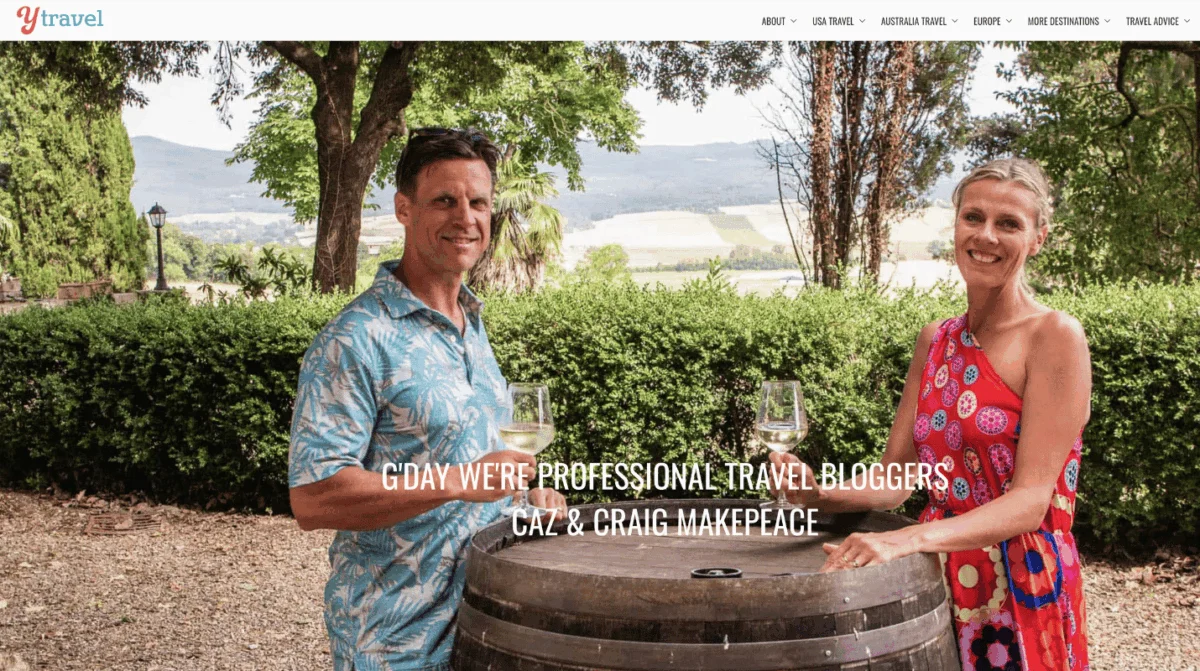
1. Visual Authenticity: YTravel (Caz and Craig)
Travel blogging is a saturated niche, yet YTravel stands out by prioritizing raw, human experience over stock imagery. Their use of candid, family-oriented photography in posts like 17 Tips for Flying With Kids serves a strategic purpose: it proves that the advice comes from lived experience.

- The Lesson: Visuals should not just be decorative; they should be evidence of your personal narrative.
2. The Power of "Flair": Pat Flynn (Smart Passive Income)
Pat Flynn mastered the art of the "personal hero" archetype. By explicitly labeling himself as a "father, husband, and serial entrepreneur," he anchors his professional brand in relatable human roles. His addition of quirky humor—such as his self-proclaimed title as "protector of baby Yoda"—humanizes a brand that deals with complex business topics.
- The Lesson: Professional expertise does not require a dry, corporate tone.
3. The Polarization Strategy: Shannon Kelly White
Shannon Kelly White demonstrates that having a distinct voice means accepting that you aren’t for everyone. Her use of candid, salty language serves as a filter. While it may alienate some, it creates a fierce, loyal bond with the audience that resonates with her style.

- The Lesson: A brand that tries to appeal to everyone usually appeals to no one.
4. Custom Visual Identity: Blog Tyrant (Ramsey)
Ramsey of Blog Tyrant utilizes a custom avatar—the "red-shirted blogging superhero." This illustration is consistent across his home page and lead magnets. It acts as a visual anchor that makes his brand immediately recognizable in a crowded inbox or search feed.
- The Lesson: Invest in a visual signature that exists independently of your own face.
5. The "About" Page as a Conversion Funnel: A Beautiful Mess
Elsie and Emma of A Beautiful Mess treat their About page not as a biography, but as an invitation. By combining bold photography with a punchy, clear mission statement, they convert "casual lurkers" into fans within seconds.

- The Lesson: Your About page is often the first place a new visitor goes to verify if you are a "real" person. Make it count.
Supporting Data: Why Personality Drives Revenue
Industry studies on digital marketing suggest that content featuring a human face or personal anecdote receives 30% more social shares than content that is purely informational. Furthermore, email open rates for creators who use a "personal tone" (the "from a friend" style) consistently outperform newsletters that maintain a detached, corporate voice by an average of 15–20%.
The implication is clear: when the barrier between the creator and the reader is lowered, the conversion barrier is also lowered. People buy from people they feel they know.

Official Perspectives: The Expert Consensus
Marketing experts argue that the rise of AI makes personality a non-negotiable asset. According to recent white papers on the "Creator Economy," the value of an individual creator is derived from their idiosyncrasies—the specific things that make them different from a generic search result.
"The algorithm can mimic expertise," says one industry analyst, "but it cannot mimic the specific, messy, beautiful, and unique journey of an individual human life."

Implications for Future Growth
For bloggers looking to implement these strategies, the road ahead involves a shift in mindset:
- Audit your visual presence: Is your imagery generic or does it tell a story?
- Refine your brand voice: If your blog was a person, how would they speak? Is that voice consistent across social media and email?
- Define your audience through exclusion: Stop trying to write for "everyone." Create content for a specific person, and let your personality act as a magnet for that demographic.
The Role of the "Call to Action" (CTA)
As seen with Kelly Exeter, the transition from personality to business is a matter of clarity. Once you have established your brand through your voice, your CTA should be a natural extension of that relationship. If your reader likes your "personality," they will be more inclined to trust your "offer."

The "Niche" Identity
Finally, consider the approach taken by Puttylike. By defining a specific identity (the "Multipotentialite"), Emily did more than just write a blog; she created a community. When you allow your readers to define themselves through your content, you are no longer just a blogger—you are the center of a movement.
Conclusion: Moving Forward
The path to a successful blog is no longer found in the technicalities of H1 tags or keyword density alone. Those are the foundation, but personality is the structure built upon them. By integrating visual authenticity, a distinct, unapologetic voice, and a clear sense of who your reader is, you can move your blog from a stagnant page to a vibrant destination.

As you look at your own site today, ask yourself: If every other site in my niche disappeared tomorrow, would my readers notice? If the answer is no, it is time to stop being a publisher and start being a personality. The digital world is waiting for your specific perspective—don’t hide it behind a template.