In the modern digital economy, the most valuable currency for any founder is time. Yet, the traditional approach to email marketing—manually drafting newsletters, batch-sending discounts, and chasing individual leads—is a relentless drain on that resource. The solution, increasingly adopted by high-growth ecommerce brands, is not to work harder, but to build smarter. Enter email automation: the art of creating a 24/7 sales engine that nurtures leads, recovers lost revenue, and builds lifelong customer loyalty while you sleep.
The Core Concept: Moving Beyond Manual Broadcasts
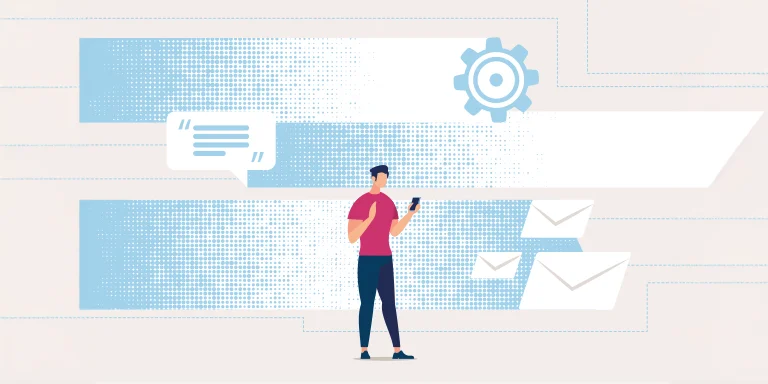
At its most fundamental level, email automation is the transition from "broadcasting" to "triggering." Instead of sending a static message to an entire list, automation relies on predefined workflows initiated by specific customer behaviors.
For the modern founder, this represents a shift from reactive marketing to proactive relationship management. When a user interacts with your digital storefront, they are providing data signals. Whether they are browsing, adding to a cart, or finalizing a purchase, these actions serve as triggers. An automated system interprets these signals in real-time, delivering the exact piece of content required to guide the user to the next stage of the funnel.
This is not merely a convenience; it is a necessity for scalability. According to recent industry data from Omnisend, automated email workflows generate 320% more revenue per email than standard, manual one-off campaigns. The efficiency gain is astronomical: by setting up a flow once, a business owner can effectively hire a virtual sales team that never sleeps, never forgets to follow up, and never requires a day off.
Chronology of a Customer Journey: The Seven Essential Automations
To build an effective automated ecosystem, one does not need dozens of complex flows. Rather, success lies in perfecting the "Big Seven"—a series of automated touchpoints that cover the entire lifecycle of the customer.
1. The Welcome Series: The Digital Handshake
The welcome sequence is the foundation of brand trust. Triggered the moment a lead enters your ecosystem, this 3–5 email sequence does more than deliver a discount code. It establishes your brand’s voice, shares your origin story, and anchors the customer in your value proposition. By the end of this series, the subscriber should know exactly why your brand exists and why they belong in your community.
2. Abandoned Cart: The High-ROI Recovery
Cart abandonment is a universal ecommerce pain point. However, it is also the highest-performing automation in any stack. Customers often abandon carts due to momentary distractions or price hesitation. A well-timed series—typically one email within an hour of abandonment and a follow-up 24–48 hours later—acts as a gentle nudge. Often, the inclusion of a minor incentive, such as free shipping, is all that is required to finalize the transaction.
3. Browse Abandonment: Capturing Intent
While cart abandonment targets those who have explicitly initiated a purchase, browse abandonment targets those who are still in the evaluation phase. By tracking which products a user viewed without adding to their cart, you can serve them personalized content. This demonstrates attentiveness, reminding the user of the items they were interested in while perhaps suggesting similar products or highlighting social proof like customer reviews.
4. The Post-Purchase Follow-Up
The sale is not the end of the journey; it is the beginning of a relationship. Post-purchase automations serve to eliminate buyer’s remorse. By providing clear shipping expectations, product usage tips, and a sincere "thank you," brands can turn a one-time purchaser into a recurring customer. This is also the ideal window to introduce loyalty programs or cross-sell complementary products.
5. The Win-Back Flow: Resurrecting Dormant Leads
Customer churn is inevitable, but it is not always permanent. The win-back flow targets users who have gone "cold" for 60 to 120 days. By offering an exclusive "we miss you" incentive or inviting them to provide feedback, you can reignite dormant relationships. This flow serves as a final check, keeping your list clean and potentially reclaiming high-value customers who simply drifted away.
6. Review Request: Fueling Social Proof
In the digital age, social proof is the primary driver of conversion. An automated review request, triggered a few days after product delivery, ensures you capture the "peak" of customer excitement. By making the process frictionless, you build a library of testimonials that will serve as the most effective sales copy for future customers.
7. Milestones: The Personal Touch
Birthday emails or "first-purchase anniversary" messages are the secret sauce of retention. These emails perform exceptionally well because they are rooted in the customer’s personal experience. They transform the brand from a faceless vendor into a partner that celebrates the customer’s life, creating deep emotional loyalty that is difficult for competitors to replicate.
Supporting Data: Why Automation Wins
The economic argument for email automation is supported by significant performance benchmarks. When compared to traditional newsletters, automated flows see higher open rates, significantly higher click-through rates, and, most importantly, superior conversion rates.
The reason for this success is relevance. Manual broadcasts suffer from "message fatigue," where the content is often irrelevant to a large portion of the list. Automated emails, by contrast, are hyper-personalized. A customer who has just made a purchase does not want to see a general "Welcome" email; they want to see a post-purchase guide. By aligning the content with the customer’s exact place in the buying cycle, the friction to purchase is minimized.
Strategic Implications: Optimization and Testing
Building these flows is only the first step. The true power of an automated system lies in the "set and refine" methodology. The most successful founders treat their automations as living assets.
Optimization should be approached systematically:
- A/B Testing: Focus on one variable at a time—subject lines, CTA placement, or offer types.
- Timing Adjustments: If open rates are high but conversions are low, consider shifting the delivery time of your emails.
- Performance Audits: Quarterly reviews of each flow allow you to prune underperforming content and double down on the sequences that drive the highest revenue.
A 2% improvement in open rates may seem negligible in isolation, but when scaled across thousands of automated sends, that margin translates into significant bottom-line growth.
The Future of Ecommerce Efficiency
The implication of this shift toward automation is clear: the advantage in the ecommerce market is moving toward those who can best leverage technology to replicate human-like engagement at scale. By removing the manual labor from routine communications, founders are liberated to focus on high-level strategy, product innovation, and long-term brand building.
The transition to automated workflows is not about removing the "human touch" from your business; it is about ensuring that the human touch is delivered at the exact moment it is needed most. Whether you are a solo entrepreneur or managing a growing team, these systems provide the stability and consistency required to survive and thrive in an increasingly crowded marketplace.
As you look to implement these strategies, platforms like Omnisend offer specialized tools designed specifically for these workflows. By centralizing your triggers, segmenting your data, and automating your messaging, you can create a cohesive experience that guides customers seamlessly from their first click to their tenth purchase.
For those ready to scale, the path is clear: stop writing the same emails over and over. Build the machine, optimize the gears, and let your sales engine work for you.