In the high-octane world of Software-as-a-Service (SaaS), the prevailing narrative often favors the "blitzscale" model—raise venture capital, burn through cash to capture market share, and aim for a unicorn valuation. However, the true backbone of the internet is built by the quiet, methodical operators who prioritize sustainability over hype.
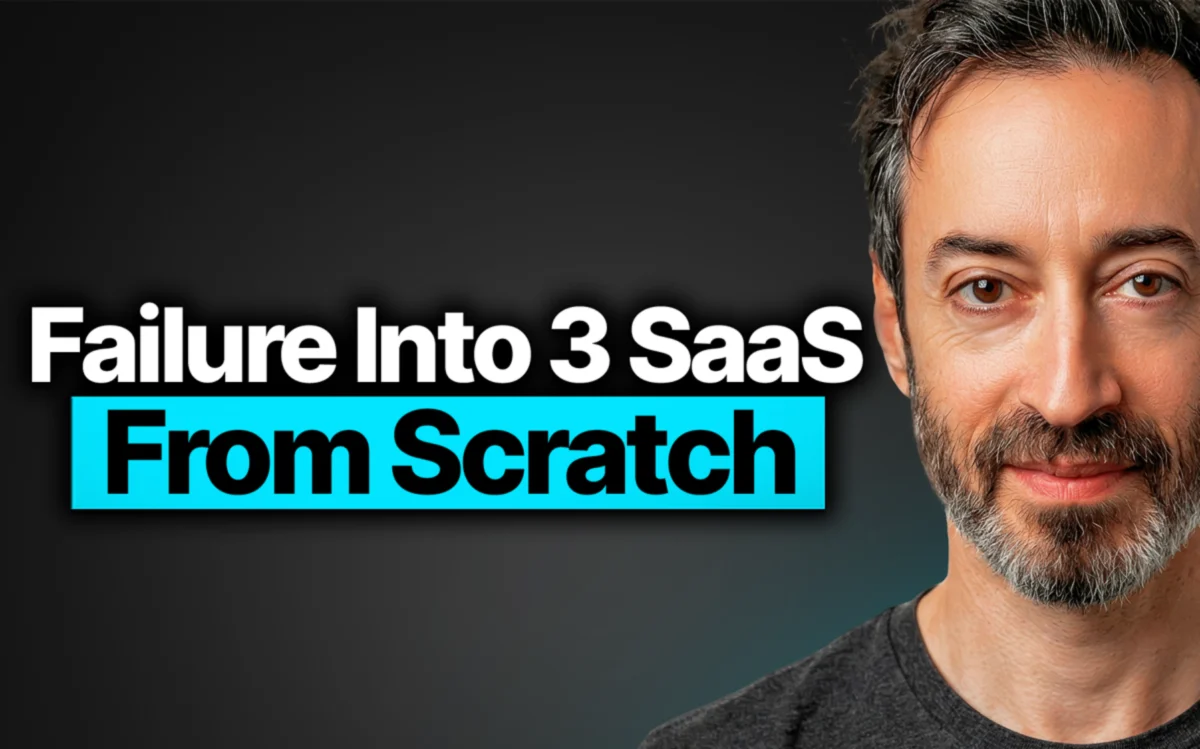
In this week’s episode of the Niche Pursuits podcast, entrepreneur François Mommens offers a masterclass in the latter. Over a career spanning more than a decade, Mommens has successfully launched and scaled three distinct SaaS products within the highly competitive SEO space: Linkody, IndexChecker, and LinkStorm. His journey, from an initial failed venture to the management of a multi-product portfolio, serves as a blueprint for founders seeking to build durable, profitable businesses without sacrificing their personal lives.
The Chronology: A Decade of Iterative Growth
Mommens’ story is not one of overnight success, but of disciplined evolution. His path began with a failed startup—a harsh but necessary lesson that taught him the importance of product-market fit. In 2011, he launched Linkody, a backlink-tracking solution, while still balancing a full-time job.
The initial version of Linkody was, by his own admission, a "crude MVP." It was built during evenings and weekends, lacking the polish of modern enterprise software. Yet, when he observed strangers willingly paying for the tool, the validation provided the necessary catalyst to go "all in."
Growth was steady rather than explosive. Unlike companies that rely on venture-backed marketing blitzes, Mommens focused on building a foundational product. As Linkody matured, he observed a plateau around 2020. Facing a saturated market with 40 to 50 competitors—including industry titans like Ahrefs and Semrush—Mommens pivoted from a "one-size-fits-all" strategy to a diversification strategy. This led to the birth of IndexChecker, born from a feature set that proved too narrow for Linkody’s broader audience, and LinkStorm, his most ambitious project to date, which addresses the complex challenges of internal linking.
The Engine of Growth: Why Organic Search Remains Supreme
A central pillar of Mommens’ success is his unwavering commitment to organic search. Remarkably, he notes that 100% of his customer base has been acquired through organic traffic.
While many SaaS founders fall into the trap of spending heavily on Facebook or Google Ads, Mommens found that the math simply did not work for his niche. Instead, he leaned into the very discipline his products serve: SEO. By consistently investing in high-quality content, logical site architecture, and robust internal linking, he created a self-sustaining cycle of acquisition.
His approach to SEO is notably "old school" and remains effective:
- Basics First: He emphasizes site structure and content quality over "hacks."
- Content Strategy: Consistent blog posts that solve specific user problems.
- Backlink Strategy: Leveraging his own tools to understand the link profile of his sites, ensuring they remain authoritative in the eyes of search engines.
Pricing Power and the "Double-Down" Experiment
Pricing is frequently the most neglected lever in a SaaS founder’s arsenal. Mommens took a data-driven, albeit courageous, approach to his pricing model. Starting with "dirt cheap" entry points to encourage adoption, he gradually increased prices as the product’s value proposition matured.
The turning point came when he decided to execute a bold experiment: doubling the price of all plans simultaneously. He expected a significant churn rate, but to his surprise, conversions remained largely unaffected. This taught him a vital lesson in value perception: if a tool provides essential data for business operations, customers are far less price-sensitive than founders often fear. Today, Linkody’s pricing scales effectively, with entry-level plans starting at $15 per month, while power users managing thousands of links pay significantly higher premiums.
Diversification: The Birth of IndexChecker and LinkStorm
Mommens’ expansion beyond Linkody demonstrates the power of identifying "friction points" within an existing user base.
IndexChecker originated as a utility feature within Linkody—designed to help users see if their backlinks were actually indexed by Google. He realized that this was a standalone pain point. By isolating the feature into a separate, paid tool, he captured a segment of the market that didn’t need a full backlink monitor but desperately needed to verify indexation.
LinkStorm, his latest venture, highlights his ability to identify broader market gaps. Recognizing that internal linking is a tedious, manual process for virtually every publisher, he developed a solution to automate the identification of broken or missing links. This launch is particularly significant as it marks his first co-founder partnership with developer Shyam Verma, signaling a transition from solo-entrepreneurship to a more collaborative, scaled business model.
Operational Realities: Managing the Load
A critical segment of the conversation focuses on the "fake truths" of the startup world. Mommens pushes back against the romanticized notion that SaaS becomes "passive income" once the product ships. In reality, the operational load increases in direct proportion to the product’s success.
For tools that rely on external data—like backlink indexes or Google search results—the maintenance burden is constant. Mommens manages this through:
- Workflowy: A structured system for tracking tasks across three distinct products.
- Time-Zone Efficiency: Leveraging a remote team in India to ensure 24/7 support coverage.
- Prioritization: He rejects the "hustle culture" that demands 80-hour work weeks. Instead, he adheres to standard business hours, arguing that the statistical probability of a massive, life-changing exit is low enough that one should not sacrifice their family life in pursuit of it.
The Impact of AI on the SEO Landscape
When asked about the future of SEO in the age of AI, Mommens remains pragmatically optimistic. He acknowledges that AI-driven search (like Google’s SGE or Perplexity) will inevitably reduce "blue-link" traffic. However, he posits that the traffic that remains will be of higher quality—users who have moved past the initial discovery phase and are ready to transact.
Furthermore, he has integrated AI into his own workflow to combat the "implementation fatigue" inherent in running multiple products. He utilizes AI for coding, drafting documentation, and managing customer support tickets, allowing him to maintain three businesses with a lean team.
Strategic Implications: Lessons for Future Founders
The trajectory of François Mommens provides three clear takeaways for anyone looking to build in the SEO SaaS space:
- Don’t Confuse Hype with Truth: Success is rarely the result of a "perfect" MVP launch. It is the result of long-term patience, timing, and the ability to pivot when the market demands it.
- Distribution is King: You cannot validate an idea if nobody sees it. Mommens warns that launching an MVP without a plan for distribution is a waste of time. He advises founders to build in channels where they already have authority or access to an audience.
- Solve Real Pain: His three businesses were not built to chase trends; they were built to solve specific, recurring problems he encountered in his own work. When the tool becomes part of the user’s daily workflow, it becomes a durable asset.
Conclusion
François Mommens’ story is a testament to the power of the "founder-led" SaaS model. By maintaining a balance between innovation and sustainability, and by resisting the pressure to conform to venture-capital expectations, he has built a portfolio of tools that serve a genuine market need.
For the aspiring entrepreneur, the message is clear: SaaS is not about the "big exit." It is about the "big grind"—the daily, consistent work of improving a product, listening to customers, and iterating until you have built something that truly lasts. In an era of infinite digital noise, Mommens’ focus on the basics of SEO, clear pricing, and sustainable growth is not just refreshing—it is the most reliable path to long-term independence.