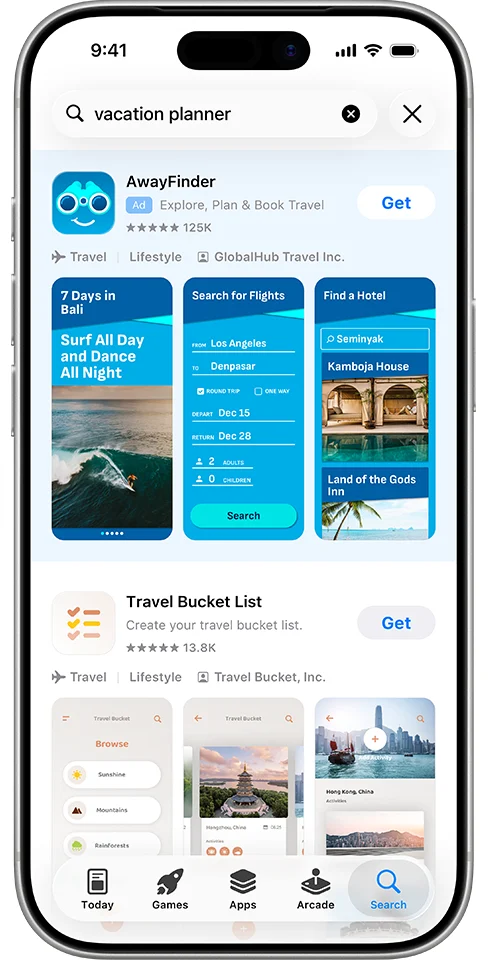
For nearly a decade, the Apple App Store’s search interface operated under a rigid, singular doctrine: one query, one sponsored result. This "winner-take-all" auction model defined the ecosystem, where the highest bidder with the most relevant app claimed the coveted top spot, and all other competitors were relegated to the organic rankings below. That era has officially come to an end.
In a move that fundamentally alters the economics of the App Store, Apple has introduced a second paid placement within search results. This shift represents more than just a change in layout; it is a strategic expansion of Apple’s advertising inventory that forces developers and digital marketers to rethink their acquisition strategies. As the second slot becomes a global standard, the industry is witnessing a transition from a simple auction to a complex, multi-layered environment where relevance, rather than just budget, dictates visibility.
Main Facts: The New Architecture of App Discovery
The core of the update is the introduction of a second sponsored app placement that appears within the search results page. Unlike the primary "Search Results" ad, which sits at the very top of the list (Position 1), the new secondary ad is integrated further down the page, typically appearing around the third or fourth position, interspersed with organic results.
Key aspects of this rollout include:
- Integrated Inventory: The second slot is not a separate product. It is part of the existing "Search Results" ad type. Advertisers do not "buy" the second slot specifically; they bid for a presence in the search results, and Apple’s algorithm determines which of the two slots an app will occupy.
- Automatic Eligibility: There was no manual opt-in required for this change. Any campaign active during the rollout was automatically entered into the expanded auction.
- Relevance-First Filtering: Apple maintains a "relevance threshold" that is significantly stricter than its competitors, such as Google Play or Amazon. If an app’s metadata and category do not align closely with the user’s search query, it will be barred from both the first and second slots, regardless of the bid amount.
- Organic Displacement: By inserting a second ad into the top five results, Apple has effectively pushed organic listings further down the "fold." For users on smaller devices, this often means that only one or two organic results are visible without scrolling.
Chronology: The Road to March 2026
The expansion of Apple Search Ads (ASA) has been a calculated, multi-year progression. To understand the significance of the March 2026 rollout, one must look at the trajectory of Apple’s advertising business over the last several years.
2023–2024: The Foundation of High-Intent Search
During this period, Apple focused on refining its attribution models following the industry-wide shakeup caused by App Tracking Transparency (ATT). As third-party tracking became more difficult on Meta and Google, advertisers flocked to ASA because of its "first-party" data advantage. The "one-ad" rule remained the standard, but demand began to outpace supply.
2025: The Year of Rising Costs
By 2025, the saturation of the single-slot auction led to a significant spike in costs. Data indicates that the average Cost Per Tap (CPT) on Apple Search Ads reached $2.25 in 2025, a sharp increase from the $1.59 average seen in 2023. This 41% increase in two years signaled to Apple that the existing inventory was no longer sufficient to accommodate the growing number of developers willing to pay for premium placement.
March 3, 2026: The Initial Rollout
Apple officially began deploying the second paid placement in the United Kingdom and Japan. These markets served as the testing grounds for the algorithm’s ability to balance two ads without degrading the user experience.

Late March 2026: Global Expansion
Following successful metrics in the UK and Japan, Apple pushed the update to all available regions. Within thirty days, the "two-ad" search page became the global standard for the App Store, effectively doubling the available premium search inventory overnight.
Supporting Data: Costs, Clicks, and Cannibalization
The introduction of new inventory usually suggests a decrease in price due to increased supply. However, early data from the first few months of the dual-slot era suggests a more nuanced financial reality.
The Cost Per Tap (CPT) Divergence
While the top slot (Position 1) continues to command a premium, the second slot typically clears at a lower CPT. Preliminary reports suggest that the second position can be 15% to 25% cheaper than the top spot. However, this has not resulted in an overall decrease in average account spend. Instead, advertisers are using the "savings" from the second slot to bid more aggressively on high-intent keywords where they were previously priced out.
The Conversion Rate (CVR) Gap
Data shows that the primary top slot still maintains a significantly higher Click-Through Rate (CTR) and Conversion Rate (CVR) compared to the second slot. Users still perceive the first result as the most "authoritative" response to their query. The second slot, sitting among organic results, behaves more like a high-performing organic listing than a traditional "banner" ad.
The Impact on Organic Traffic
One of the most critical data points involves the "cannibalization" of organic traffic. Before the update, an app ranked #1 organically would appear immediately below the single ad. Now, that same app appears below two ads. For many high-volume keywords, apps that previously enjoyed a 20% organic tap-through rate have seen that figure drop by 3% to 5% as the second paid slot intercepts users.
Official Stance and Algorithmic Philosophy
Apple’s official documentation regarding ad placements emphasizes a "user-first" approach. Unlike Google, which has historically allowed for a higher degree of "keyword conquesting" (where a non-related app can bid on a competitor’s name), Apple’s system is designed to prevent "irrelevant noise."
The "Relevance Score" Barrier
Apple’s internal "Relevance Score" is the invisible gatekeeper of the second slot. In official guides, Apple notes that "ads will only show if they are a strong match to the user’s search intent." This means that if two apps are bidding on the word "Fitness," but the second app is actually a "Meditation" app with poor keyword alignment, Apple may choose to show only one ad rather than filling the second slot with a low-relevance result.
The "No-Choice" Policy
Apple has remained firm on its decision not to allow advertisers to target specific slots. In a statement reflecting their programmatic philosophy, Apple suggests that their system is optimized to deliver the "best possible placement" based on the auction dynamics at that millisecond. This prevents wealthier advertisers from simply "buying out" both the first and second positions for every search, as the algorithm prioritizes a diversity of results.

Implications: A New Playbook for App Marketers
The shift to a two-slot system has created a "relevance arms race." Advertisers can no longer rely on brute-force spending to dominate the App Store. To thrive in this new environment, three strategic pillars have emerged as essential.
1. The Death of the "Broad Match" Strategy
In the single-slot era, many advertisers used "Broad Match" keywords to cast a wide net. With two slots available, the penalty for being "slightly irrelevant" has increased. If an app wins the second slot but has low relevance, its CTR will plummet, signaling to Apple’s algorithm to deprioritize the app in future auctions. Marketers are now shifting toward "Exact Match" keywords and tighter "Creative Sets" to ensure their app’s visuals perfectly match the user’s search intent.
2. Sophisticated Audience Segmentation
A significant implication of the increased inventory is the cost of "Returning Users." Data suggests that returning users (those who have previously downloaded the app) can account for up to 20% of an ad budget. With two slots available, the risk of paying for a tap from a user who was already looking for the app is higher. High-performing accounts are now strictly separating "New User" and "Returning User" campaigns, applying lower bids for the latter to ensure that the second slot is used for genuine acquisition rather than expensive re-engagement.
3. Defensive and Offensive Brand Bidding
The second slot has revolutionized "Brand Defense." Previously, a brand could buy the top slot on its own name and effectively own the top of the screen. Now, a competitor can occupy the second slot, appearing just a few centimeters below the official brand. This makes "Brand Defensive" campaigns mandatory rather than optional. Conversely, for smaller developers, the second slot provides a "fighting chance" to appear on a major competitor’s search terms at a price point that was previously unreachable.
4. The Integration of ASO and ASA
The line between App Store Optimization (ASO) and Search Ads (ASA) has officially blurred. Because the second ad slot looks and feels like an organic result, the app’s metadata (title, subtitle, and screenshots) must work harder. If the organic results surrounding the second ad have better ratings or more compelling visuals, the paid ad will fail. Marketing teams are now forced to coordinate their paid creative assets with their organic listing to maintain a cohesive "visual identity" on the search page.
Conclusion: Preparation Over Power
The expansion of Apple Search Ads to a two-slot system is a clear indication of Apple’s intent to scale its services business. While more inventory is generally a positive development for the industry, it introduces a level of complexity that rewards precision over raw spending power.
As the format matures throughout 2026, the winners will not necessarily be the apps with the largest budgets, but those with the most disciplined keyword structures and the highest relevance scores. The second slot is an opportunity for growth, but it is also a trap for those with "noisy" campaigns. In the new App Store, being seen is no longer just about the highest bid—it is about being the most relevant answer to the user’s question.